
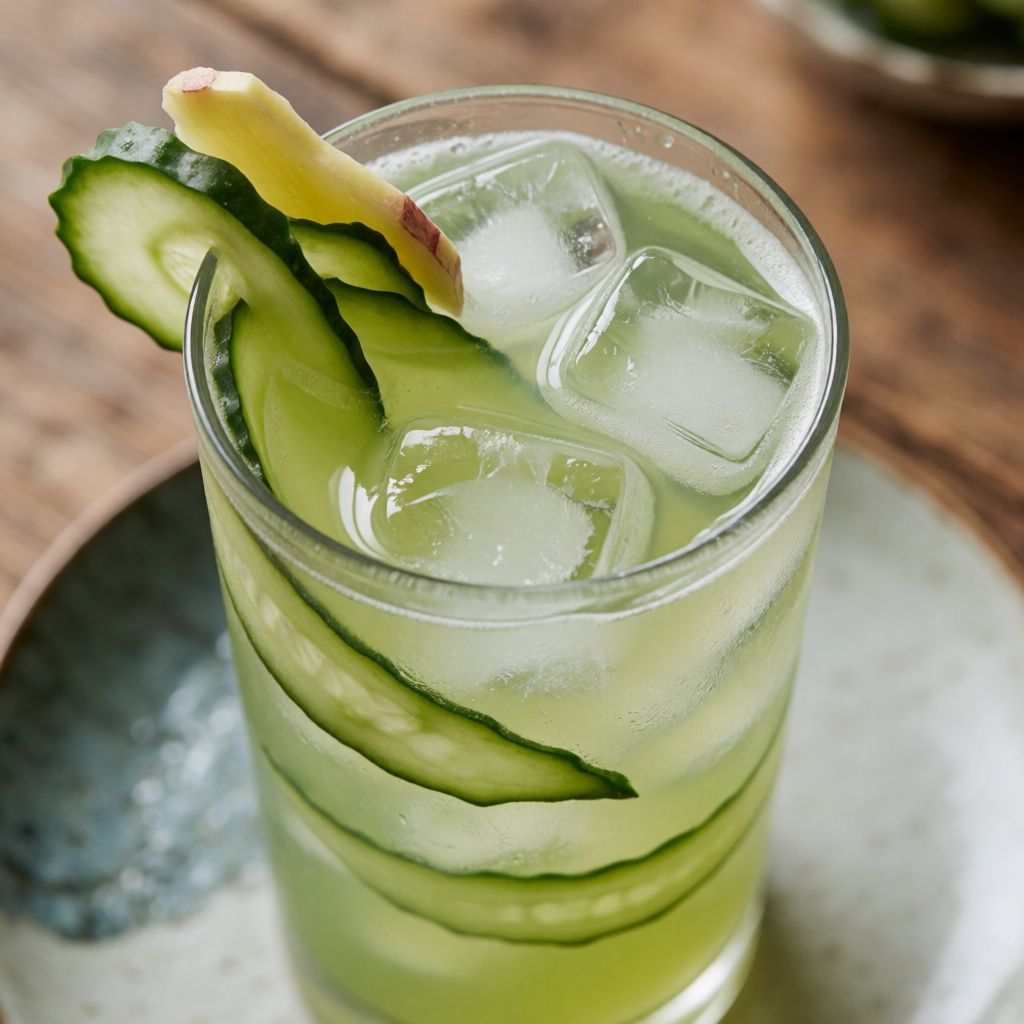
 AI photo
Cucumber and Ginger Gin Cocktail
A refreshing cucumber and ginger cocktail mixed with gin and topped with tonic water.
Labels are worked out automatically from the ingredients and can be wrong. Check the packaging if it matters to you.
Ingredients
- 50 ml Water
- 50 ml Sugar
- 15 g Ginger peeled and finely chopped
- 0.5 pcs Cucumber freshly squeezed juice
- 60 ml Gin
- 60 ml Ginger syrup
- 2 pcs Lime juice
- 350 ml Tonic water
- Ice cubes to taste
- 6 pcs Cucumber slices to garnish





Steps
Put the water, sugar and ginger in a saucepan and simmer for 5 minutes to make the ginger syrup.
5 minRemove from the heat and let it infuse in the pan for at least 1 hour, then strain.
60 minPour the cucumber juice into a shaker with the gin, ginger syrup, lime juice and ice cubes.
Shake well and pour into two glasses.
Top up with tonic water and garnish with the cucumber slices.
This is a gin and tonic that got ambitious — cucumber for coolness, ginger for heat, lime for the sharp edge that stops the whole thing turning into squash. Whether it works comes down to one balance: ginger's burn against cucumber's cold water taste. Too much syrup and you've made a hot toddy with bubbles. Too little and the tonic just dilutes everything into pale fizzy water.
The ginger syrup is the one piece of actual cooking in a drink that's otherwise assembly. Everything else is juicing, shaking, pouring — no heat, no technique to fail at. So the syrup is where attention goes, and where patience is the real ingredient: you can't rush ginger into giving up its flavour, you can only wait for it.
Some say muddle the cucumber straight in the glass, the way you'd do mint in a mojito. No — because cucumber skin and seeds are where the bitterness lives, and bruising the whole slice drags that bitterness into your drink along with a cloud of pulp that sinks to the bottom and looks like something went wrong. Juice it instead, through a sieve or an old clean tea towel, and you keep the sweet watery part, leave the bitter part in the sink.
Start with the syrup, because it decides the drink. Water and sugar in equal volume, simmered — meaning small bubbles breaking the surface, not a rolling boil — with the ginger in it. At a hard boil you drive off the same volatile oils you're trying to capture and you reduce the water unevenly, so the sugar ratio drifts and the syrup can crystallise oddly once cold. A gentle simmer just melts the sugar and coaxes the ginger's heat compounds into the liquid without cooking the fragrance out of it. Five minutes is the lower bound, not the answer — you're listening and smelling, not watching a clock. It should start smelling sharp and peppery, not just like sweet water.
Then comes the part everyone skips when they're impatient: the hour of sitting off the heat. This is where most of the ginger actually moves into the syrup — heat starts the extraction, but the slow steep finishes it. Taste a drop after the hour. If it tastes thin and mostly sweet, give it longer; ginger doesn't punish you for waiting. Strain it well, because stray fibres in a cold drink are unpleasant in a way that's hard to undo later.
The cucumber juice has to be fresh, pressed close to when you're drinking, not sitting in the fridge from this morning — cucumber juice oxidises and goes flat and slightly metallic within a few hours, the same way a cut apple browns. Choose a mild, thin-skinned cucumber — the ordinary English kind, not the stubby pickling ones with hard seeds — because you want water and a clean green taste, not bitterness. No cucumber at all, in a pinch: a very mild, unripe honeydew melon juiced the same way gets you closer than people expect, though it's not the same drink.
Gin here wants juniper you can actually taste under the ginger and lime — a straightforward London Dry does the job; an overly floral or citrus-heavy gin just gets lost once the tonic and lime arrive. Lime juice should be squeezed, not bottled — bottled lime juice is often treated to survive on a shelf and tastes dully acidic rather than bright, and bright is the whole point of adding it.
Tonic goes in last and isn't shaken — pour it, don't stir it hard, because its only job is to carry bubbles, and bubbles are the one thing in this drink you can't get back once they're gone. Choose a dry, quinine-bitter tonic rather than a sweet lemonade-style one; the drink already has sugar from the syrup, and a sweet tonic on top just flattens the ginger's bite instead of letting it cut through. If you haven't got a cocktail shaker, a clean jam jar with a tight lid does exactly the same job — the point is agitation and cold, not the equipment.
One proper batch of this syrup makes more than two drinks need — keep the rest covered in the fridge, it holds for a week or so, and that's the real economics of it: making your own ginger syrup costs you five minutes of heat and an hour of waiting, against buying a bottle of ginger cordial that's mostly sugar and preservative anyway. Worth knowing if this becomes a Sunday-roast-afternoon kind of drink rather than a one-off.