
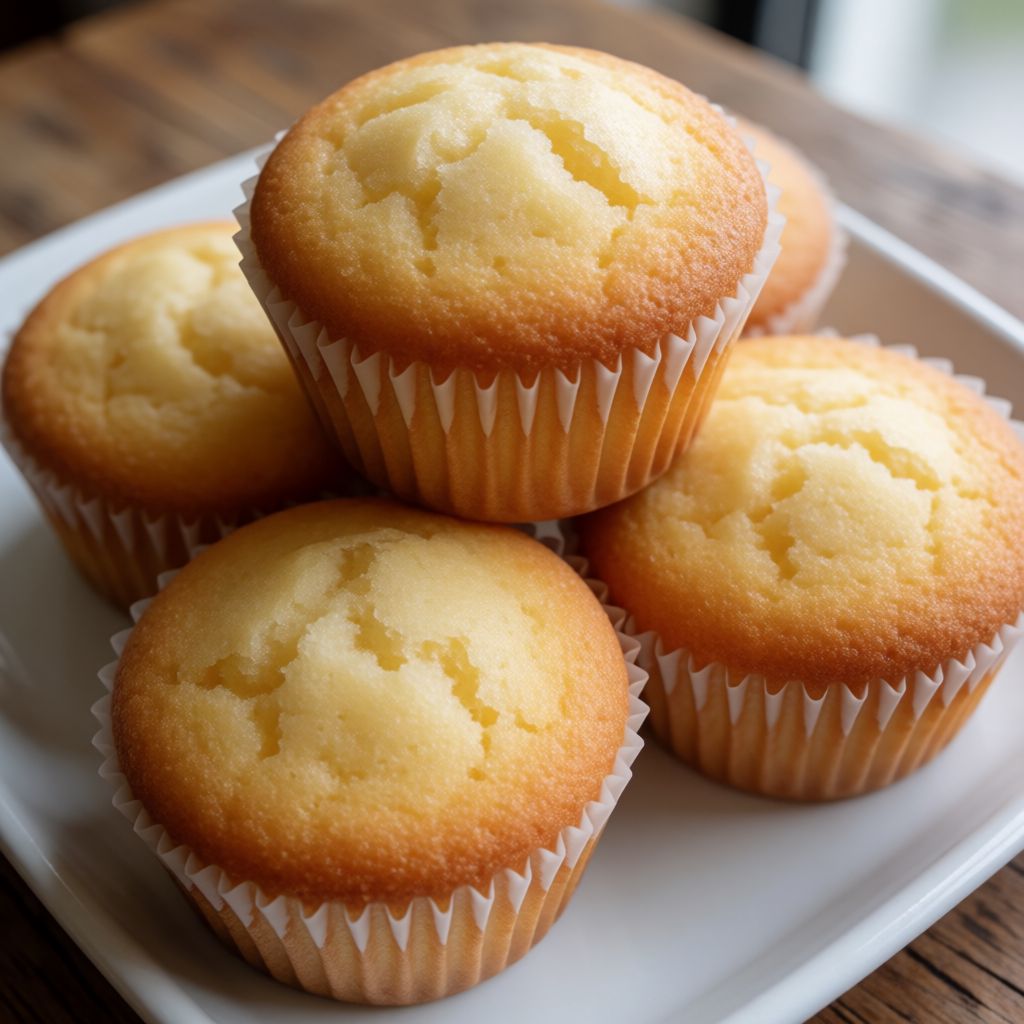
 AI photo
Simple Cupcakes
Simple homemade cupcakes filled with Nutella and dusted with icing sugar.
Labels are worked out automatically from the ingredients and can be wrong. Check the packaging if it matters to you.
Ingredients
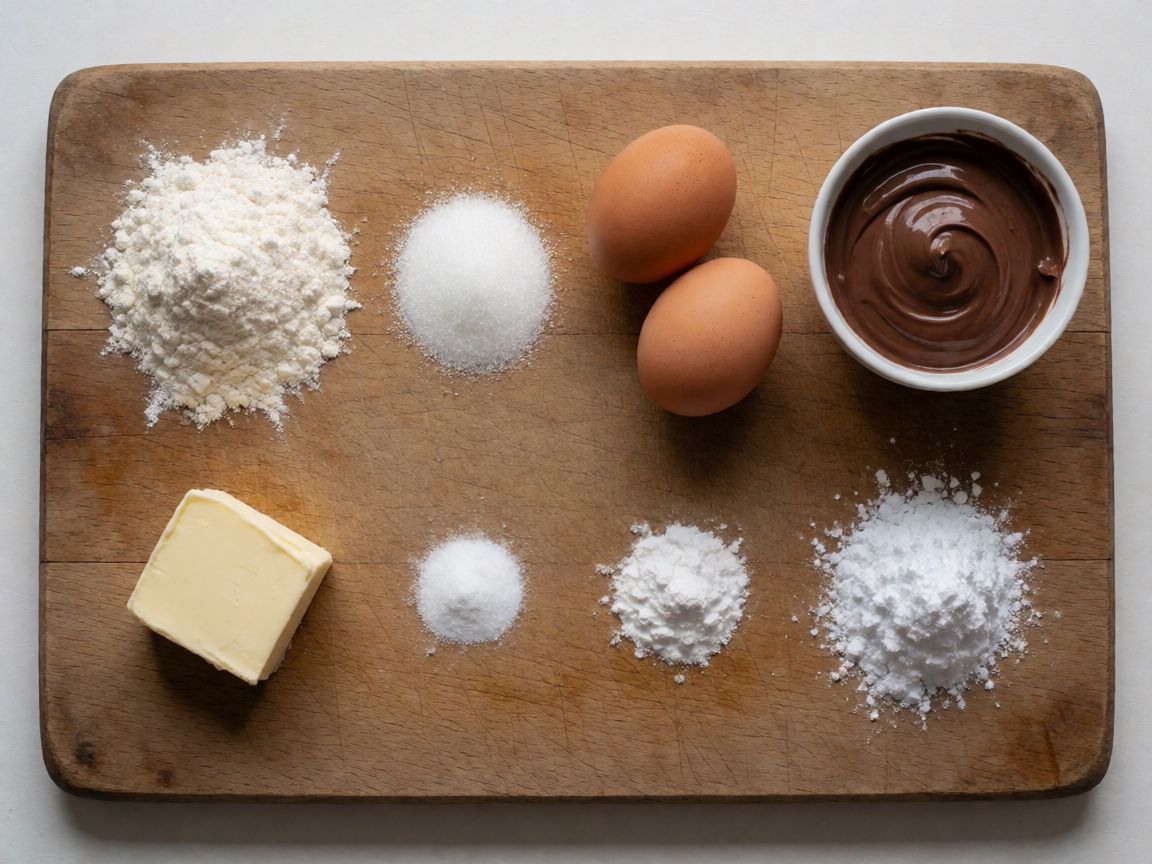
- 130 g Plain Flour
- 130 g Caster Sugar
- 130 g Butter
- 2 pcs Eggs
- 0.5 tsp Bicarbonate of Soda
- 1 tsp Baking Powder
- Nutella to taste
- Icing Sugar to taste








Steps
Whisk the melted, cooled butter with the sugar until smooth and creamy.
Add the eggs one at a time, continuing to whisk so each one combines well.
In a separate bowl, sift together the flour, baking powder and bicarbonate of soda.
Gently fold the dry ingredients into the butter-and-egg mixture until smooth.
Divide the batter among paper cupcake cases.
15 minBake in a well-preheated oven at 180°C.
Let the cupcakes cool, then make a small cut on top of each one.
Fill with Nutella or jam.
Dust with icing sugar and serve.
This is a one-bowl pound cake dressed up as something smaller: equal weight of flour, sugar and butter, two eggs, a dusting of raising agents, baked in paper cases instead of a tin. The ratio — 130/130/130 — is the whole secret, and it's not a secret at all, it's just arithmetic a home baker without scales for exotic ratios can hold in her head: one part fat, one part sugar, one part flour, by weight, always. That's the whole tradition behind "nursery cake" logic, and it survived not because it's magic but because it's reliable and cheap to remember.
What decides whether this works is temperature, twice. First: the butter must be melted and then cooled before it meets sugar and eggs. Melted — because this isn't a creamed sponge, there's no mechanical whipping of air into solid butter here, the lift comes almost entirely from the raising agents and the egg foam, not from trapped air bubbles. Cooled — because warm butter meeting egg is a scrambled-egg problem waiting to happen, and a curdled batter bakes into something greasy and uneven rather than smooth.
Second: the oven has to be properly up to heat before the cases go in, not just dialled to 180°C on the display. If the oven is still climbing when the batter enters, the chemical reaction in the raising agents starts lazily, bubbles form and then wander off before the crumb has set hard enough to hold them, and you get a flat, dense result that no amount of extra baking powder will fix later.
Flour, sugar, butter: 130g each is not a coincidence, it's the whole method. Equal weights by mass is the oldest trick for a cake you can scale in your head without a recipe card — double it, halve it, it still works, because the ratio does the thinking. Plain flour is right here; nothing in this batter needs the extra protein of strong flour, and self-raising would double up on the leavening already measured in separately, throwing the balance off.
The eggs go in one at a time for a reason that has nothing to do with ceremony. Butter-and-sugar at this stage is an emulsion, fat and sugar crystals loosely bound; egg is mostly water. Dump both eggs in together and the water can split that emulsion faster than the whisk can re-bind it, leaving you with little pools of grease in the finished cake instead of an even crumb. One egg at a time, whisked in properly, lets the mixture absorb the water gradually and stay smooth.
Bicarbonate of soda and baking powder together looks like belt-and-braces, but it's worth knowing what each actually does. Baking powder already contains its own acid, paired with bicarbonate, so it reacts on its own when it gets wet and warm. Plain bicarbonate needs an acid to react with — and there isn't one here, no buttermilk, no yoghurt, no cocoa. Some bakers add extra bicarb thinking "more raising agent, more rise" — no, because without acid to neutralise it, the unreacted bicarbonate can leave faint soapy or metallic notes and the occasional dark freckle in the crumb. Use it sparingly, as the recipe says, half a teaspoon against a full teaspoon of baking powder, and don't be tempted to add more for extra height.
Folding the dry ingredients in "gently" is the instruction that gets skipped most often, and it's the one that saves the cake from being tough. Stir flour into a batter hard and long enough and you build gluten strands — fine for bread, wrong for a cupcake, which wants a soft, slightly crumbly bite, not chew. Fold until the last streak of flour disappears and then put the spoon down.
Nutella is the filling named, but the real criterion is: something soft enough to sit in a cut without soaking straight through the crumb, and sweet or sharp enough to contrast the plain sponge. Jam does the same job, as the recipe itself admits — a sharp fruit jam actually cuts the richness better than more chocolate on chocolate-adjacent butter cake. Make the cut and fill only once the cupcakes are properly cool; hot sponge has no structure yet, and a soft filling dropped into a warm cake just melts into the crumb instead of sitting as a pocket.
On the ordinary kitchen: a muffin tray under the paper cases isn't vanity, it's support — paper alone, unsupported, bakes into thin, leaning walls instead of a proper cupcake shape, because there's nothing holding it upright while it rises. If you don't have a tray, stand the cases close together in a loaf tin or snug in a baking dish so they prop each other up. And the icing sugar goes on last, after cooling, dusted just before serving — put it on too early and it simply melts into the damp surface and vanishes, which rather defeats the point of dusting it on at all. This batch, from 130g of each, makes more than two cupcakes from two people's worth of ingredients — expect eight to ten, which in this country just means tea for several afternoons, not one sitting.