
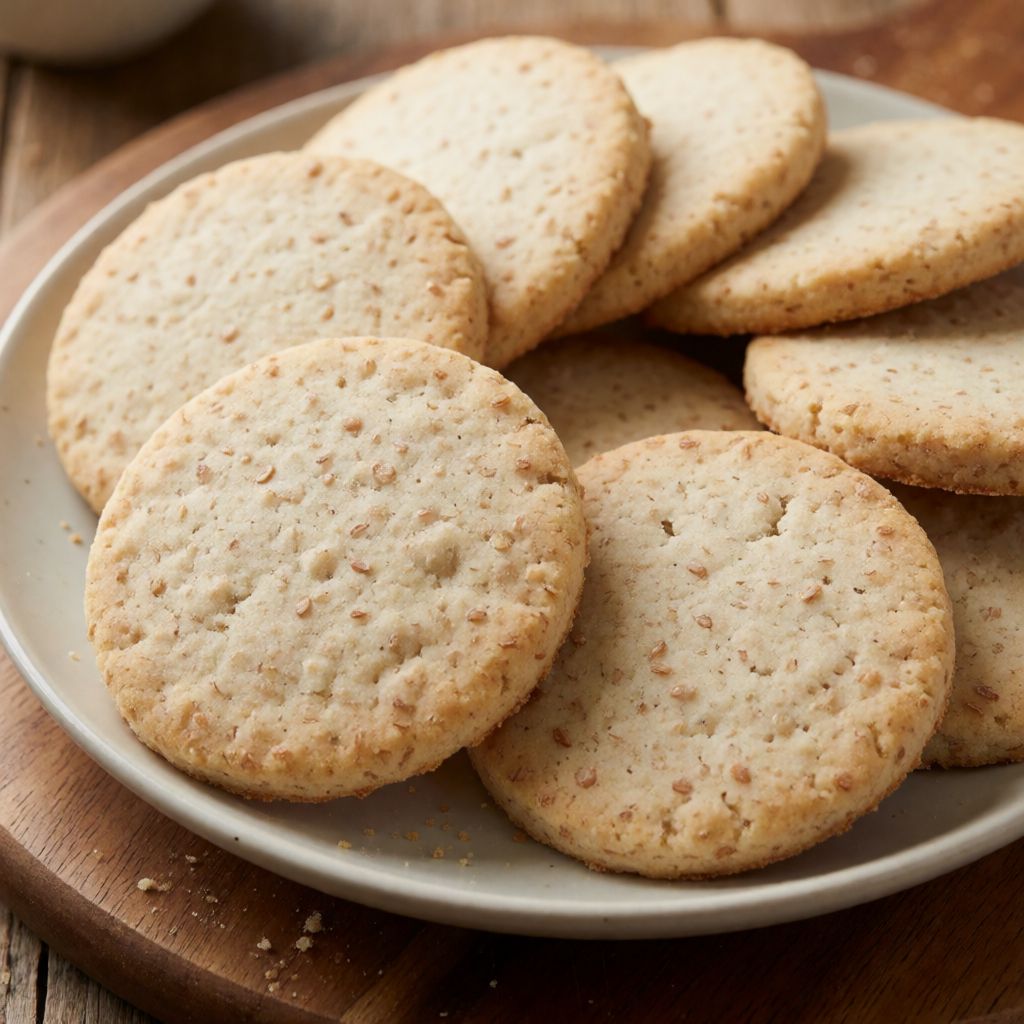
 AI photo
Digestive Biscuits
Crumbly wholemeal digestive biscuits, lovely with a cup of tea.
Labels are worked out automatically from the ingredients and can be wrong. Check the packaging if it matters to you.
Ingredients
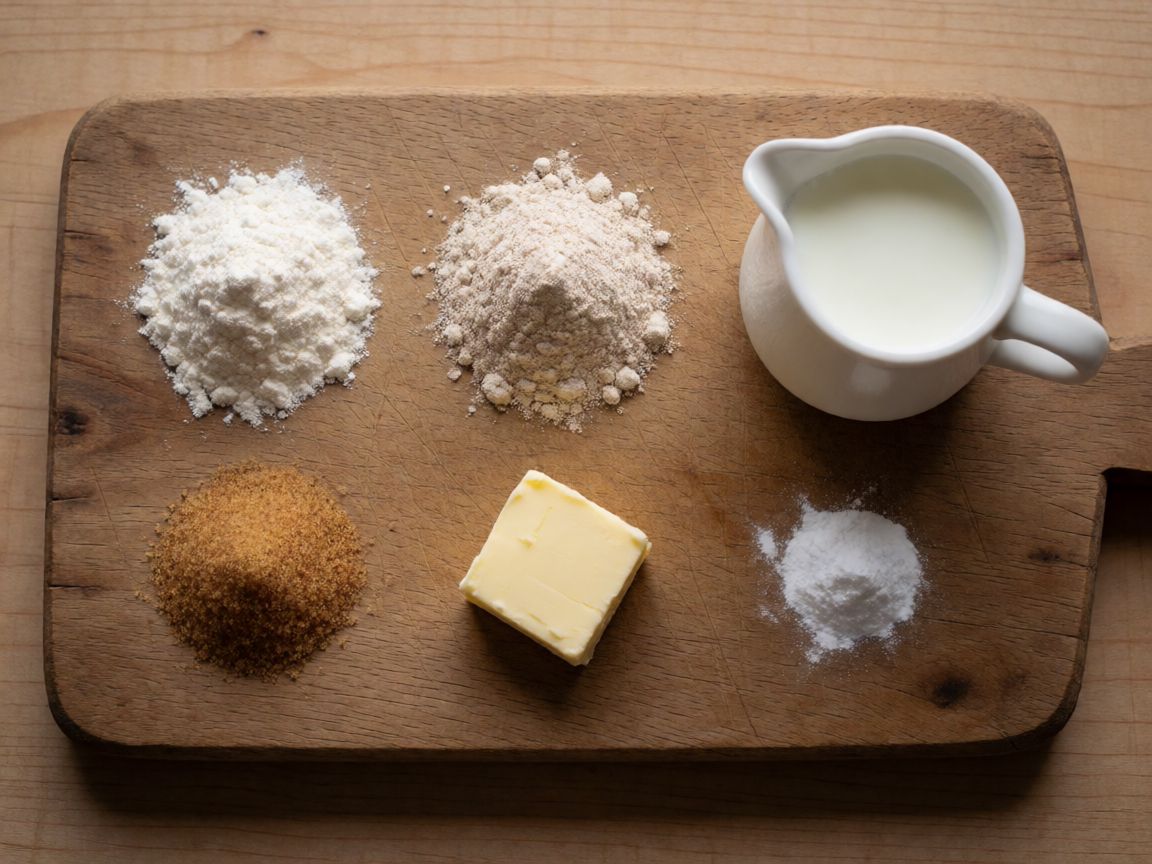
- 300 g Plain Flour
- 120 g Wholemeal Flour
- 120 g Soft Brown Sugar
- 300 g Butter
- 35 g Milk
- 1.5 tsp Baking Powder
- 1 pinch Salt







Steps
Combine and sift the flour, wholemeal flour and baking powder; tip onto the worktop in a mound and make a well in the centre. Add the salt and brown sugar.
Add the butter, cut into small pieces, and rub in with your hands until the mixture turns crumbly.
Pour in the milk and knead well until smooth, then shape into a neat ball.
Wrap the dough in cling film and chill in the fridge for 30 minutes.
30 minRoll out the dough on a lightly floured worktop with a rolling pin to about 4mm thick.
Cut out rounds with the rim of a glass and prick each one lightly with a toothpick.
Place the biscuits on a buttered, flour-dusted baking tray, transfer to a preheated oven and bake at 180°C for about 15 minutes.
15 min
A digestive is not health food and never pretended to be — the name is a nineteenth-century sales pitch. Early biscuit makers put bicarbonate of soda in the dough and told shoppers it settled the stomach. There's no enzyme in here that helps you digest anything. What the name really describes is texture: short, sandy, slightly savoury under the sweetness, built to survive a dunk in tea without turning to mush before you've lifted it out.
What decides whether it works is one thing — how cold the butter stays while you rub it into the flour. You're not making a dough the way you'd make bread, where you want strands of gluten to form and stretch. Here you want the opposite: fat coating every grain of flour so thinly that gluten can barely link up at all. That's why the butter goes in as pieces, not melted, and why you rub rather than beat — warm hands and a slow hand turn butter to grease, and greasy dough won't hold the crumbly, almost grainy bite this biscuit is known for. If your kitchen's warm, work fast or the whole point of the method slips away before you've finished.
The milk is a hinge, not a soak — just enough to make the crumb cling into a dough, no more. Pour in extra because the mix looks dry and you've started building the very gluten network you spent the last step avoiding. The dough should feel like it's barely holding together, not like bread dough that springs back.
Flour is split for a reason beyond flavour. Wholemeal brings bran and germ — rough, textured, slightly bitter particles that give the biscuit its characteristic grainy bite and that faint nuttiness. All wholemeal and the dough turns heavy, almost impossible to bind with so little liquid, and the bitterness takes over. All plain flour and you lose the point entirely — you've made a plain sweet biscuit, not a digestive. The ratio here, roughly two and a half parts white to one part wholemeal, is the compromise that keeps the texture without the dough falling apart in your hands.
Butter does two jobs: flavour, and — more importantly — shortening. "Shortening" isn't an old-fashioned word for fat, it describes exactly what it does: it shortens the gluten strands, breaks them up, stops them linking into long elastic chains. Any fat that's solid enough to cut into pieces and stays firm while you handle it will do this job — lard did it for generations before butter became the default, and it's cheaper, which is half of why older versions of this biscuit used it. Butter wins now mostly on taste, not mechanism. A soft tub margarine will not behave the same way; it's already closer to liquid, and you lose the control you get from butter that only gives up its structure when it warms in the oven, not in your palm.
Soft brown sugar isn't just sweetness — it carries a little molasses, which means a little moisture and a faint caramel note you don't get from white sugar. That's also why these biscuits brown the way they do at the edges rather than staying pale — sugars with molasses in them colour faster and deeper. If you only have white sugar, it will still work; you'll just lose that warmer tone, and you could nudge it back with a teaspoon of golden syrup.
Milk at 35 grams looks almost token, and it is — it's there to let the buttery crumb gather into a dough, not to hydrate flour the way a bread recipe would. If the dough won't come together, add it in drops, not splashes.
Baking powder is a light hand on the tiller, not a push. Digestives don't rise, they hold their shape — too much lift and they puff and soften into something closer to a scone. The pinch of salt isn't there to be tasted; it's there so the sugar doesn't taste flat and one-note, the way a stew without salt tastes dull even if it's sweet enough already.
The thirty minutes in the fridge before rolling is not optional admin — it's the dough recovering from being handled. Warm, worked dough has butter sitting too close to melting and gluten slightly roused from the kneading; chilling firms the fat back up and lets any gluten that did form relax. Skip it and the biscuits spread further and thinner in the oven than you intended, losing the clean edge a glass-cut round should keep. On this point, patience earns you the shape you cut, nothing more mysterious than that.
Your oven's dial reads 180°C, but ovens lie, especially small domestic ones with an element close to the tray — trust what you see over what the dial says. Look for the edges turning the colour of light toffee while the centre is still pale; that's the moment to pull them, because digestives firm up as they cool on the tray, not in the oven. If you wait for the centre to look done, the edges will already have gone past gold into bitter.