
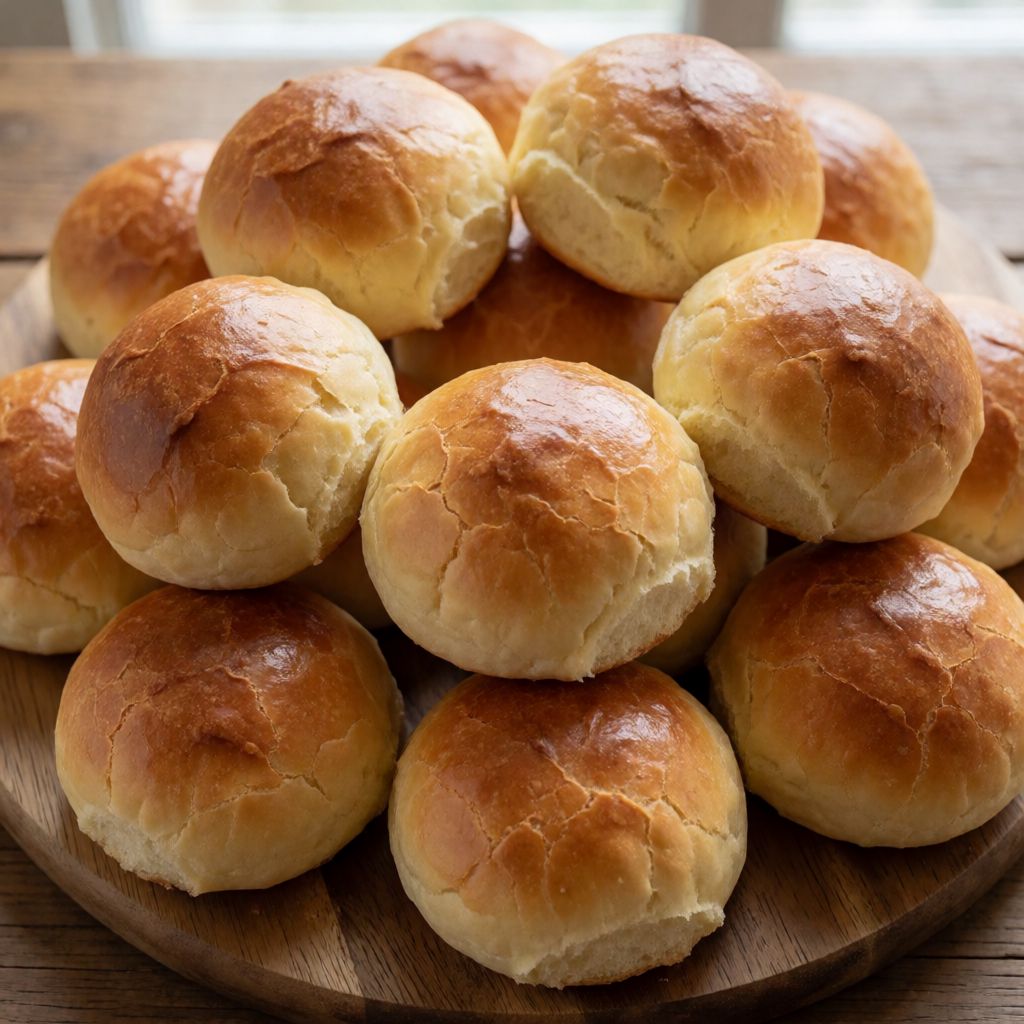
 AI photo
Olive Oil Buns for a Party Buffet
Soft olive oil buns perfect for a party buffet, easy to slice and fill with your favourite filling.
Labels are worked out automatically from the ingredients and can be wrong. Check the packaging if it matters to you.
Ingredients
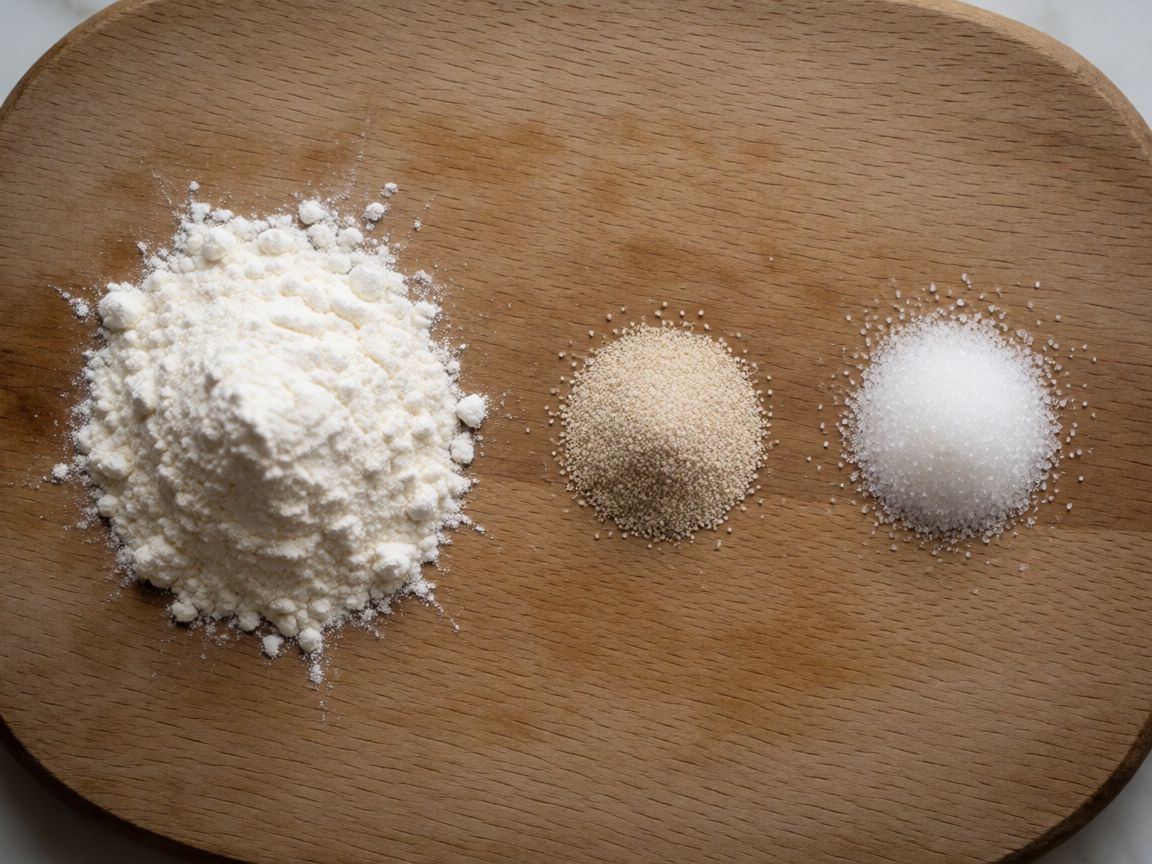
- 500 g Plain flour
- 250 ml Water
- 7 g Yeast
- 5 g Caster sugar
- 15 g Salt
- 40 g Olive oil






Steps
In a bowl, combine the water with the sugar and yeast, mix well and set aside for a few minutes.
In a larger bowl, place the flour, add the salt and olive oil, then pour in the dissolved yeast mixture.
Knead the dough by hand, first in the bowl and then on a lightly floured surface, until smooth and elastic.
Divide the dough into pieces of about 60 g each and shape them into even balls.
Cover the balls with a clean tea towel and leave to rise in a warm, draught-free spot for about 3 hours.
180 minTransfer the balls to a baking tray lined with parchment paper, brush with olive oil and, if liked, sprinkle with sesame and poppy seeds.
Bake in a fan oven preheated to 180°C for about 20 minutes.
20 minLet the buns cool, slice them in half and fill with your favourite filling.
This is a lean, savoury roll built for grazing, not for show — one dough, one fat, no eggs or milk to soften the job for you. It's flour, water, yeast, a pinch of sugar and salt, and olive oil doing double duty as flavour and insurance. What decides whether it works isn't the ingredient list, which is almost insultingly short — it's whether the gluten gets built properly by hand, whether you give the yeast its full three hours instead of rushing it, and whether the oil is allowed to do its real job, which is keeping these buns soft on a buffet table for hours after they've left the oven.
Start with the kneading. "Smooth and elastic" isn't a vague instruction, it's a test: pull a bit of the dough and it should stretch like chewing gum, not tear like paper. That stretch is the gluten network — the scaffold that traps the gas the yeast makes and holds the bun's shape instead of letting it slump sideways on the tray. Skip this and you get a flat, dense disc that looks more like a biscuit than a bun, no matter how long you leave it to rise.
Plain flour is the right choice here, not a compromise — this dough is enriched with oil but has no fat-laden crumb to support, and the pieces are small, so you don't need the extra protein of a strong bread flour to get a chewy structure. If strong flour is all you've got, it'll still work; just ease off the kneading slightly, because it grips water harder and tightens up faster.
Water and yeast are doing a simple chemical conversation: the sugar gives the yeast something to wake up on quickly, which is why you see it foam within minutes — that foam is your check that the yeast is alive, not decoration. Some say sugar "feeds" the yeast and without it the dough won't rise — no, because yeast happily breaks down the starch in flour on its own, given time; the sugar here is just a jump-start and a touch of crust colour, nothing more. If your yeast doesn't foam in that first wait, it's dead, and no amount of extra time later will fix it — better to find out now than after three hours.
Salt at roughly 3% of the flour weight is a brake, not a seasoning only. It slows the yeast down to a pace where it builds flavour instead of just gas, and it tightens the gluten you worked so hard for in the kneading. Too little salt and the dough overproofs fast and goes slack; too much and the rise crawls and the crumb turns tight and dry.
The olive oil is the one ingredient doing real structural work here, not just taste. Fat coats the starch and protein strands, which is why an enriched dough like this stays soft for hours — exactly what a buffet needs, since nobody's eating these the minute they come out of the oven. That softness fading is called staling, and it's really starch pulling moisture back out of itself as it cools; oil slows that down. Historically this is the cheaper, savoury cousin of a butter brioche — in places where olive trees outnumber dairy herds, oil was the affordable enrichment, and it leans the dough toward savoury fillings rather than sweet ones, which suits a buffet far better than a sugared bun would. The honest substitution rule is: any oil with no strong smell of its own if you want a neutral base — sunflower, rapeseed — but you'll lose the characteristic flavour that makes this bread what it is, so only swap it if the filling is doing the talking anyway.
In an ordinary UK kitchen, "a warm, draught-free spot" usually means the switched-off oven with the light left on, or a spot away from the kettle's steam and the back door's draught — not on top of a radiator, which dries the surface faster than it warms the inside and gives you a crust before there's any rise underneath. Cover the balls with a tea towel rather than cling film: cling film traps too much condensation against the dough and leaves it sticky and misshapen, while a tea towel lets a little moisture escape without letting the surface dry into a skin that would crack open crookedly in the oven.
In the fan oven, 180°C and twenty minutes is your starting point, not your finish line — the fan evens out the heat across a tray of buns so they colour together, but ovens vary enough at home that you should trust the bun, not the timer: golden all over, a hollow knock when you tap the base, and a crumb that springs back rather than squashes when you press it. And don't shortcut the three-hour rise to make up for a late start — patience is the one ingredient here with no substitute, and it's the cheapest one in the recipe.