
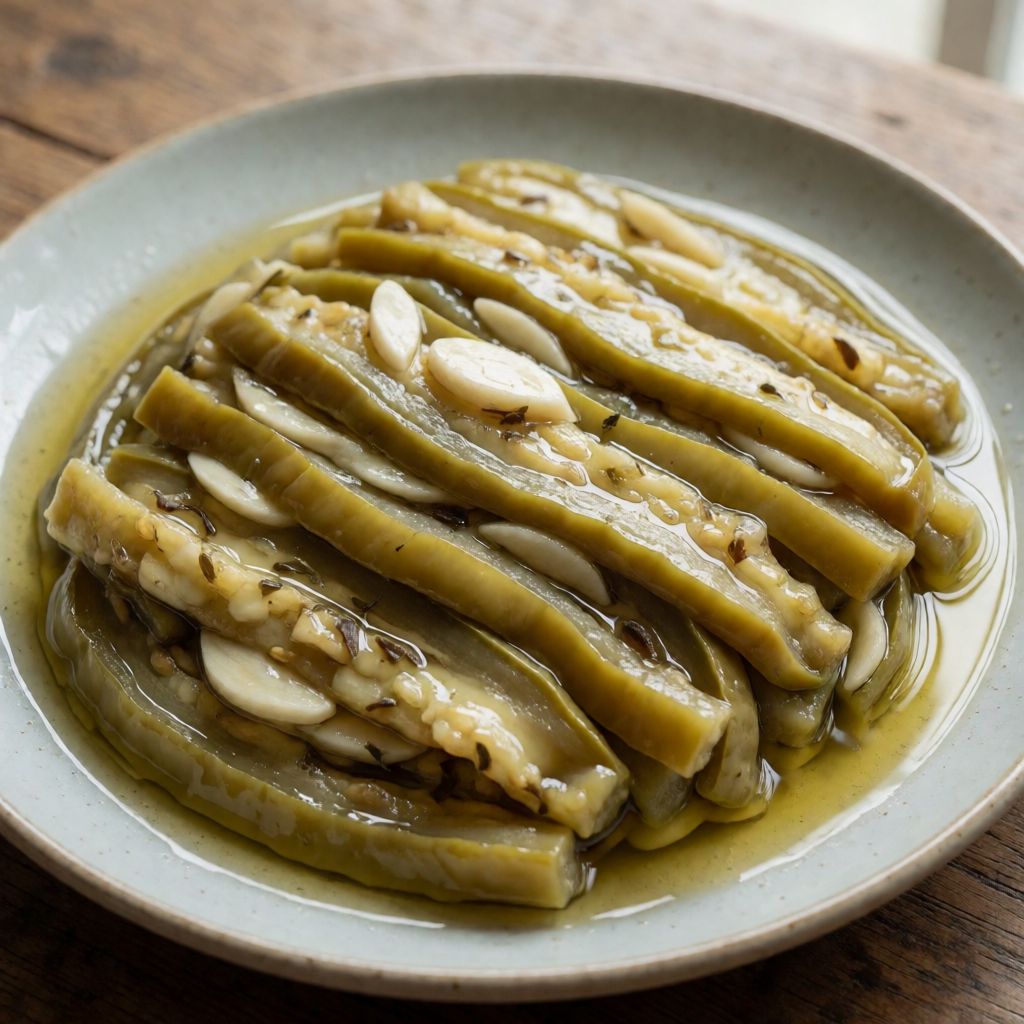
 AI photo
Preserved Aubergines in Oil
A classic Italian-style antipasto of aubergine slices cured, blanched and preserved in olive oil.
Labels are worked out automatically from the ingredients and can be wrong. Check the packaging if it matters to you.
Ingredients
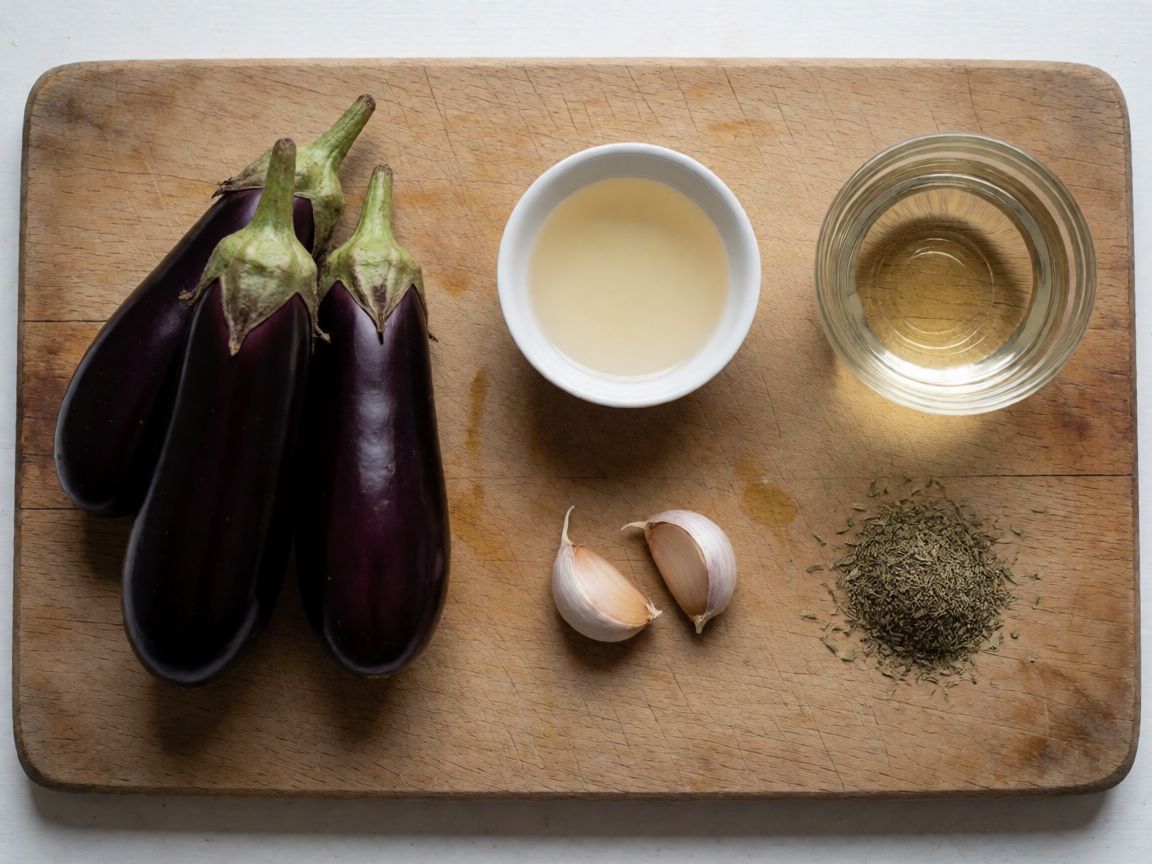
- 1.2 kg Aubergine
- coarse salt to taste
- 250 ml white wine vinegar
- 100 ml white wine
- 200 ml water
- 2 clove garlic
- aromatic herbs thyme, rosemary, tarragon, to taste
- olive oil to taste
- black pepper to taste









Steps
Wash the aubergines, trim the ends and peel off strips of skin. Slice the aubergines thinly.
Layer the aubergine slices in a bowl, sprinkling each layer with coarse salt and pressing down with your hands.
Cover the bowl with a plate and weigh it down, then leave for 5–12 hours (if more than 5 hours, refrigerate).
Drain off the liquid and squeeze the aubergines well.
Bring the water, wine and vinegar to the boil and blanch the aubergines in two batches of 2 minutes each.
Drain the aubergines, let them cool and pat dry on a clean tea towel.
Slice the garlic, then rinse and dry the aromatic herbs.
In the bottom of sterilised jars, layer aubergine, garlic, herbs, pepper and oil, filling the jars almost to the top.
Pour in oil so it completely covers the last layer of aubergine, and leave to infuse for 30 minutes.
30 minTop up with more oil to the rim and close the jars.
Pasteurise the jars in water: bring to the boil and cook for 25 minutes.
25 minOnce the jars have cooled, remove them from the water and leave the aubergines in a cool pantry for at least 15 days before tasting.
This is aubergine the way you'd preserve it before there were fridges on every corner: salted, vinegared, boiled briefly in a sour bath, then drowned in oil and left alone for a fortnight. What you end up with is not a vegetable dish but a jar of patience — a condiment that sits next to cold meats, cheese, bread, and quietly does the work capers or pickles do elsewhere.
Whether it works or not is decided in two places, and neither is the final jar. First is the salting: aubergine is mostly water held in a sponge of flesh, and if you don't force that water out first, it will still be sitting there in the oil weeks later, diluting the vinegar's grip and giving mould somewhere to start. Second is the blanching — brief, sharp, in a boiling vinegar-wine-water bath, not a slow simmer. That's not cooking the aubergine so much as sterilising its surface and cutting the bitterness that raw aubergine skin can carry, while keeping enough bite that the slices don't collapse into mush in the jar.
Some say aubergine has to be bitter and that's "the taste of the real thing" — no. Bitterness in aubergine is mostly a trait of old, overripe fruit with tough skin and dark seeds, not a flavour you're meant to chase. A firm, young aubergine with pale, few seeds barely needs defending against; the salting step takes care of what little harshness remains, bitter or not.
Start with the aubergine itself. You want it dense, no soft spots, skin tight and glossy — that's young flesh, not yet gone spongey and seedy with age. 1.2 kg is roughly three to four medium aubergines, enough for a few modest jars that will feed six as part of a spread, not as a main course. Peeling strips of skin rather than the whole thing isn't decoration: bare flesh picks up salt and vinegar faster, but a little skin left on gives the slices something to hold their shape against — strip it all off and you get slices that go limp in the jar.
Coarse salt, not fine table salt. Fine salt dissolves too fast on the surface and seasons without properly dragging water out of the flesh; coarse salt sits on the slices longer, drawing moisture out slowly and steadily under the weight of that plate. This is the same logic as salting cabbage for sauerkraut — you're not flavouring yet, you're dehydrating. If you've only got table salt, use less of it and press harder, because it will do its job faster and you don't want it just turning the aubergine salty rather than dry.
White wine vinegar and white wine together, cut with water, make the blanching bath. The vinegar is the preservative — acid is what stops the wrong bacteria getting comfortable in the jar — and the wine softens vinegar's flat sharpness with a bit of fruit and alcohol that mostly cooks off. If you only have a plainer white wine vinegar or a cheaper wine, don't worry: the proportions matter more than the pedigree. Any dry white works; you're not drinking it. Avoid balsamic or malt vinegar here — their own strong flavour and colour would fight the aubergine rather than carry it.
The garlic and herbs are seasoning the oil as much as the aubergine — thyme, rosemary, tarragon are the classic Mediterranean larder shelf, chosen because they're hardy, dry well, and don't rot in oil the way soft herbs like basil can. If tarragon isn't in your shop, don't hunt for it specially; bay leaf or oregano will do the same steadying job. Slice the garlic rather than leaving cloves whole so it actually gives something to the oil instead of sitting inert.
Olive oil needs to be the kind with no smell of its own that you mind sitting in a jar for weeks — a decent, plain olive oil, not your best finishing bottle, because fifteen days in a cupboard will mellow and merge it with the garlic and herbs anyway, so there's nothing gained by using anything precious. Any neutral vegetable oil would preserve the aubergine just as well chemically, but you'd lose the base flavour that makes this worth doing in the first place.
Two mechanical notes worth being honest about, given a flat kitchen rather than a kazan. "Sterilised jars" means washed in very hot water or run through a dishwasher hot cycle, then dried — not sealed in some mysterious way; it's there to stop stray bacteria getting a head start before the oil and vinegar can do their job. And the pasteurising step — jars standing in boiling water for 25 minutes — is doing the final, serious killing of anything that survived the vinegar: don't skip it as "just extra boiling," because an underlying flat gas ring that struggles to keep a full rolling boil is exactly the situation where this step earns its keep, giving the inside of the jar real sustained heat rather than a brief dip. After that, the fifteen days in a cool pantry isn't superstition either — it's the vinegar and oil actually migrating all the way through each slice, which simply takes the time it takes. Open it on day three and you'll taste raw aubergine wearing a vinegar coat, not the thing itself.