
 AI photo
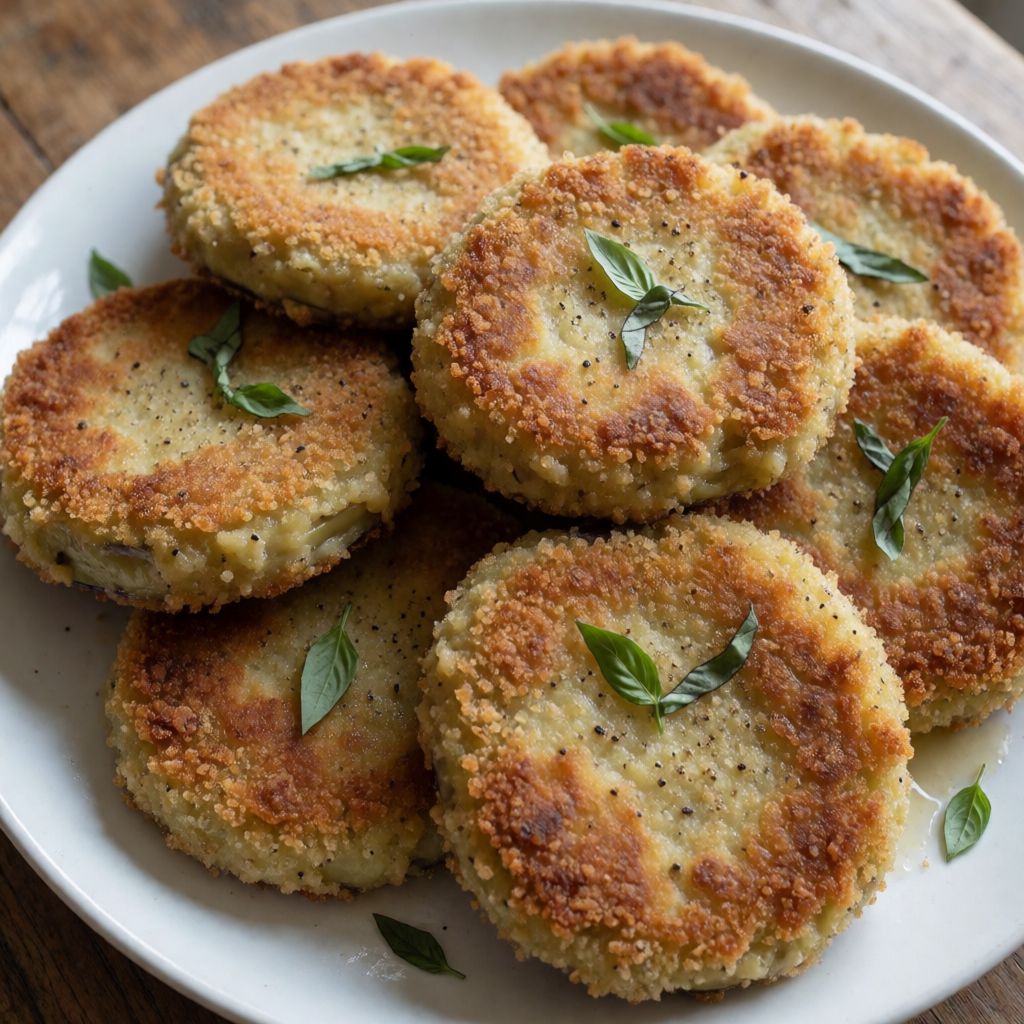
Vegan Aubergine Cutlets
A simple vegan side of boiled aubergine formed into crisp cutlets with breadcrumbs, garlic and basil.
Labels are worked out automatically from the ingredients and can be wrong. Check the packaging if it matters to you.
Ingredients
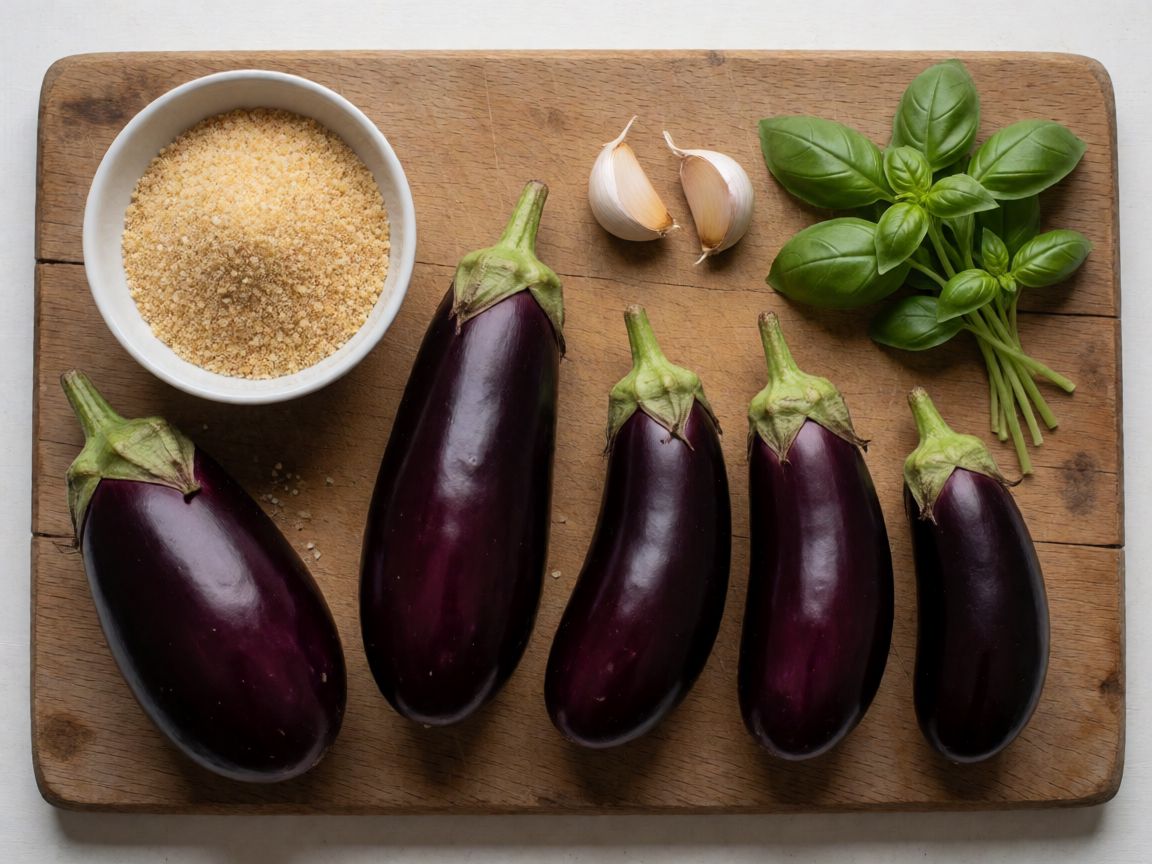
- 4-5 pcs Aubergine
- 350 g Dried breadcrumbs
- 2 clove Garlic
- 1 bunch Basil
- Salt to taste
- Black pepper to taste
- Vegetable oil for frying






Steps
Cut the aubergines into cubes, season with salt and leave to release excess liquid.
Boil the aubergines for at least 30 minutes, then leave to cool.
30 minPut the cooled aubergines in a bowl, add the breadcrumbs, black pepper, salt, garlic and basil with the oil.
Knead the mixture with damp hands until it holds a firm consistency, adding more breadcrumbs if needed.
Shape the mixture into elongated cutlets.
Heat the oil and fry the cutlets over high heat for about 5 minutes.
5 min
This is not a meat cutlet dressed up as vegetable — it's closer to a vegetable dumpling that's been shaped and crusted, because the aubergine is fully cooked *before* it ever sees the pan. Boiling comes first, frying comes last, and that order is the whole mechanism. Once you see the frying as crust-only, the five minutes on high heat stops being mysterious: there's nothing left to cook inside, so the oil's only job is to seal the breadcrumb shell before it has time to soak in and turn soggy.
What decides whether this works is moisture, start to finish. Salt the raw cubes and you pull water out before it can dilute everything downstream. Boil them and you finish softening the flesh into something moldable, almost a mash, with no oil involved — this is the diet trick behind the dish: aubergine normally drinks oil like a sponge, and boiling it instead of frying it from raw is how you avoid that. Cool it before mixing in the breadcrumbs, because hot vegetable plus dry crumb makes paste, not structure — you want crumb that still has some bite left to bind the mixture, not crumb that's dissolved.
Some say salting aubergine is there to "take the bitterness out." Not really — the bitter varieties were mostly bred out of supermarket aubergines decades ago. What the salt actually does here is draw liquid out so the vegetable isn't waterlogged by the time it meets the breadcrumbs; without that step your cutlets won't hold a shape, they'll just slump.
Aubergine: pick ones that feel heavy for their size and give just slightly under a thumb press — if they're soft all through or the skin looks wrinkled, they've lost water already and will turn to mush with no body left for the cutlets to hold onto. Four or five medium ones is roughly what it takes to feed four, since you lose bulk twice — once to salting, once to boiling.
Breadcrumbs, dried: their job isn't flavour, it's absorption. Cooked aubergine is wet and structureless; dry crumb pulls in that moisture and gives the mix something to grip. This is also why fresh breadcrumbs are the wrong tool here — they're already carrying water, so instead of soaking up the aubergine's moisture they'd just add their own. If you've no shop breadcrumbs, stale bread grated and left to dry out (a low oven or just the air for a day) does the same job — any crumb that's genuinely dry, not necessarily a brand.
Garlic and basil go in raw, after the aubergine has cooled — not before, not cooked. The whole point of adding them late is that their flavour is still sharp and hasn't been boiled away with the aubergine. If basil isn't to hand, parsley will do the freshening job, though the flavour note changes — basil has a sweetness parsley doesn't.
Oil: for the mix, and for frying, you want something with no smell of its own, so sunflower or a plain vegetable oil — nothing that'll compete with garlic and basil. For frying specifically, you need it properly hot before the cutlets go in, because a lukewarm pan is the real cause of greasy, heavy cutlets — not the amount of oil. If the shell doesn't seal fast, the cutlet soaks oil instead of forming a crust, and no amount of draining fixes that afterwards.
On a domestic hob, a wide frying pan with a bit of depth does the work of shallow frying fine — you don't need a deep pot of oil, just enough to come partway up the cutlets, and don't crowd the pan, or the oil cools and you're back to the soggy problem. Keep a plate lined with paper towel next to the hob for when they come out; that's your substitute lid-and-drain in one.
And give the cooling step its due time — this is the one place patience is doing real work. Mix breadcrumbs into hot aubergine because you're in a hurry, and you'll feel the difference the moment you try to shape it: it won't hold, it'll just spread on your palm.