
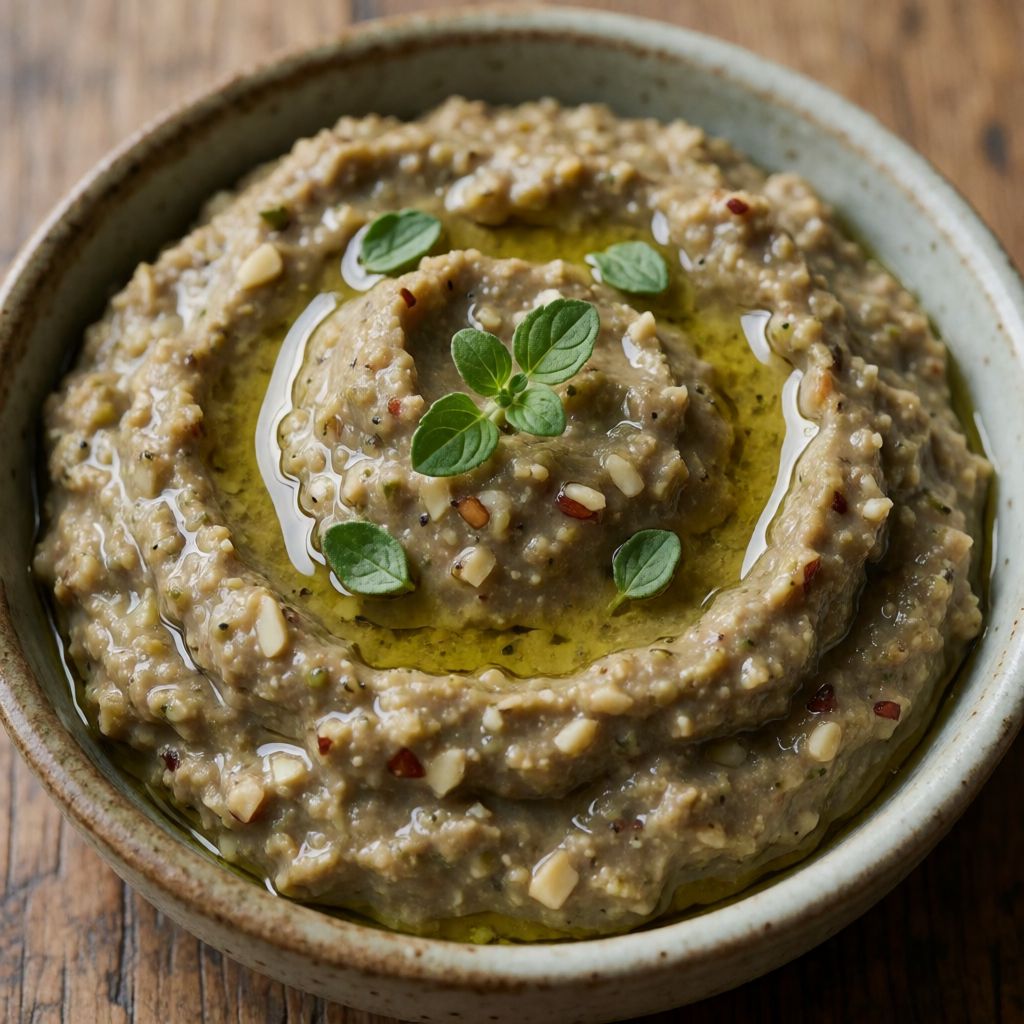
 AI photo
Aubergine Pesto
A smoky roasted aubergine pesto with almonds, marjoram and Parmesan.
Labels are worked out automatically from the ingredients and can be wrong. Check the packaging if it matters to you.
Ingredients






Steps
Wash and peel the aubergines, cut into small chunks and place on a baking tray lined with parchment paper.
Roast the aubergines in an oven preheated to 160°C.
35 minIn a blender, combine the almonds, marjoram and olive oil, and blend for a few seconds.
Add the roasted aubergines, Parmesan, salt and black pepper, and blend until smooth.
What you are making here is not a dip in the shop-bought sense — it is a concentrate. Three hundred grams of aubergine, roasted until most of its water has gone, pounded with fat and nuts until it turns into something thick enough to sit on a cracker without running off. The whole method stands or falls on that water. Aubergine flesh is a sponge — full of air pockets and juice — and if you blend it before the oven has driven that juice out, you get a thin, bitter-edged paste that weeps oil on the plate the next morning. Roasting first is not a flavour step you could skip and fry instead; it is a drying step disguised as a flavour step.
So the test for doneness is not the clock, it is the chunk itself. Press one with the back of a spoon on the tray: it should give way, collapse, and the cut edges should have gone from pale cream to a deep, almost caramel brown. If it still holds its shape like a boiled potato, it is not ready, however many minutes have passed — 160°C is a slow fire, meant to coax the water out as steam rather than scorch the skin, and ovens lie about their own temperature often enough that you should trust the aubergine, not the dial.
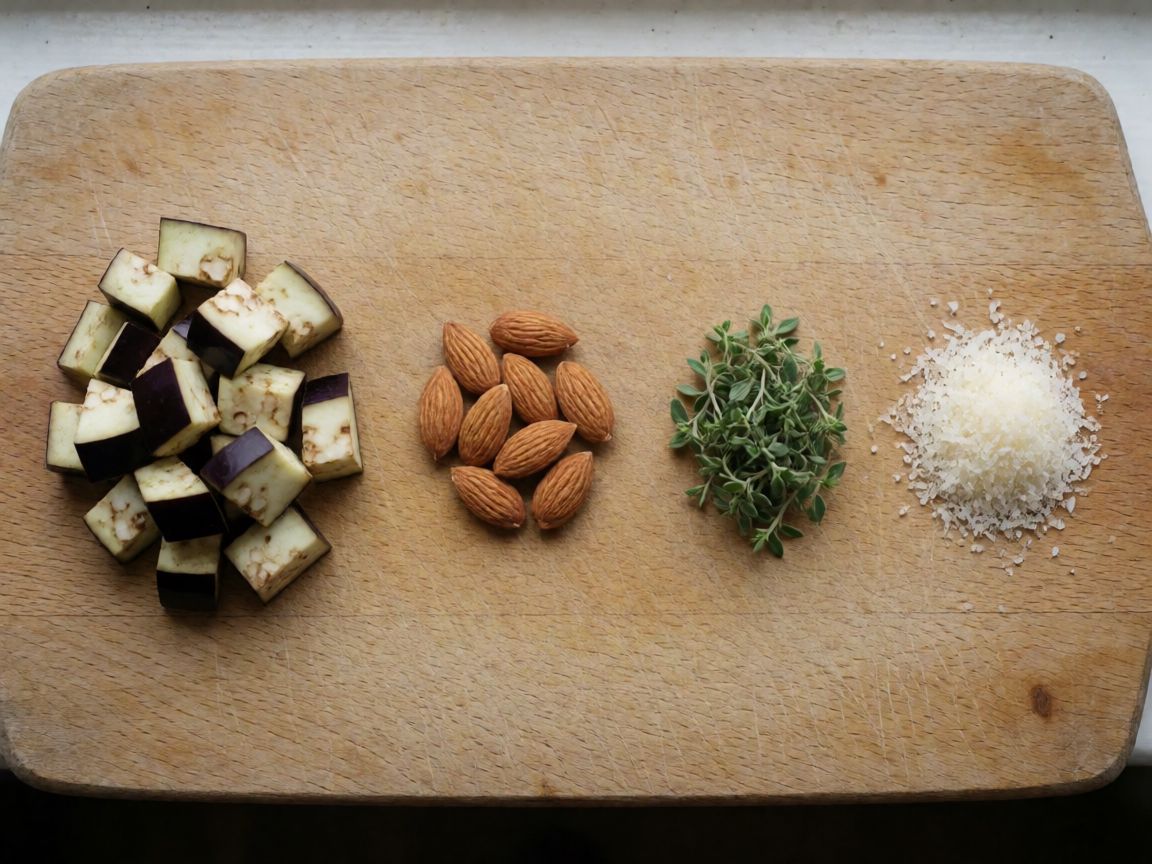
Aubergine: buy one that's heavy for its size with skin that's tight and glossy, not dull or wrinkled — wrinkled skin means the flesh underneath has already started losing water on the shelf, and you want that water lost in your oven, under your control, not lost randomly before you've even bought it. Peel it because the skin won't soften fully at this gentle a temperature and will sit in the pesto as tough little ribbons. Cut the chunks roughly even so they dry out at the same rate — one oversized piece in the middle of the tray stays wet while its neighbours are already brown, and a wet piece anywhere in the mix drags the whole pesto back toward thin and bitter. The parchment on the tray isn't fussiness: without it, the sugars that caramelise as the aubergine dries will glue themselves to bare metal and catch, turning bitter-black rather than just brown.
Almonds: here they do the job pine nuts do in a basil pesto — body, fat, a background crunch that survives blending as texture rather than disappearing into it. Almonds are tougher and more neutral than pine nuts, which suits aubergine's bigger, smokier flavour; pine nuts would be too delicate to notice under it. Any nut with a mild flavour and enough fat in it will work — cashews give a creamier result, walnuts a slightly bitter edge that can actually suit this dish, hazelnuts if you want something rounder. Avoid anything heavily roasted and salted already; you want to control the salt yourself, later.
Marjoram: dried herb needs fat to give up its aroma — most of what makes marjoram taste like marjoram is oil-soluble, sitting in those little dried leaves doing nothing until something fatty dissolves it out. That's why it goes into the blender with the olive oil and almonds first, not sprinkled on at the end — you are making an infused oil before you've even decided to call it that. If you've no marjoram, oregano is its close cousin and will stand in without drama; thyme is a different, more resinous thing and will change the dish rather than just substitute into it.
Olive oil: this isn't a neutral cooking fat here, it is a flavour in its own right and the only thing holding the whole paste together, so don't reach for whatever's cheapest. You want something with a fruity edge and no bitterness biting back at the end of a mouthful — an early-harvest, cold-pressed oil tastes of itself; a stale or overheated one tastes of nothing, or worse. If all you have is a flavourless oil — sunflower, say — the pesto will work mechanically but taste one-dimensional; that's the trade you're making, not a crime.
Parmesan: goes in last, after blending, unheated, because its aroma is just as fragile as the marjoram's and heat would flatten it the same way. It also carries most of the salt in this dish, which is why the pinch of salt at the end is a taste-and-adjust pinch, not a fixed measure — cheeses vary in how salty they are, and you'd be seasoning twice if you salted blind before tasting. Grana Padano or a sharper pecorino will both stand in — pecorino brings more bite, which can be good against the sweetness of the roasted aubergine, or too much, depending on your taste.
Blending in two stages — nuts, herb and oil first, aubergine and cheese after — isn't an arbitrary order. It builds a small emulsion first, so the fat has something to cling to before the wet, broken-down aubergine goes in; add everything at once and the oil has nowhere to go but to the top, separating out rather than binding in. And give the whole thing the one ingredient that isn't on the list: patience. Thirty-five minutes at a gentle heat is the oven doing the work that a hot pan and ten minutes would rush and ruin — bitterness in aubergine, more often than not, is just unfinished cooking wearing a different name.