
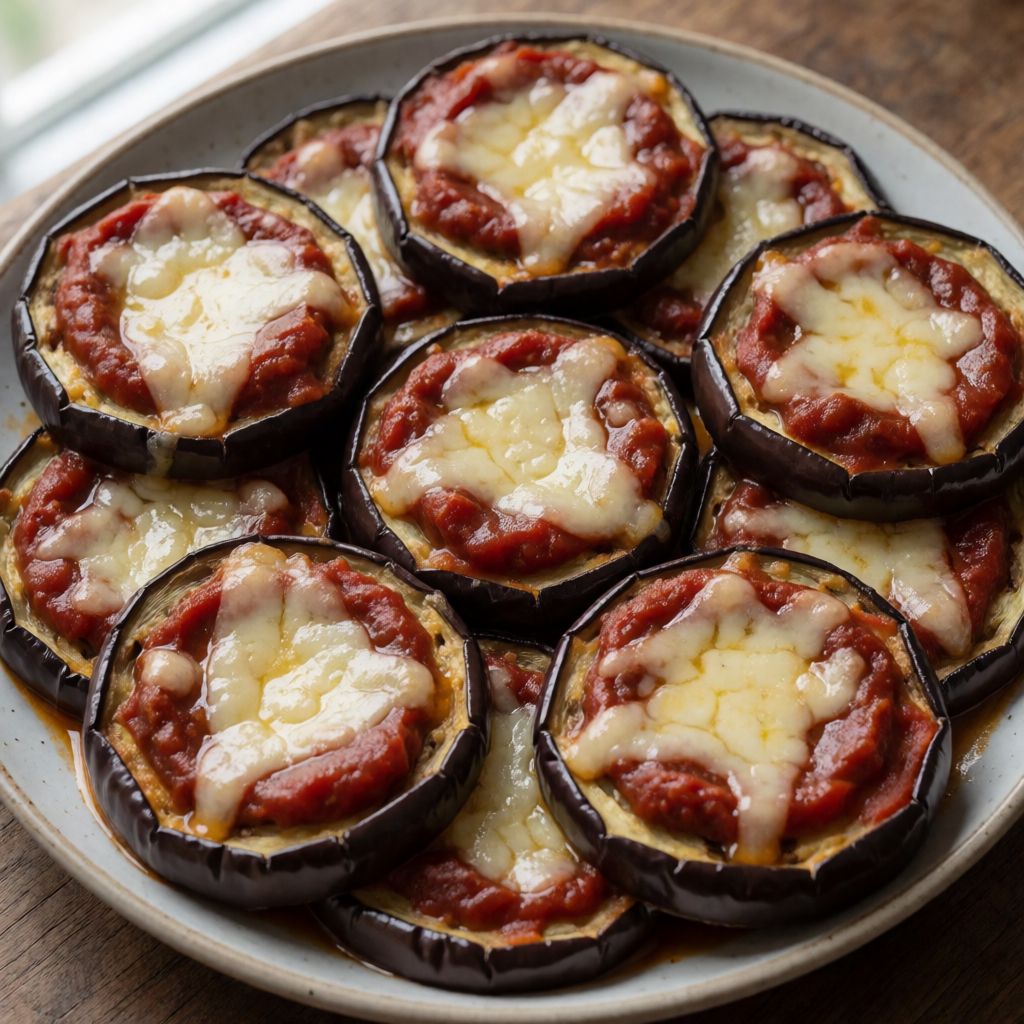
 AI photo
Baked Aubergine Pizzette with Anchovies and Fontina
Little aubergine pizzas topped with tomato, fontina, anchovy and pecorino, baked until bubbling.
Labels are worked out automatically from the ingredients and can be wrong. Check the packaging if it matters to you.
Ingredients






Steps
Wash the aubergines thoroughly and cut into slices about 1.5 cm thick.
Lay the slices in a colander, sprinkle with coarse salt and leave to draw out their bitter liquid.
Rinse the slices and pat them dry with paper towel.
Arrange the slices on a baking tray lined with parchment, score the surface lightly, drizzle with olive oil and season with a little salt.
Bake in an oven preheated to 200°C for at least 20 minutes.
20 minWash the tomatoes, peel them and cut into small cubes.
Cut the fontina into cubes.
On the baked aubergine slices, layer the diced tomato, add the fontina cubes and one anchovy per slice.
Sprinkle with pecorino and return to the oven, preheated to 200°C, for a few minutes until the cheese melts.
Garnish with basil leaves and serve hot.
This is aubergine playing the role of a pizza base — a round of flesh standing in for dough, because it can hold toppings and because it has the right structure once it's been treated properly. Six slices, six little "pizzas," each one carrying tomato, fontina, an anchovy, a dusting of pecorino. Antipasti, meant to be eaten with your hands or a fork while the real courses are still coming.
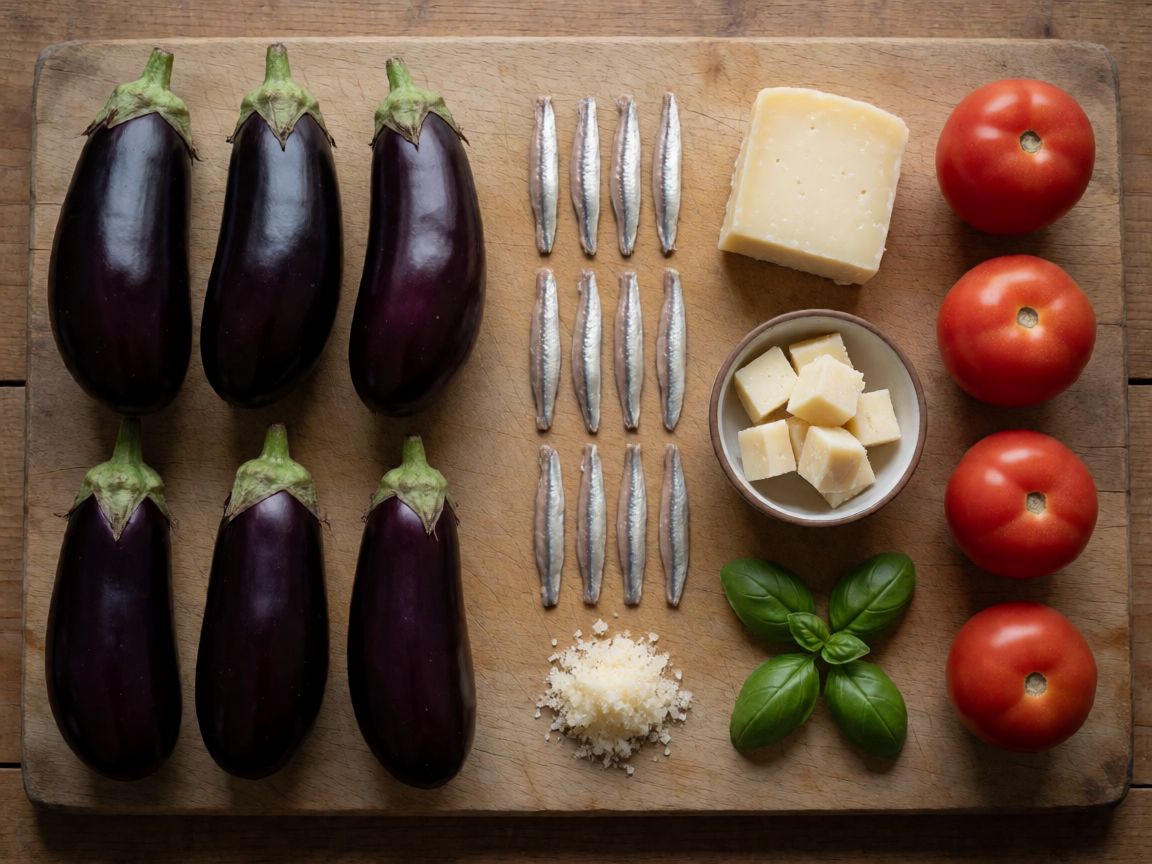
What decides whether this works is almost entirely upstream of the oven. Aubergine is a sponge full of water and a bitter compound, and if you skip the salting step you get a slice that weeps grey liquid onto your tray, turns the base soggy, and tastes faintly of soap. Some say the bitterness in modern aubergines is gone, bred out — no, mostly true for big smooth supermarket ones, but the salting still matters: it's not really about bitterness anymore so much as pulling water out of the cells so the flesh goes dense and meaty instead of mushy when it hits 200°C. Salt it, rinse it, dry it properly. That's not a ritual, that's physics with a time cost.
Aubergine is the one ingredient here with no real substitute, because the whole dish depends on its specific trick: raw, it's bitter and wet; salted and roasted, it turns sweet, dense, and almost meaty, which is exactly the texture you need to stand in for a base. Buy ones that feel heavy for their size and have tight, glossy skin — a light, spongy aubergine has already started drying out inside and will give you ragged, collapsing slices rather than firm rounds.
Anchovies are doing the seasoning job that salt alone can't do — they bring that long, savoury, slightly fishy depth that cuts through the richness of the cheese. If you genuinely dislike anchovies, a few capers or a scrape of good olive paste will give you a comparable hit of salt-and-umami, though you lose the particular character of the dish; don't swap them for something sweet, it unbalances the whole plate.
Tomato here is a garnish, not a sauce, so peel and dice it rather than crushing it — you want distinct little cubes that stay where you put them and don't turn the melted cheese into a puddle. Any ripe, firm tomato works; out of season, a drained tin of good plum tomatoes, patted dry and diced, will behave better than a pale, watery supermarket one in January.
Fontina is chosen for how it melts — smooth, slightly nutty, stretchy without turning rubbery or oily under heat. If you can't get it, reach for something in the same family: a young Gruyère or an Italian-style mild semi-hard cheese with good melt. Avoid anything that separates into pools of fat under heat, like a very mature cheddar, because then your second bake becomes about mopping up grease rather than watching cheese go glossy.
Pecorino at the end is the finishing crust, not a main flavour — it's sharp, salty, and browns nicely, which is why it goes on top rather than underneath with the fontina. Parmesan will do the same job if that's what's in the fridge, just expect a slightly milder edge.
Olive oil should have no flavour loud enough to fight the anchovy and cheese — a light, everyday olive oil, not your good finishing bottle. Any neutral oil with a decent smoke point will get the aubergine through the first bake, but olive oil is doing double duty here, helping the surface colour and crisp slightly, which a flavourless vegetable oil won't manage as well.
Patience is the real ingredient most people skip, and it's the one that decides the dish more than any swap on this list — the salting and draining takes time you can't speed up by turning the oven higher, and rushing it is exactly how you end up with a soggy, bitter base no amount of fontina can rescue.