
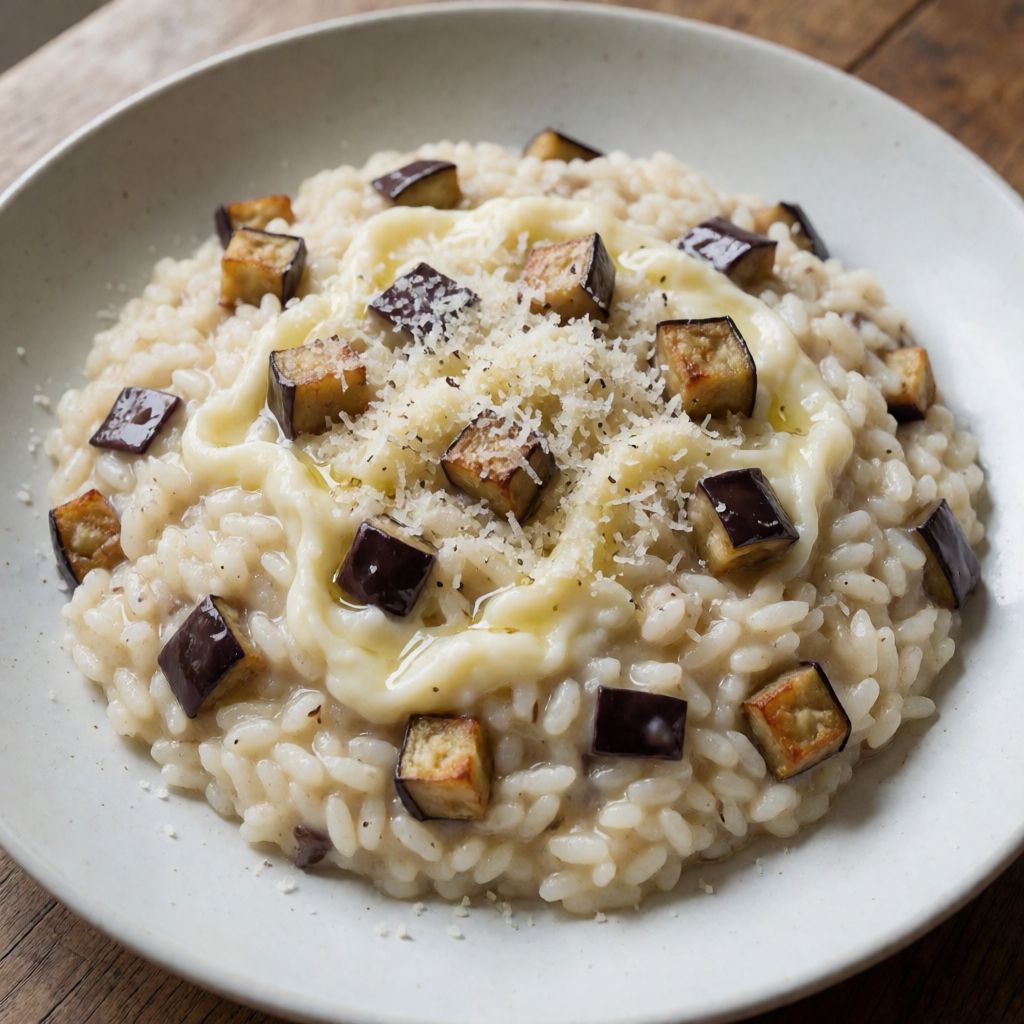
 AI photo
Risotto with Aubergine and Stracchino
A creamy risotto with aubergine, finished with soft stracchino cheese.
Labels are worked out automatically from the ingredients and can be wrong. Check the packaging if it matters to you.
Ingredients
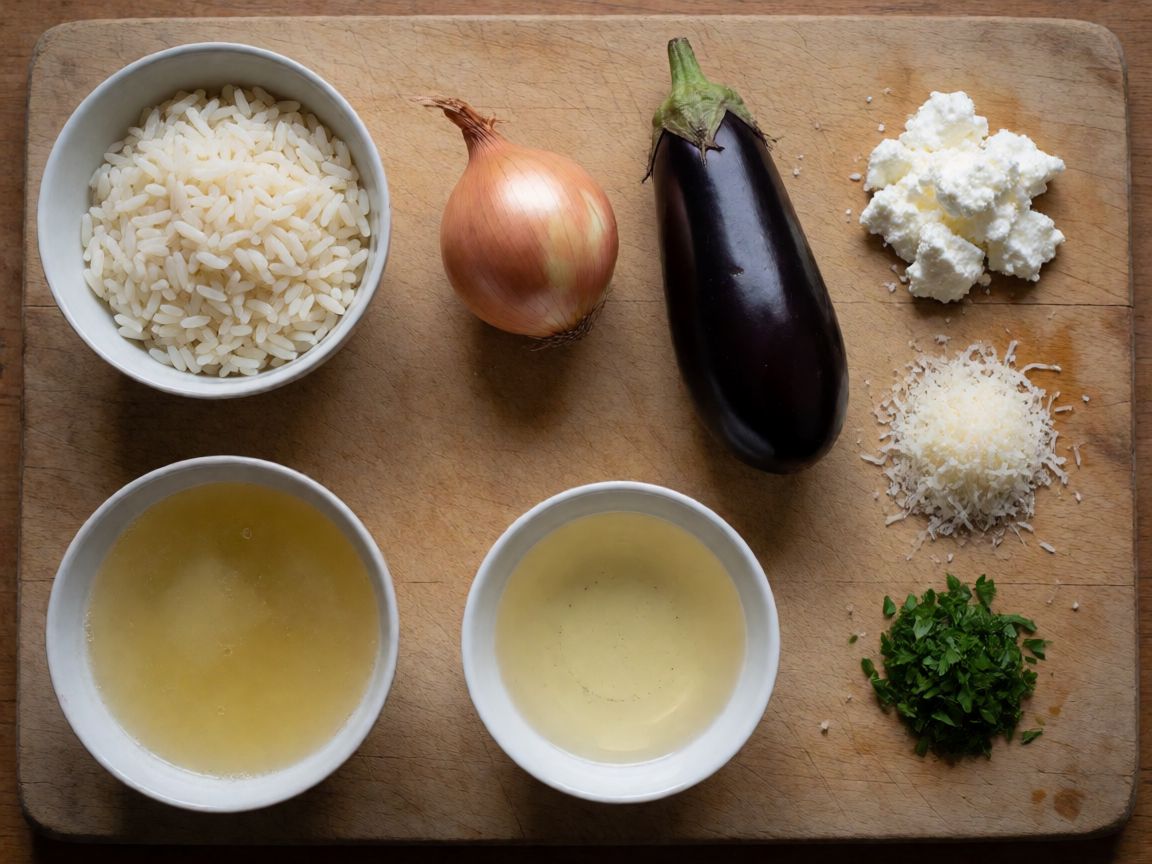
- 350 g Carnaroli risotto rice
- 1 pcs Onion
- 1 pcs Aubergine
- 80 g Stracchino cheese
- 1 tbsp Parmesan
- 2 tbsp Olive oil
- 1 l Vegetable stock
- 120 ml White wine
- 1 tbsp Parsley
- Salt to taste
- Black pepper to taste











Steps
Heat 2 tbsp of olive oil in a saucepan and fry the onion.
Add the aubergine, diced small, and cook for a few minutes, adding vegetable stock as needed.
Add the rice and toast it, stirring, for a few minutes until lightly browned.
Pour in the white wine and let it evaporate completely.
Finish cooking the risotto, gradually adding vegetable stock.
Season with salt and pepper, then stir in the stracchino, 1 tbsp of Parmesan and the parsley.
Serve immediately.
Risotto is not a rice dish that happens to be creamy — the creaminess is a chemical event you're managing with your spoon. Carnaroli grains are coated in starch; as you stir and add stock bit by bit, that starch leaches out and binds with the liquid into a sauce that clings to every grain. This is why risotto needs almost constant attention near the end and can't be left to simmer like a pot of plain rice. The aubergine and stracchino version is a good one for people who think risotto is only a cream-and-stock exercise: the aubergine breaks down into something almost jammy, and the stracchino — a soft, spreadable, barely-aged cow's cheese — melts in at the end instead of being cooked, so it stays silky rather than turning rubbery.
What decides whether this works is toasting the rice properly before any liquid touches it, and adding stock in small amounts rather than drowning the pan. Toasting (step 3) seals the outside of each grain just enough that it releases its starch slowly and in a controlled way over the next twenty minutes, instead of dumping it all out in the first five and turning into porridge. Some say you need a kazan-shaped wok or a special risotto pan — you don't. A wide, heavy-based pan, the kind you'd use for a stir-fry or a big fry-up, works exactly the same, because what matters is surface area for the liquid to reduce against, not the shape of the vessel.
Carnaroli is specified for a reason, not snobbery: it's a rice variety bred with a high amylose content, meaning it holds its shape and bite even while shedding starch into the sauce around it — it's genuinely harder to overcook into mush than ordinary long-grain rice. Arborio is the usual stand-in and will do the job, though it's a touch more forgiving-to-mushy. If you've only got basic pudding rice or long-grain in the cupboard, don't attempt risotto with it — the starch balance is wrong and you'll get either soup or glue, not that clinging sauce.
The stock matters more than people admit. "Vegetable stock" sounds like background seasoning, but it's actually the second ingredient by volume after rice, and it's what the rice is cooking in from the toasting stage onward. Keep it hot on a separate burner if your hob allows — cold stock added to hot rice stalls the cooking and stretches your thirty minutes considerably, which is a common reason home risottos take forty-five minutes and still taste undercooked in the centre. A stock cube dissolved properly in water is a legitimate substitute; what it needs is saltiness and some savoury depth, not purity.
The onion is fried first in oil with no smell of its own — olive oil here, but any neutral oil works if that's what you have, because its job is heat transfer and a little richness, not flavour. This is also why olive oil rather than butter at this stage: butter burns at a lower point and would catch before the onion softens, which is a real risk on a domestic hob where your "medium" burner might run hotter than a professional stove's.
Stracchino won't be on every UK supermarket shelf. It's a young, mild, very soft Italian cheese — think somewhere between mascarpone and a very mild Brie with the rind cut off, melted into the dish rather than grated. If you can't find it, a soft, rindless, mild cheese like mascarpone, or a mild soft goat's cheese loosened with a splash of cream, will approximate the texture; what you're matching is the melt, not a specific taste. It goes in off the heat, at the very end, alongside the Parmesan — stirred in, not cooked, because real cooking would split it and leave you with grease and curds instead of gloss. This is the same logic as finishing a carbonara with egg off the flame: the dish's final creaminess depends on protein that's been warmed, not boiled.
The white wine's job in step 4 is acidity, cutting through the fat and sweetness of the aubergine and cheese — it needs to fully evaporate before you move on, because what you're cooking off is the raw alcohol smell, leaving the acid and flavour behind. If you skip the wine, you lose that sharpness and the dish tastes flatter and heavier; a squeeze of lemon added near the end is the closest fix, though it's not the same thing.
Patience is the real sixth ingredient. You cannot rush the stirring-and-adding rhythm without paying for it in texture — add too much stock too fast and you've made rice soup; walk away too long and the bottom catches and the top stays raw. Stand by the pan. It's thirty minutes of your evening, and the dish tells you itself when it's ready — you don't need a timer for that part, only for knowing roughly when to start checking.