
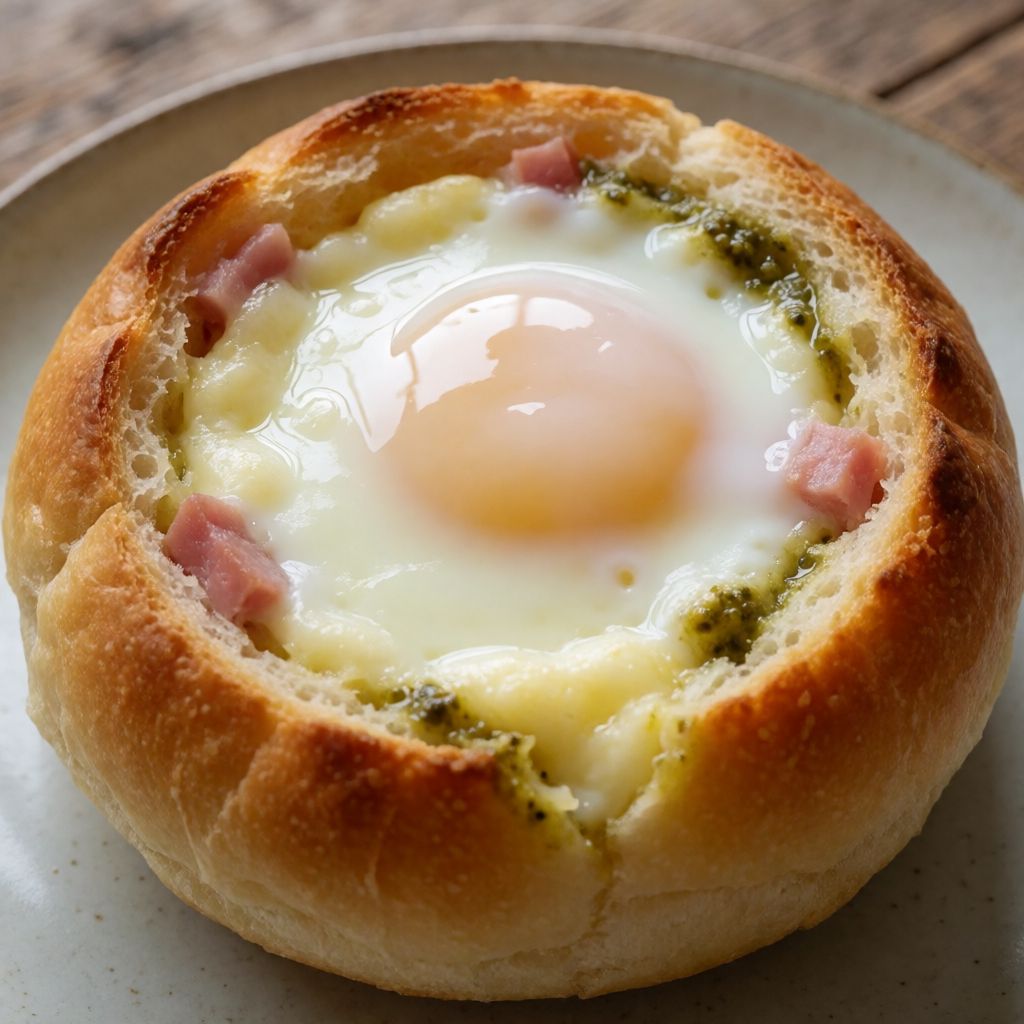
 AI photo
Eggs with Cheese in Bread Baskets
A quick bake of crisped bread baskets filled with ham, cheese and a soft baked egg.
Labels are worked out automatically from the ingredients and can be wrong. Check the packaging if it matters to you.
Ingredients
- 4 pcs Bread thin slices
- 1 tbsp Butter
- 2 tbsp Cream Cheese
- 2 tsp Pesto
- 2 tsp Dijon Mustard
- 4 pcs Ham slices
- 4 pcs Eggs






Steps
Roll out the bread as thinly as possible with a rolling pin, then spread one side with a little butter and the other with cream cheese, pesto and Dijon mustard.
Press each slice into a muffin tin, buttered side out, shaping it into a small basket with room inside for the filling.
Place a slice of ham in each bread basket, then crack one egg into each.
Bake in a preheated oven at 180°C (fan/convection setting) for about 15 minutes, until the egg white is set but the yolk stays soft.
15 min
What was changed
Oven temperature rounded to to match common oven dial settings.
This isn't toast with an egg plonked on it — it's an egg baked right inside the bread, with the bread doing the job a ramekin usually does. You roll the slice thin enough to bend without snapping, press it into a tin, and it turns into a little cup. What decides whether this works is two things: whether the bread seals round the egg without a gap for the white to escape through, and whether you pull it out while the yolk is still a soft centre, not a boiled yellow ball.
Some say you should toast the bread first, to get it crisp. No — because a second toasting before baking just turns bread into a cracker, and crackers split exactly at the fold you need to hold its shape. Raw thin bread, still a bit soft and slick with butter, flexes into the corners of the tin and crisps from the heat of the metal and the egg sitting in it. You don't need to crisp it twice — you need it pliable once, at the right moment.
The tin is standing in for a dish you don't have — think of it the way you'd think of a Yorkshire pudding tin, because that's exactly the equipment doing the work here, just with bread instead of batter. Each cup is its own sealed little oven within the oven, which is why a fan setting matters more than usual: it moves hot air evenly round every cup instead of favouring the ones nearer the door.
Bread is the one ingredient where the state it's in matters more than the kind. You want something that bends, not something that's either too fresh (squishy, it tears as you roll) or too dry (stale, it cracks at the fold). Ordinary supermarket white sandwich bread, a day or two old but not stiff, is exactly built for this — it's soft enough to roll, structured enough to hold a cup shape once pressed in. Open-crumb sourdough or anything with big holes is the wrong choice here: the holes are gaps, and gaps are where the egg white finds its way out and burns onto the tin instead of staying inside the basket.
Butter goes on the side that touches the metal, and that's not really about flavour — it's about contact. Fat between hot metal and bread is what browns and crisps that outer face; without it the bread just steams against the tin and stays pale and a bit limp. Same reason you butter any dish before you line it with something you want to crisp.
The cream cheese, pesto and mustard on the inside face are doing three jobs at once: they glue the bread to itself so the folded shape holds, they bring flavour that plain egg and ham otherwise lack, and — this is the one people miss — they form a thin fat barrier between the raw egg white and the bread, which slows the bread from going soggy the instant the egg hits it. The criterion for substitution is simple: you need something soft and spreadable with no sharp smell of its own to carry the cheese (any mild fresh cheese works, mascarpone, a soft curd cheese), something oily and herby with a bit of bite to carry the pesto (a good glug of olive oil beaten with chopped herbs does the same job), and something sharp that cuts fat to carry the mustard — wholegrain mustard works, horseradish sauce works too if that's what's in the fridge.
The ham sits between the cheese layer and the egg for a reason beyond taste: it's a second insulator. Egg white poured straight onto bread, even buttered bread, still wets it faster than you'd like. A layer of ham slows that contact and gives the white something firmer to set against, so the bottom of the basket stays bread rather than turning into paste. If you leave the ham out for a vegetarian version, replace it with something that does the same insulating job dry — wilted spinach squeezed properly dry, not straight from the bag, because wet spinach defeats the whole point.
Freshness of the egg matters more here than in most recipes, because the white has to hold its shape in a cup rather than spread flat in a pan. A fresh egg has a tight, clingy white that stays put; an older egg has a thin, watery white that runs and finds every seam in the bread. If your eggs have been sitting a while, that's exactly where a leak starts — not from a mistake in rolling, but from the egg itself being past its best for this particular trick.
And a word on patience, because there isn't much room for it in fifteen minutes, but it still applies: roll the bread slowly enough that it doesn't tear, press it into the tin slowly enough that it doesn't crack at the corners. The actual baking takes care of itself once that part's right — a dish that feeds four, one egg each, because each basket is its own sealed portion and there's no stretching it further than that.