
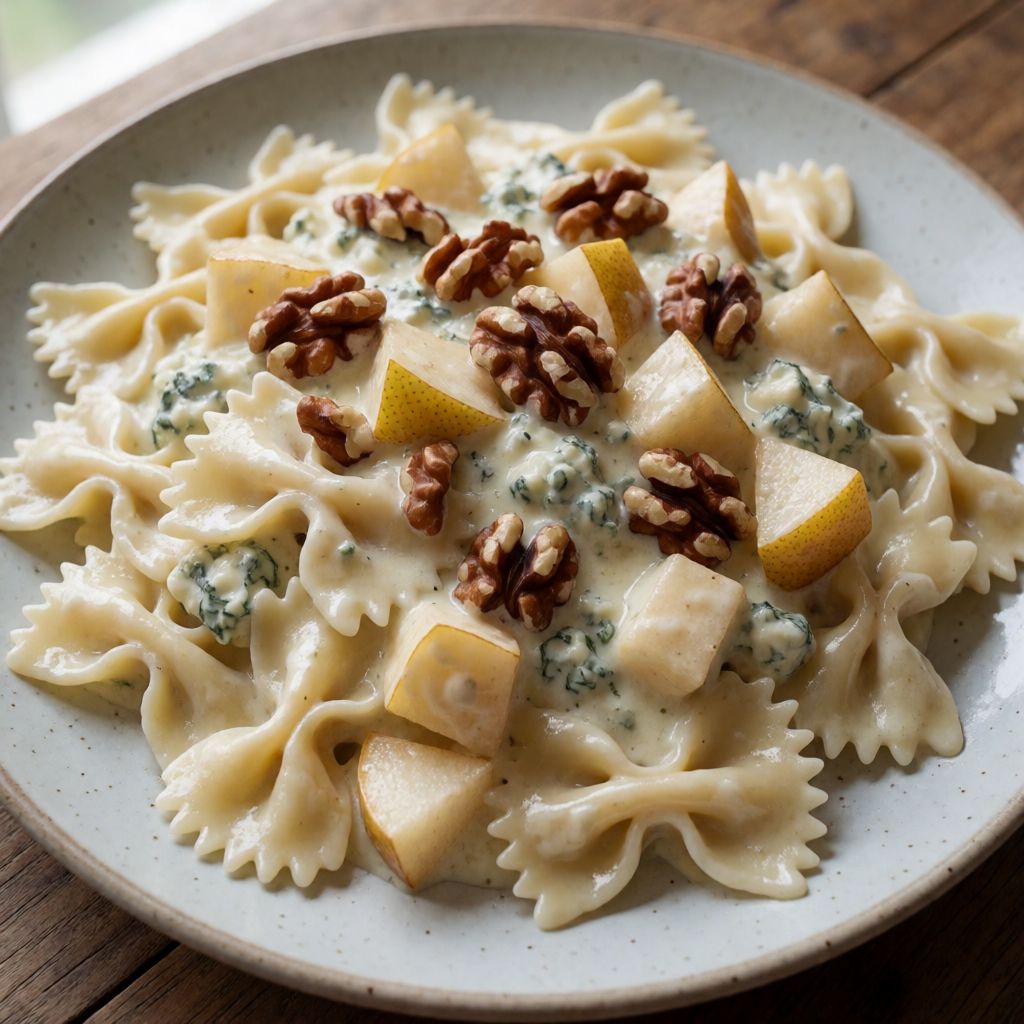
 AI photo
Farfalle with Pear, Gorgonzola and Mascarpone
A creamy pasta dish combining farfalle with pear, gorgonzola and mascarpone.
Labels are worked out automatically from the ingredients and can be wrong. Check the packaging if it matters to you.
Ingredients
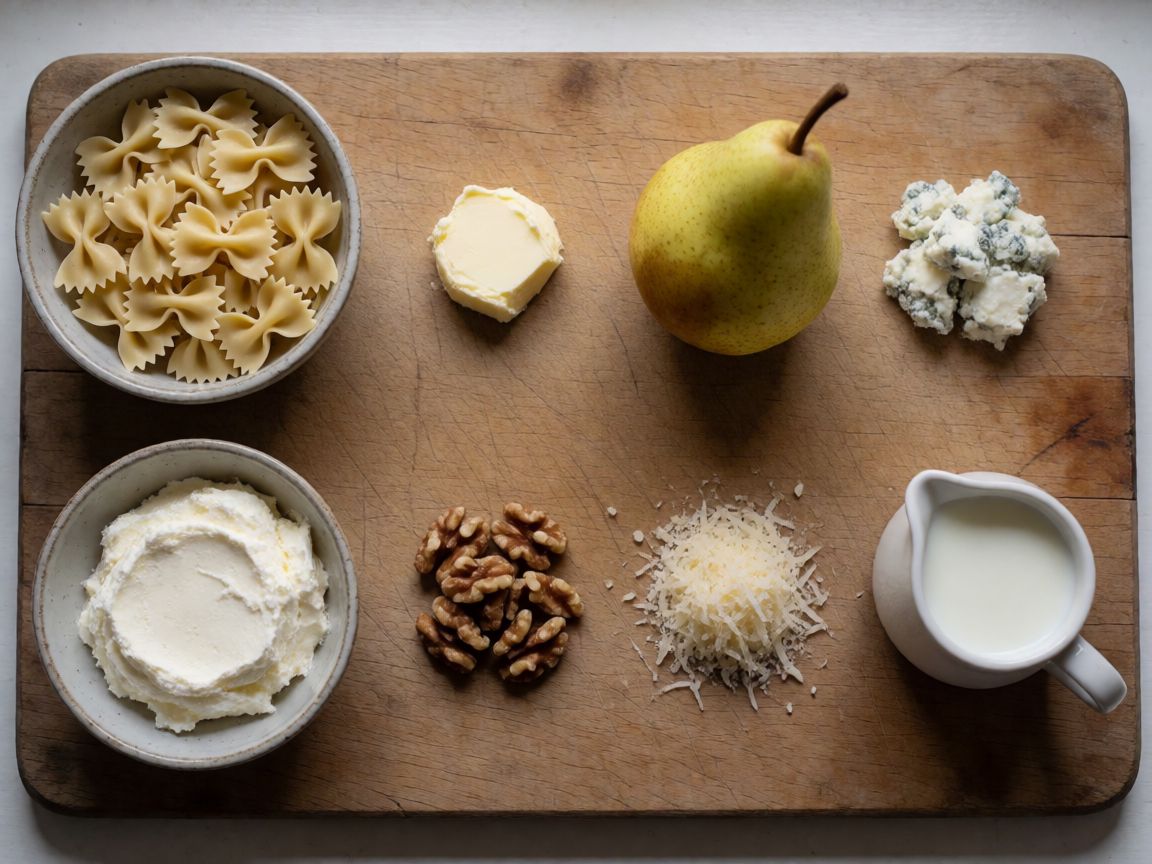
- 400 g Farfalle
- 30 g Butter
- 1 pcs Pear
- 150 g Gorgonzola Dolce
- 100 g Mascarpone
- 40 g Walnuts
- Parmesan to taste
- Salt to taste
- White Pepper to taste
- Milk a splash






Steps
Cook the farfalle in salted water. At the same time, melt the butter in a frying pan and add the diced pear.
8 minWhen the pear has softened, add the gorgonzola dolce and milk, and melt over low heat.
5 minDrain the pasta al dente and tip it into the pan together with the mascarpone.
2 minGrind in the white pepper and mix thoroughly.
1 minToss over a low heat for a couple of minutes and serve, sprinkled with Parmesan and walnuts.
4 min
This is a sauce built twice: once in fat, when butter melts around the pear, and once in cheese, when gorgonzola loosens into milk. What decides whether it works isn't the shopping list — it's whether you let each stage finish before pushing into the next. Patience here isn't a virtue, it's an ingredient you can taste the absence of.
Pear and blue cheese is an old pairing, sweetness against salt, and it needs no fixing. What it does need is gentle heat at two separate moments: when the pear softens in the butter, and when the cheese melts into the milk. Rush either one and you get a different dish — hard fruit chunks sitting in a greasy puddle, or a sauce split into fat and whey, grainy instead of glossy.
Some say a blue cheese pasta needs cream to carry it. No — cream just dilutes the gorgonzola's bite and asks the sauce to do more work than it should. The fat here comes from the cheese itself. Milk only loosens it, and the mascarpone goes in last, barely warmed, to finish the job without ever being allowed to boil.
Doneness is mostly about the pear: it should bend into the butter and go translucent at the edges, not collapse into mush. That's your cue to move on — not a clock.
Farfalle holds sauce in its folds — the pleat at the centre traps a bit of cheese that a flat ribbon would shed straight off the plate. Any short pasta with a fold or a ridge does the same job: penne rigate, conchiglie, whatever sits in the cupboard, as long as it has somewhere for the sauce to catch.
Butter should be unsalted — gorgonzola and parmesan already bring plenty of salt, and you want to judge that at the end, once the whole dish is in front of you. Melt it just enough to coat the pear, not to brown it. Browned butter fights the pear's sweetness instead of carrying it, and that's the one heat mistake that's hard to undo later.
Choose a pear that's ripe but still pushes back when you press it. One that's gone soft all the way through turns to mush the moment it meets heat, and you'll end up stirring jam into your pasta instead of folding in diced fruit. No decent pear about? A firm apple does a similar job, though you lose the honeyed edge pear brings.
Gorgonzola dolce is the young, short-aged version of this cheese — less time under the blue mould means less ammonia, more cream, and a sauce that melts smooth instead of turning gritty. The aged piccante version is sharper and far less forgiving here: its structure has already broken down with age, so under heat it tends to split into fat and curd rather than flow. If dolce isn't on the shelf, a young Cambozola or a mild Danish blue, cut small, behaves the same way in the pan.
The milk's only job is giving the cheese something to stretch into. Without it, gorgonzola alone turns oily rather than saucy once it's hot, because there isn't enough liquid around to keep the fat in suspension. Judge the splash by eye — enough that the cheese loosens into something pourable, not enough to turn it into soup.
Mascarpone goes in with the pasta, off the fiercest heat, because it's barely more than thickened cream. Push it hard and it weeps fat instead of giving you the silkiness you added it for — treat it as a finishing enrichment, not something to cook. Walnuts and parmesan aren't decoration either: walnuts cut through the cheese's richness with a dry, slightly bitter edge, which is the actual reason this pairing turns up again and again, not fashion. Toast them if you want that edge sharper; raw, they're softer and sweeter. White pepper rather than black keeps the fleck of spice invisible in a pale sauce — black pepper works just as well if you don't mind seeing it land.