
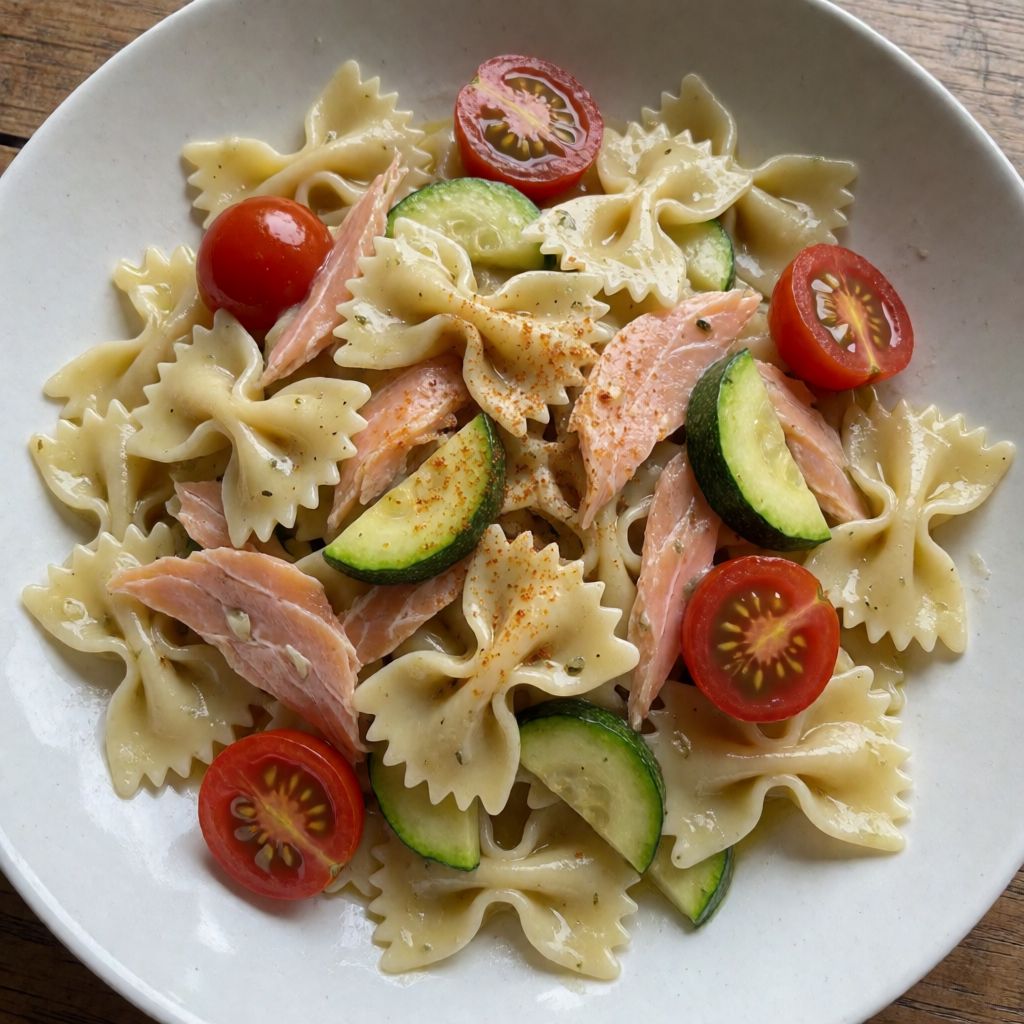
 AI photo
Farfalle with Smoked Salmon, Datterini Tomatoes and Courgette
A quick Italian-style pasta with farfalle, smoked salmon, courgette and sweet datterini tomatoes.
Labels are worked out automatically from the ingredients and can be wrong. Check the packaging if it matters to you.
Ingredients
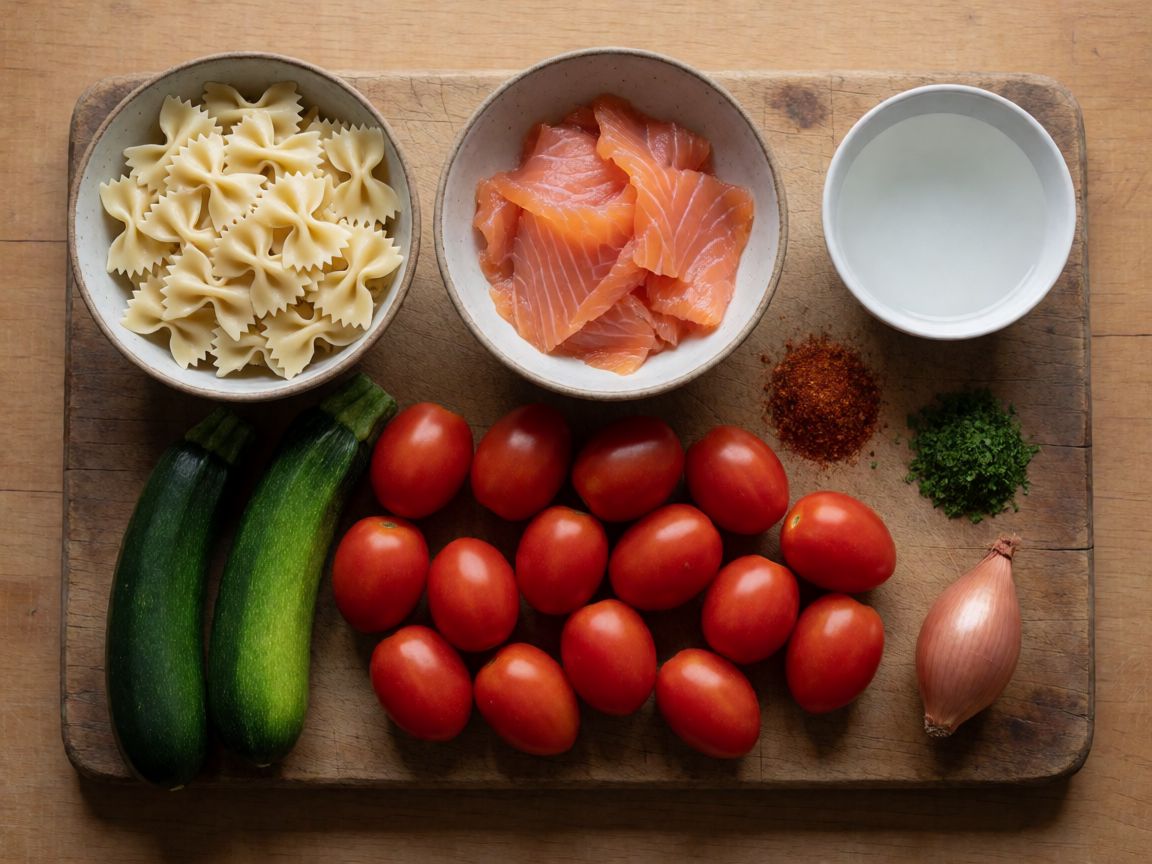
- 400 g Farfalle
- 200 g Smoked Salmon
- Olive Oil to taste
- 2 pcs Courgette
- 15 pcs Datterini Tomatoes
- Chilli Powder to taste
- 1 pcs Vodka one shot
- Salt to taste
- Parsley to taste
- 1 pcs Shallot







Steps
In a pan, sauté the shallot in olive oil, add the courgette and cook over low heat, adding warm water as needed.
5 minAdd the smoked salmon, pour in the vodka mixed with the chilli powder; let the alcohol evaporate.
5 minAdd the datterini tomatoes, season with salt and stir in the pre-cooked pasta.
10 minSauté for a few more minutes, adding more water if needed, and serve sprinkled with chopped parsley.
5 min
This is a one-pan dish built backwards from how pasta sauces usually work in Italy: here the pasta is parboiled first, then finishes cooking inside the sauce, soaking up what's in the pan instead of having sauce poured over it at the table. The whole mechanism turns on the courgette. You don't fry it — you sweat it low, topping up with warm water whenever the pan looks dry, so it steams in its own moisture rather than scorching. That's the difference between a courgette that collapses to baby-food mush and one that softens but still holds its shape, bending under a knife rather than splitting apart.
Some say courgette has to go in hot and fast to 'seal' it and keep it firm — no. Fast heat on a wet vegetable just chars the outside while the inside stays raw and squeaky; courgette is mostly water, and water doesn't sear, it steams whether you want it to or not. Low heat with a little added water is just being honest about what the vegetable is made of.
Pasta first, since it sets the clock for everything else. 'Pre-cooked' here means parboiled — a minute or two short of what you'd call done if you were plating it plain — because it finishes in the pan, drinking up the courgette water and salmon fat. This is the same logic as risotto: starch released at the surface of the pasta thickens whatever liquid it's sitting in, which is why the dish needs no flour, no cream, nothing to bind it. Farfalle holds its shape and its ridges catch small bits of tomato and herb; any short, textured shape with some surface area — penne, fusilli — will do the same job. A smooth, flat shape like linguine won't catch much and will just slide past the sauce.
Shallot, not onion, because shallot is sweeter and less sharp raw, so a short sauté in low heat is enough to take the edge off without needing to cook it down for ten minutes the way you would a strong onion. If you only have onion, use less of it and give it longer over gentler heat before the courgette goes in — you're compensating for sharpness with time, not heat.
Olive oil 'to taste' is really a question of what you want the oil to add. The criterion is: any oil with no flavour of its own strong enough to fight the smoke and salt already in the dish — a mild, fruity olive oil works, a heavily peppery one doesn't, and a flavourless vegetable oil is a fair stand-in if that's what's in the cupboard.
Smoked salmon is worth a word on why it's in an Italian-format pasta at all. Smoking fish started as preservation, before anyone had a fridge — salt, smoke and time, not flavour for its own sake. In Britain it's a deli staple, cheap and everywhere, which is exactly why it ends up thrown into a weeknight pasta rather than kept for a special occasion the way it might be treated elsewhere. Buy it cold-smoked rather than hot-smoked if you can — hot-smoked is already closer to cooked through and firmer, cold-smoked is the silkier, more fragile texture this dish is built to protect by not overcooking.
Datterini tomatoes are chosen for being small, firm-skinned and sweet with little watery flesh — if you can't find them, ordinary cherry tomatoes do the job, just expect slightly more water and slightly less sweetness, so taste and adjust salt accordingly; don't reach for big beef tomatoes, their flesh is too watery and will turn the sauce thin and sour rather than concentrated.
Vodka's only job is to be neutral ethanol with nothing of its own to say — if you don't have it, a dry white wine will deglaze the pan the same way, but it brings its own acidity and fruit, so the dish will taste a little different, not worse, just a different dish. Chilli powder, like salt, is a 'to taste' ingredient because chilli strength varies wildly batch to batch — start with less than you think you need, you can always add more in the last minute, you can't take it out. And the parsley at the end isn't decoration: it's the one raw, cold, green thing against a pan full of smoke, fat and soft vegetable, there to wake the dish back up before it goes to the table. Chop it at the last minute — parsley bruised too early smells of grass, not of itself.