
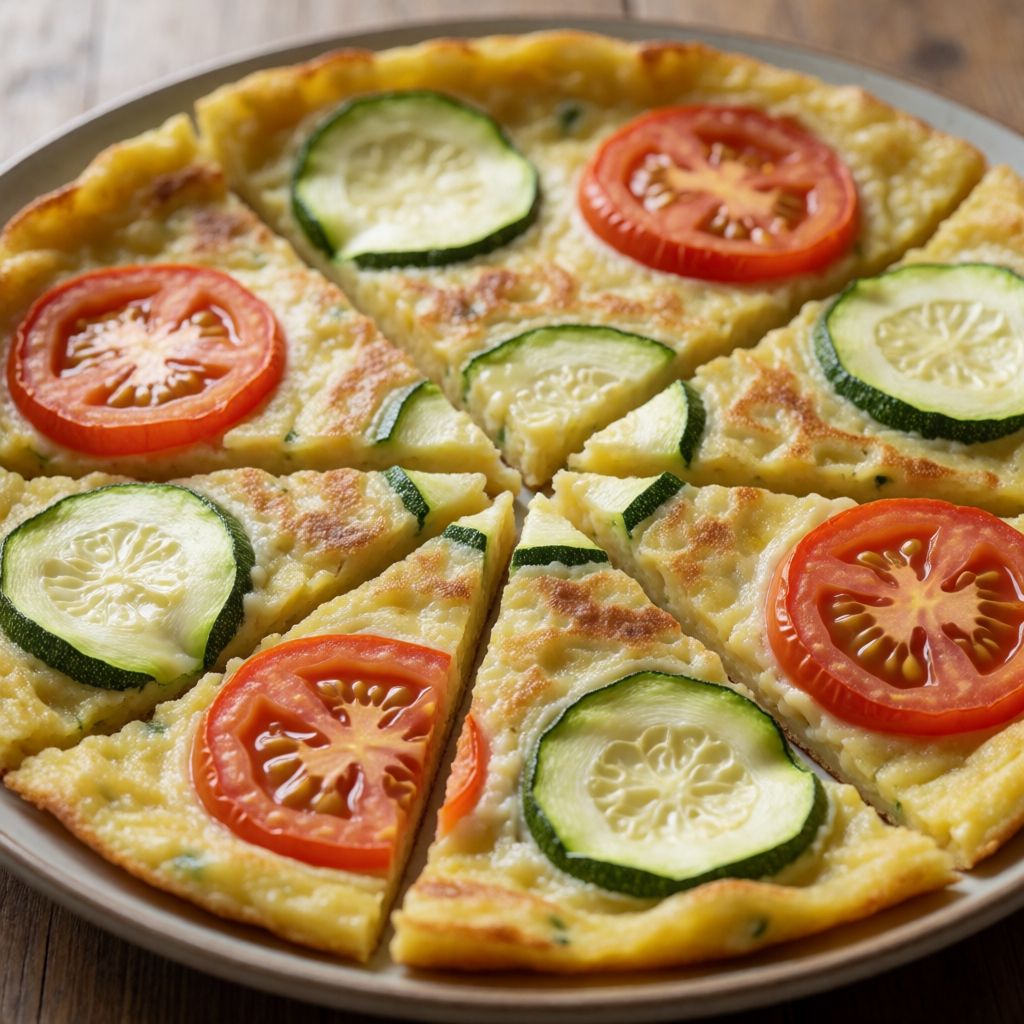
 AI photo
Vegetable Farinata
A savoury Italian chickpea-flour bake with courgettes, tomatoes and basil.
Labels are worked out automatically from the ingredients and can be wrong. Check the packaging if it matters to you.
Ingredients
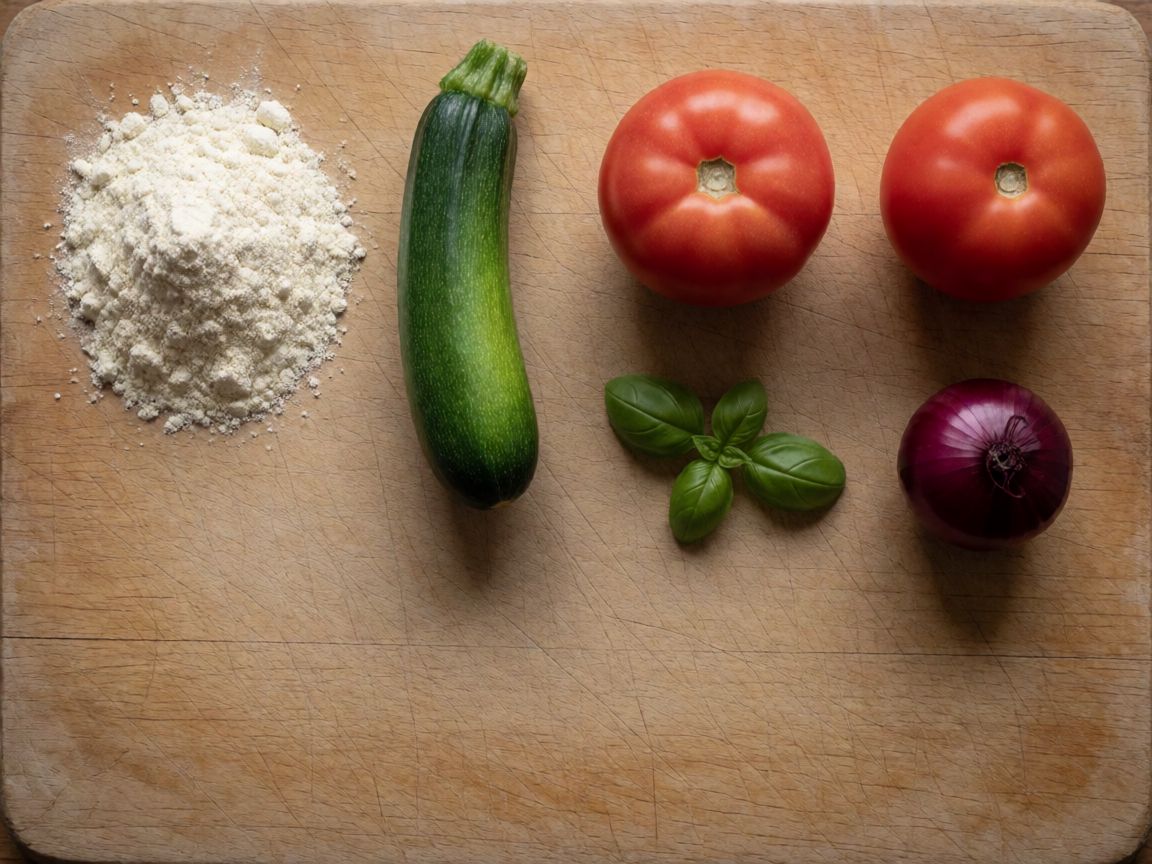
- 200 g Chickpea Flour
- 550 g Water
- 40 g Olive Oil
- 2 tsp Salt
- 2 pcs Courgette
- 10-12 pcs Cherry Tomatoes red
- 10-12 pcs Tomatoes
- 0.5 pcs Red Onion
- 10-12 pcs Basil







Steps
Grate the courgettes, finely chop the onion and dice the cherry tomatoes.
Put the vegetables into a large bowl, add the chopped basil and mix well.
In a separate bowl, mix the chickpea flour with the salt, then whisk in the olive oil and water.
Pour the chickpea batter over the vegetables and mix well.
Line a baking tray with parchment paper, pour in the mixture and spread it evenly.
Bake in a fan oven preheated to 200°C for 30 minutes.
30 minRemove from the oven, let it cool and serve.
This isn't a pizza base and it isn't a crustless quiche, whatever it looks like once it's cut into squares. It's farinata — a Ligurian chickpea batter that sets firm under heat because of its own starch, not because of gluten and not because of egg. Here the vegetables go in raw and cook inside the batter as it bakes, which is a different trick from frying them first and folding them in cooked.
What decides whether this works isn't the oven timer, it's water management. Grated courgette is mostly water held in cell walls, and once you tear those walls with a grater, the water starts leaving. Diced tomato does the same. All of that liquid goes straight into a batter that's already thin — 550g water to 200g flour, closer to a pancake batter than a dough. If your tray is on the small side and the mixture sits thick, that extra vegetable water pools in the middle and you get a soft, wet core under a dry top. Spread it thin and even, and the same water evaporates upward through the batter as it bakes, instead of stewing inside it.
At 200°C fan the job of the oven is to brown the surface — the sugars and starch at the top catching colour and a few freckled dark spots — while the heat works its way down through the layer fast enough to set the middle before it dries out. That's the whole balancing act in one tray. Thirty minutes is where you start checking, not where you stop: look for the edges pulling back from the parchment on their own, and give the tray a gentle shake — a wobble in the centre means it needs longer, however loudly the timer disagrees.
Chickpea flour is also sold as gram flour or besan — same thing, different shelf in the UK, usually next to the other pulse flours. It has no gluten, so nothing here rises or stretches; it thickens and sets purely because its starch swells with water and then firms under heat, the same basic idea as a cornflour sauce, just denser and savoury. If you can't find it, another finely milled pulse flour — pea or lentil — will behave close enough; what you're looking for is a flour with that same starchy, gluten-free backbone, not a specific brand.
The water and oil aren't just bulk. Water this generous — nearly three times the weight of the flour — is what keeps the batter pourable enough to spread thin across a tray, which matters more than it sounds, since a thick pool is exactly what causes the soggy-middle problem above. The oil (olive, traditionally, because this dish comes from a part of Italy where olive oil was the cheap local fat and chickpeas were the cheap local flour when wheat cost more than either poor farmers or Genoese sailors could easily spare) does two jobs: it stops the batter sticking to the parchment, and it's part of why the top browns and crisps rather than just drying stiff. Any oil with no smell of its own will do the structural job — sunflower, a neutral vegetable oil — but you lose the faint fruitiness olive oil brings, so keep it if you have a bottle that isn't your best one.
On the vegetables: the two tomato types aren't decoration, they're two different jobs. Cherry tomatoes, diced, hold their shape in the bake and bring sweetness in small bursts. The larger tomatoes bring more juice and acidity, and that juice is part of your water load, same as the courgette — if your tomatoes are very ripe and watery, know you're adding more liquid than the recipe assumes, and spread the mixture a shade thinner to compensate. Courgette is grated rather than sliced because you want its moisture distributed through the batter, not sitting in slabs; if courgette is out of season or you're not keen, grated carrot or finely diced pepper will take its place — the criterion is a vegetable that can go in raw and cook through in half an hour without turning to mush, not a specific one.
Red onion goes in raw and finely chopped, which is a gamble some people get nervous about — but half an hour at 200°C is enough to take the raw bite off without your kitchen smelling like onions for a day, the way frying them first would. Basil goes in uncooked too, right into the vegetable mix, because its aromatic oils are easily driven off by heat; adding it raw and letting the bake be gentle on it is how you keep any basil flavour at all rather than a faint green memory of it.
Salt is the one seasoning point in the whole dish, since the vegetables aren't pre-salted and nothing gets adjusted after baking. Two teaspoons across 200g of flour and all that vegetable bulk is moderate, not heavy — taste the raw batter before you commit it to the tray, because this is your only chance to fix it.
Some say this needs the hours-long batter rest the classic Ligurian farinata gets, where the chickpea flour sits in water overnight to lose its raw, slightly bitter edge. For a thin cracker-style farinata that matters a great deal; for a vegetable-loaded side like this one, less so — the vegetables and their own moisture change the texture anyway. If you've got a spare hour while you're chopping, let the batter sit and it won't hurt. If you haven't, don't treat it as a failure — it's a refinement here, not a requirement.