
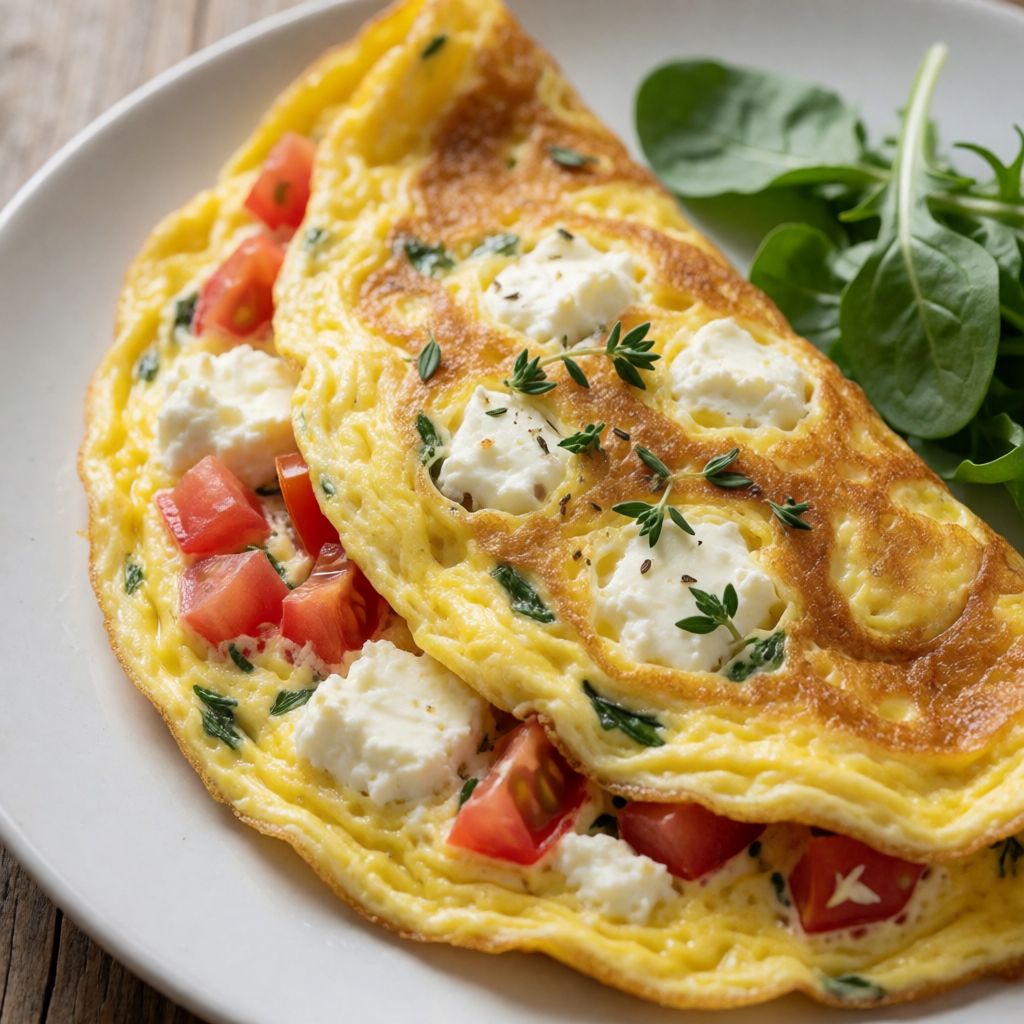
 AI photo
Feta and Tomato Omelette
A quick, fluffy omelette filled with feta, ripe tomatoes, fresh thyme and a handful of salad leaves.
Labels are worked out automatically from the ingredients and can be wrong. Check the packaging if it matters to you.
Ingredients
- 5 pcs Eggs
- 3 tbsp Water
- 50 g Feta
- 2 pcs Tomato cut into quarters
- 1 bunch Thyme fresh
- 80 g Mixed salad leaves
- 1 tbsp Olive Oil
- Salt to taste
- Black Pepper freshly ground, to taste






Steps
Whisk the eggs with the water and pour into a warm pan greased with olive oil.
Cook over medium heat until the omelette is fully set.
8 minAdd the filling to one half, then fold the other half over to cover — the omelette is ready.
This isn't the French omelette that wobbles on the plate and gets eaten in four bites before it cools. This one is cooked through, firm enough to hold a filling of feta and tomato without weeping egg all over your fork. What decides whether it works is simple and unglamorous: does the egg set clean through without the bottom turning to leather, and do you leave it alone long enough to do that.
The mechanism is basic protein chemistry dressed up as breakfast. Egg white and yolk are mostly water and protein; heat uncoils those proteins and they grab each other and set. Too gentle, and you wait forever with a puddle in the middle. Too fierce, and the bottom seizes and browns while the top is still raw — because heat only travels from the pan upward, it doesn't arrive everywhere at once. A warm pan before the egg goes in matters for a different reason: cold metal lets raw egg bond to it in patches, and that bond doesn't let go when you try to fold — you tear the omelette instead of folding it, and the filling spills out the hole.
Some say add milk for a softer, richer omelette. No — water is what you want here. Water turns to steam inside the setting egg and pushes it up a little, giving you air pockets instead of a dense slab. Milk brings fat and milk sugar, which weighs the structure down and browns faster where it touches metal, so you risk a scorched floor under a soggy top. Three spoons of water for five eggs is restraint, not stinginess — too much and you thin the egg past the point where it can hold its own shape when folded.
Five eggs for two people is a generous breakfast, not a snack — this is Sunday territory, when there's time to sit at the table rather than eat standing at the counter. Eggs are the one ingredient here that costs almost nothing and does almost everything: they're the entire structure of the dish, everything else just rides along inside the fold. Buy them as fresh as you can tell — a fresh egg holds together tighter in the pan, an older one spreads thinner and tears more easily when you try to lift an edge.
The oil's only job is to stop the egg from welding itself to the metal, so don't overthink it: any oil with no smell of its own will do that job, which is why neutral sunflower or rapeseed oil works as well as olive oil here — the olive oil isn't flavouring the eggs, there's too little of it and too much egg for its taste to survive. Use olive oil because you have it open already, not because the dish demands it. A splash poured into a pan that's already warming is what spreads it thin and even; pour it into a cold pan and it just sits in the low spot, leaving bare metal everywhere else for the egg to grab onto.
Feta earns its place for salt, not just flavour. It's a brined cheese, already carrying a good deal of seasoning inside it, which is exactly why you salt the eggs lightly if at all and taste before reaching for more — season twice without thinking and you've over-salted a dish that was never short of salt to begin with. Buy feta in a block sitting in its own brine rather than pre-crumbled in a tub; the pre-crumbled kind dries at the edges and loses the crumbly-creamy contrast that makes it worth using. No feta in the house — any salty, crumbly cheese that holds its shape rather than melting into a puddle will stand in: a mild, firm goat's cheese does the job.
Tomato goes in raw, in quarters, not diced. Dicing opens more surface for the juice to run, and that juice, meeting hot egg, turns the inside of your fold watery instead of warm and soft. Quarters give you bite and a little heat-softened sweetness without flooding the filling. Pick tomatoes that are ripe but still hold their shape when you press a thumb into them — an overripe one collapses the moment it meets a warm fold.
Thyme is fresh for a reason beyond habit: the oils that carry its scent are volatile, they fade fast once the leaf is dried, which is why a pinch of dried thyme from the back of the cupboard tastes like a memory of thyme rather than the thing itself. Strip a few sprigs and rub the leaves between your fingers before they go in — that bruising is what actually releases the scent, not just scattering them on whole.
The salad leaves aren't a filling, they're a cold contrast sitting beside the plate — crisp and raw against something warm and set. On a British hob, which holds heat a beat longer than gas even after you turn the ring off, that cold crunch on the side does real work: it's the one element on the plate that doesn't keep cooking after you've stopped looking at it. And patience, here, is the one ingredient that costs nothing and gets skipped the most — walk away from the pan for the last stretch instead of lifting the edge every ten seconds to check, and the omelette sets evenly instead of in the torn patches your spatula made.