
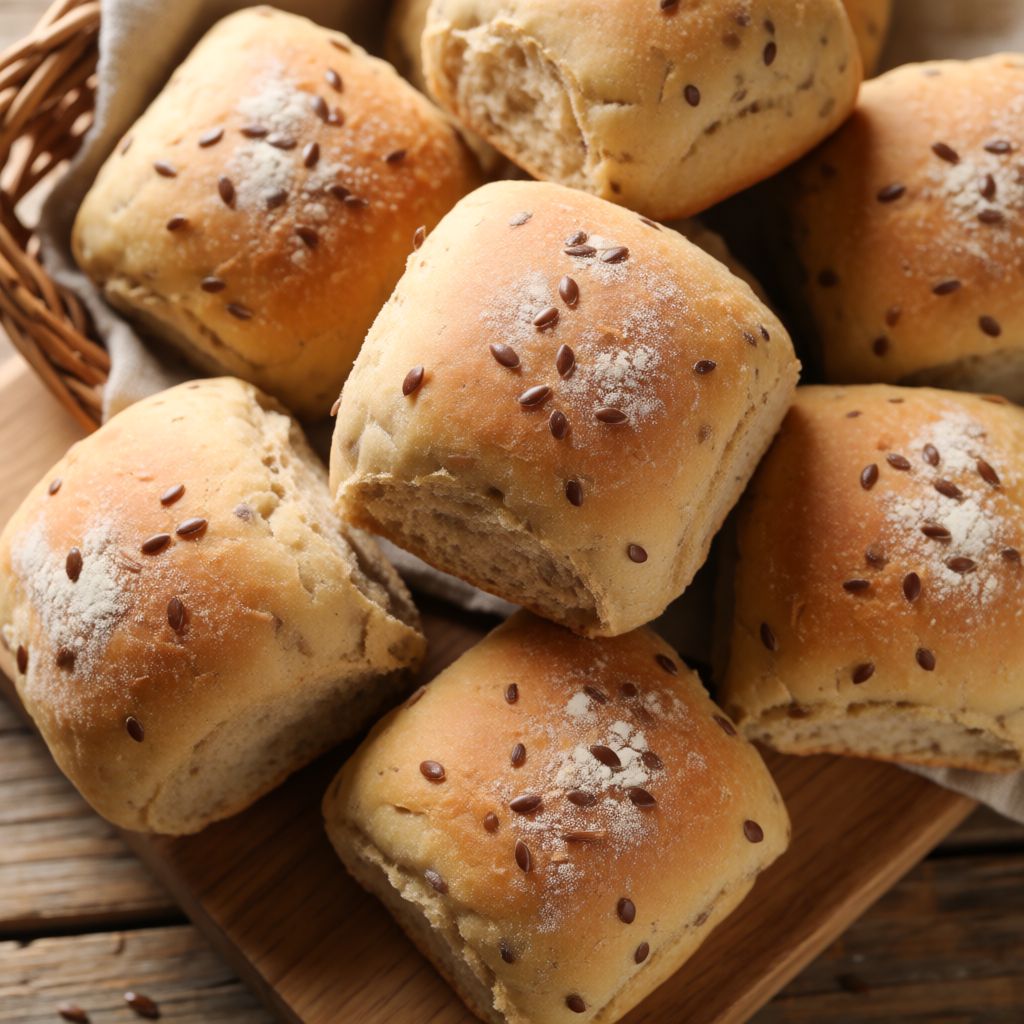
 AI photo
Flaxseed Bread Rolls
Soft, crusty homemade bread rolls made with flaxseed, perfect for breakfast or with a meal.
Labels are worked out automatically from the ingredients and can be wrong. Check the packaging if it matters to you.
Ingredients
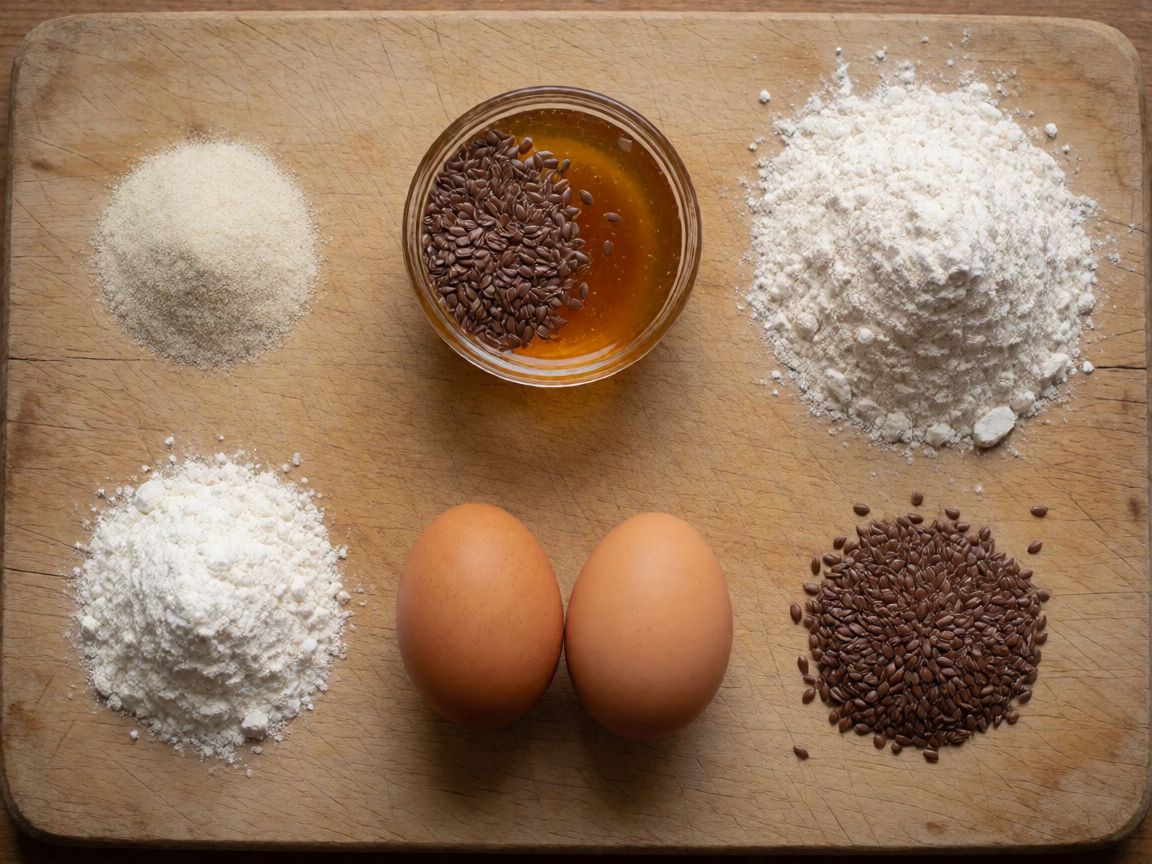









Steps
Dissolve the yeast in a bowl with the water.
Add the honey, salt, flaxseeds, wholemeal flour and plain flour.
Knead the dough in a stand mixer for 10 minutes on low-medium speed, until the dough is soft, elastic, glossy and smooth.
10 minTransfer the dough to a clean bowl greased with a little oil.
Leave the dough to rise on the kitchen counter for 30 minutes, then put the bowl in the fridge overnight, or for at least 12 hours.
30 minTurn the dough out onto a flour-dusted surface and use a dough scraper to divide it into rolls.
Place the rolls on a baking tray lined with parchment paper, brush with the beaten egg and sprinkle with flaky salt and flaxseeds.
Bake the rolls at 200°C for 15 minutes.
15 minRaise the temperature to 230°C and bake for a further 5-7 minutes, until the crust is nicely golden and crisp.
6 min
These are simple yeasted rolls, honest ones, no butter, no milk — flour, water, yeast, salt and a handful of flaxseed for crunch and a vague health halo. What decides whether they work isn't the recipe, it's the fridge. You mix a wet, flaxseed-studded dough, let it sit on the counter for half an hour, then shove it in the fridge overnight. That cold wait is doing the actual work: the yeast slows right down but doesn't stop, and over twelve-odd hours it builds flavour that half an hour of room-temperature rising never could. Cold fermentation isn't a fridge-space-saving trick, it's a flavour decision — the dough develops acidity and depth the way a quick rise never will, because the enzymes that break starch into sugar keep working slowly while the yeast itself is sluggish, so sugars accumulate for better crust colour later.
Some say a roll needs hours of proving on the counter to be "proper" bread. No — because what the counter rise gives you is volume, and what the fridge gives you is taste, and you can get both if you let gas build briefly first, then chill it down to slow, not stop, the ferment.
The flaxseed inside the dough is mostly texture and a nutty note; the ones on top, pressed into egg wash, are there for the eye and for a bit of bite on the crust — don't skip the egg wash thinking it's decorative fuss, it's the glue, and without it the seeds just roll off onto your tray.
On ingredients, start with the yeast — 10g of fresh or dried is simply the organism that makes the gas; what matters more is that you dissolve it straight into the water rather than dumping dry yeast onto dry flour, because this gives it a head start before it has to fight through gluten strands for food. If you only have instant yeast, that's fine, use a similar weight and skip nothing — the dissolving step still helps even if it's not strictly required.
The honey is there to feed the yeast quickly in the first minutes and lend a faint sweetness that balances the slightly bitter, nutty note of flaxseed — a teaspoon of sugar does the same job, no finer point to it, this isn't a dish where honey's floral character actually survives the oven.
Salt, split in the recipe into dough-salt and finishing-salt, does two different jobs. In the dough it tightens the gluten network and controls how fast the yeast works — too little and the dough ferments wildly and tastes flat; this is also why you never let salt touch yeast directly before mixing, it can stun it. The flaky salt on top is pure seasoning and crunch at the very last bite — don't substitute table salt there, it dissolves into nothing and you lose the point of sprinkling it at all.
Flour is split between wholemeal and plain for a reason beyond virtue-signalling fibre content — wholemeal brings bran and germ, which means flavour and a coarser chew, but bran also cuts gluten strands short, so a dough made entirely of wholemeal flour would be dense and crumbly. The plain flour supplies the gluten strength that lets the dough actually rise into something light. If you want to swap ratios, know the trade: more wholemeal, denser rolls; more plain, lighter but blander ones.
Flaxseed itself, inside the dough, is doing double duty — it's a textural crunch and, soaked in a wet dough overnight, it gulps up some water and keeps the crumb from drying out, a trick millers have used with seeded loaves for a long time because seeds act like tiny sponges holding moisture where you want it. If you've no flaxseed, any small, hard seed with a mild flavour works roughly the same mechanical trick — sesame or a mix of poppy and sunflower, say — though none taste quite the same.
The dough scraper and "divide into rolls" step matters more than it sounds — a wet, sticky dough like this tears if you try to shape it with floury hands and a knife; a scraper cuts cleanly without dragging the gluten structure, which is what keeps a roll's crumb open rather than dense and gummy at the cut edges.
On the UK kitchen specifically — this dough doesn't need a stand mixer to work, though ten minutes of hand-kneading on a counter will feel like more effort than it is; you're aiming for the same glossy, elastic stretch, just judged by feel rather than a timer. An ordinary domestic oven rarely holds 230°C evenly, so don't trust the dial blindly — trust the crust colour, and if your oven runs hot or has a hotspot, turn the tray round partway through the final stretch rather than guessing by time alone.