
 AI photo
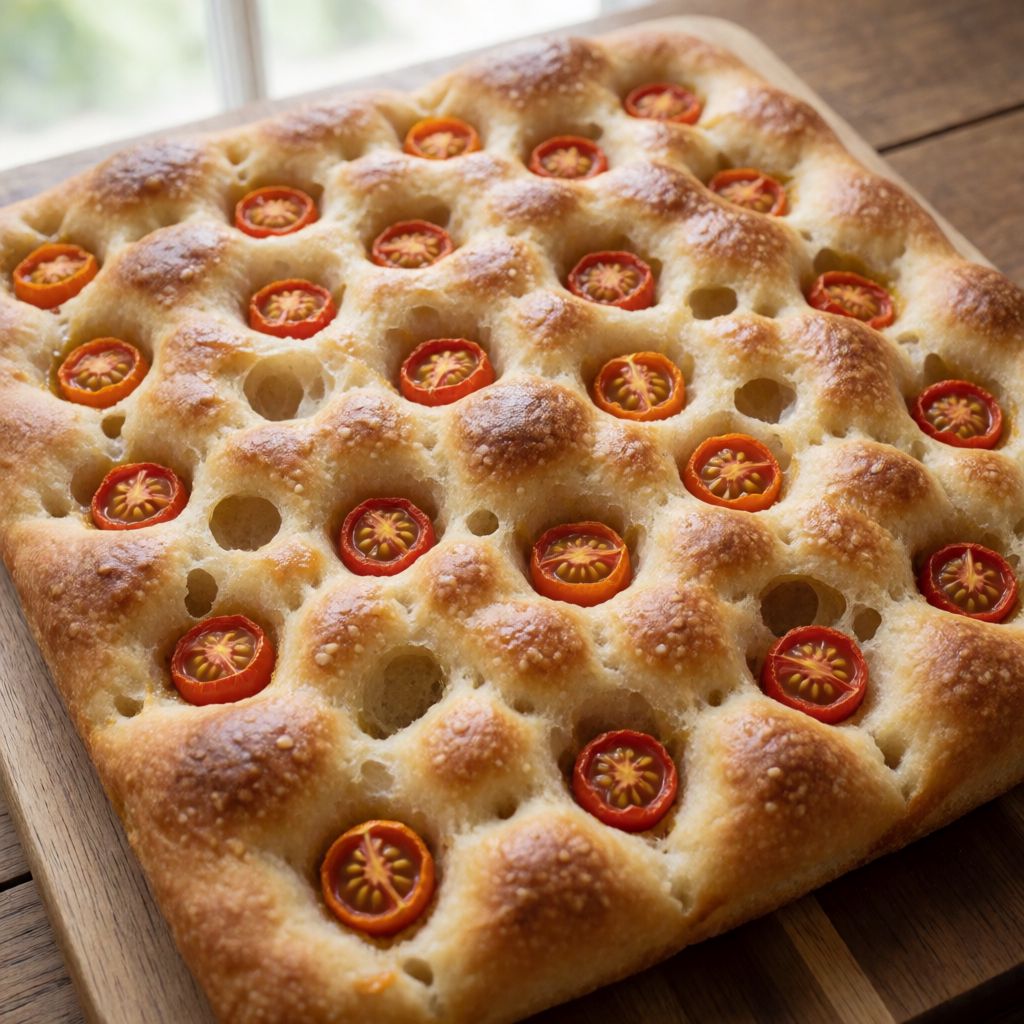
Oat Focaccia with Cherry Tomatoes
A soft oat focaccia topped with cherry tomatoes and a little coarse salt, perfect for sharing.
Labels are worked out automatically from the ingredients and can be wrong. Check the packaging if it matters to you.
Ingredients
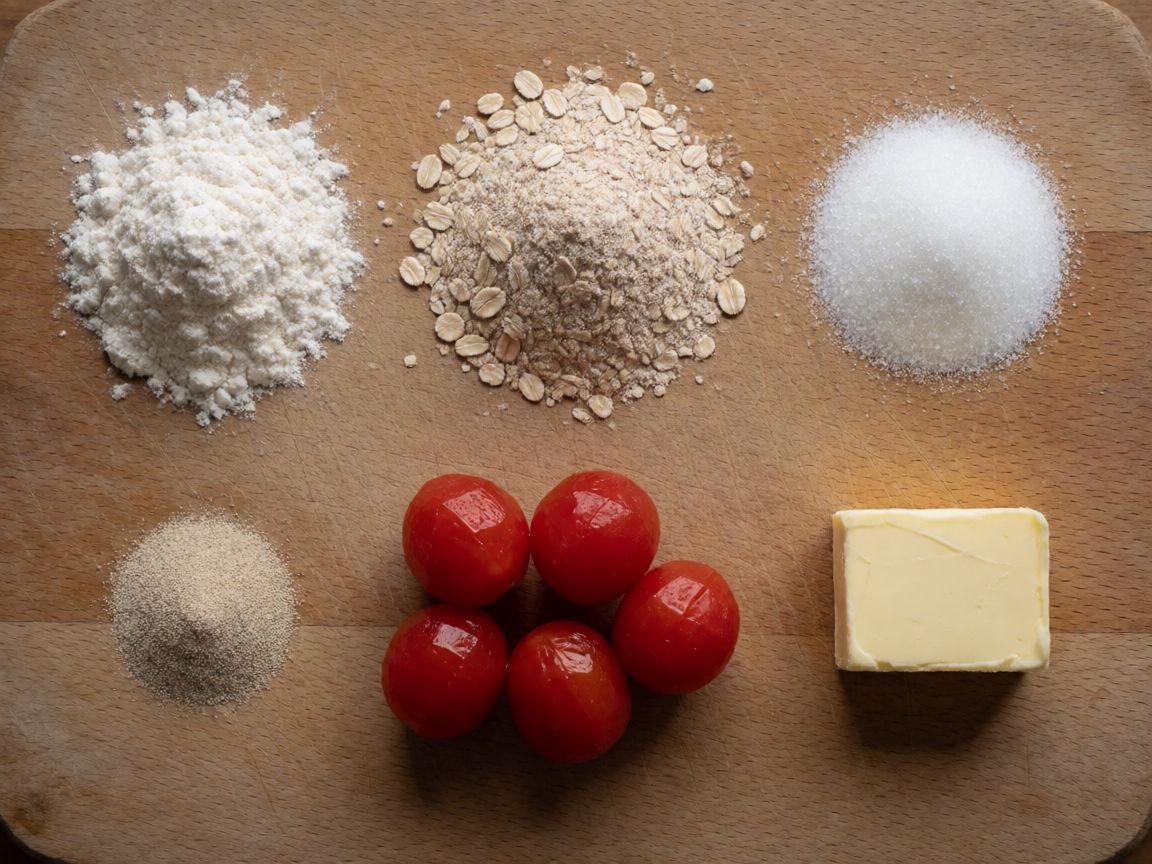
- 300 g Plain flour
- 200 g Oats
- Salt to taste
- 2 tsp Sugar
- 1 package Fast-action dried yeast 1 sachet
- Cherry tomatoes to taste
- Coarse salt to taste
- Water
- Butter for greasing the tray
- Vegetable oil to taste, for brushing the tray








Steps
Mix the flour with the oats, salt, sugar and fast-action dried yeast, add the water and knead into a smooth, firm ball of dough.
Cover the dough and let it rest for 2 hours, making a few shallow cuts on the surface.
120 minPreheat the oven to 180°C.
Place the dough on an oiled baking tray, scatter the cherry tomatoes and a little coarse salt on top.
Bake for 20 minutes.
20 min
This is a thick round of yeasted dough, half ordinary flour and half porridge oats, baked whole with cherry tomatoes pressed into the top. It isn't the thin, olive-soaked sheet Liguria calls focaccia — it's a British cousin, built from the pantry: bread flour and the same oats that usually end up as porridge, nothing exotic required.
What decides if it works is the oat. It isn't decoration here, it's structure — or rather, a deliberate dilution of structure. Half the flour in this dough carries no gluten at all, so it can't inflate the way a pure wheat focaccia does. It needs the full two hours to let what gluten there is relax and stretch around all that oat, or you end up with a loaf that's dense in the wrong way — tight and chewy like underbaked porridge, not pleasantly rustic.
Some say real focaccia needs olive oil pooled into dimples poked by fingers — no, because that trick belongs to a dough wet enough to spread thin in a tin and blister. This dough is a firm ball, closer kin to bread than to batter. The shallow cuts here do a related but different job: they let gas escape in places you've chosen, instead of wherever the crust happens to be thinnest. You're not pooling oil, you're greasing a tray for release and brushing oil over the top for colour and grip.
Plain flour brings the only gluten in this dough, so it's doing all the structural work; the oats bring bulk, a faint sweetness, and that slightly nutty chew, but contribute nothing to the rise. This is economics, not whimsy — oats have always been cheaper and more at home in a British cupboard than fine wheat flour, and this recipe treats them as a stretcher, the same instinct that put oats into flapjacks and biscuits whenever flour was the dear ingredient. If you have none to hand, use old-fashioned rolled oats rather than instant — they hold their shape and drink in water slowly; instant oats turn to paste and change the whole texture of the crumb.
Fast-action dried yeast is milled fine enough to go straight into the flour — no proofing bowl of warm water and sugar first. That step belongs to fresh yeast and standard dried yeast; skipping it here isn't a shortcut, it's how this strain is built to work. The two teaspoons of sugar aren't there to "wake the yeast up" — plain flour already carries enough starch to feed it regardless — they're there to speed the first stretch of fermentation and to give the crust something extra to caramelise against, a shade darker than flour alone would manage.
The two hours of rest is a lower limit, not a countdown. What you're waiting for is the gluten relaxing and the yeast building gas evenly through a stiff dough that has oats getting in the way of an easy stretch. Press a finger in: if the dent springs back fast, it isn't ready; if it stays and fills slowly, it is. The shallow cuts you make at this stage aren't decorative — a tight dough skin with nowhere chosen to give will tear itself open somewhere ugly in the oven, so you decide the lines instead of letting the oven decide for you.
Cherry tomatoes earn their place because they're small enough to cook through in twenty minutes and firm-skinned enough to blister rather than collapse into a puddle that would soak the crust soggy underneath. Any small, firm, sweet tomato does the same job — baby plum included. A big, juicy tomato is the wrong tool for this; it floods. The coarse salt scattered on top afterwards isn't doing the same job as the salt kneaded into the dough — that one seasons quietly from inside, in a small amount; this one is for bite, the crunch between your teeth that salt dissolved into dough can never give you.
Butter on the tray is there for flavour and a clean release at the base, where it sits against metal and never gets hotter than the tray itself. Oil brushed over the top and around the tomatoes is doing something else entirely — sitting in direct contact with 180°C air, resisting that heat without scorching the way butter's milk solids would, and giving the crust a sheen while giving the tomatoes something to grip so they don't roll straight off. Any oil with no smell of its own does this — sunflower, anything neutral — because this isn't the dish where oil needs to taste of where it came from.
It serves two, and generously — this is a thick loaf for two people with their tea, not a show bread for a table of six. Patience is the one ingredient here you genuinely cannot substitute: the two hours aren't negotiable just because you're hungry now, and there's no oven trick that buys that time back.