
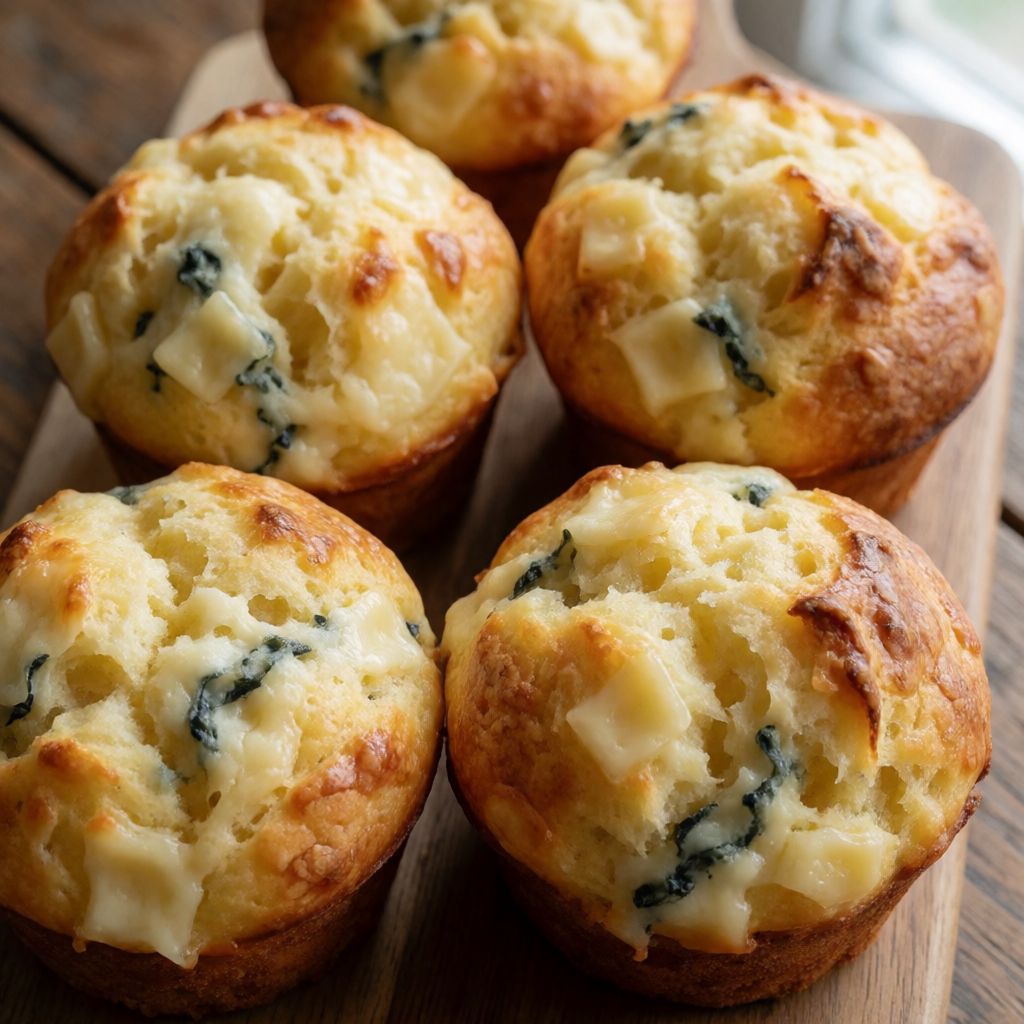
 AI photo
Four Cheese Muffins
Soft savoury muffins packed with four kinds of cheese, great for breakfast or a snack.
Labels are worked out automatically from the ingredients and can be wrong. Check the packaging if it matters to you.
Ingredients
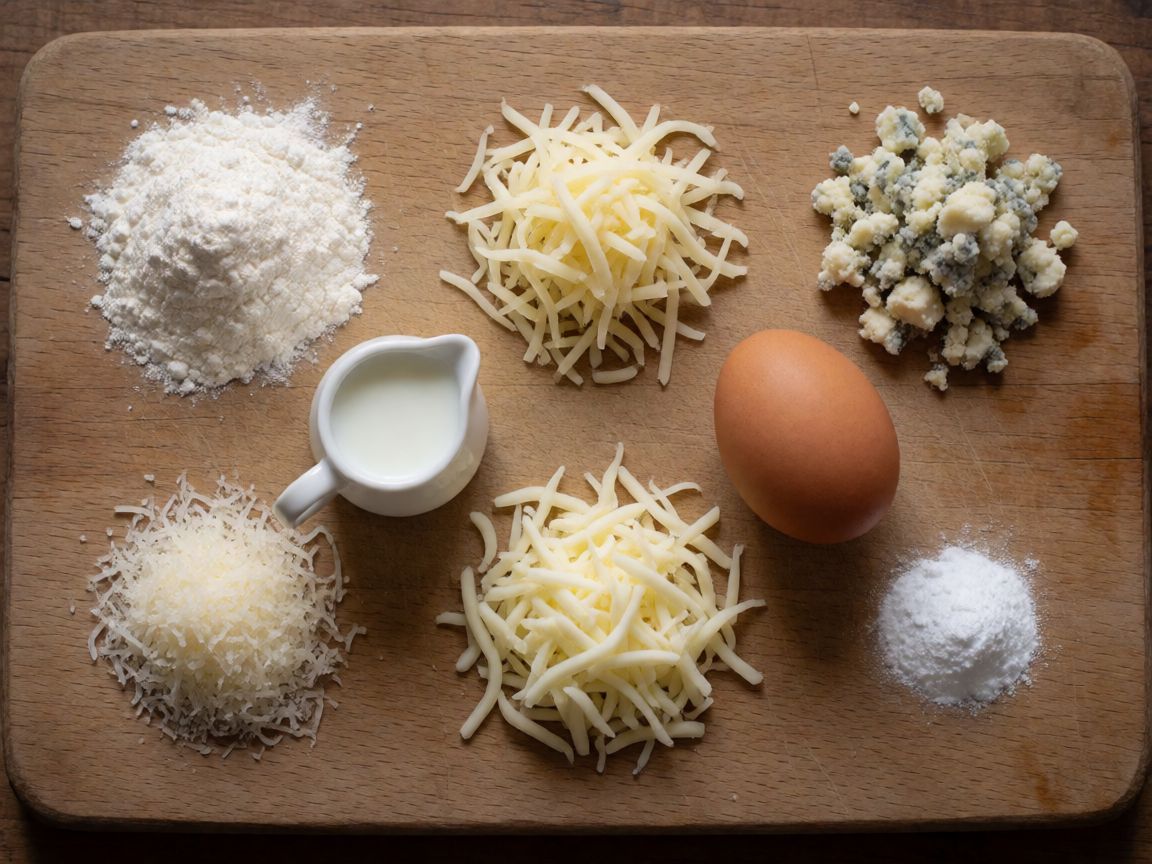
- 150 g Plain flour
- 50 g Emmental
- 50 g Gorgonzola Dolce
- 50 g Parmesan
- 50 g Mozzarella
- 1 pcs Egg
- 50 ml Vegetable oil
- 50 ml Milk
- 0.5 package Baking powder
- Salt to taste
- Thyme fresh leaves, for garnish










Steps
Dice all the cheeses, and finely grate the Parmesan.
In a bowl, beat the egg, add the milk and vegetable oil, and whisk well.
In another bowl, sift the flour with the baking powder, add the diced cheeses, and season with salt to taste.
Pour the liquid mixture into the dry ingredients and mix thoroughly until you have a smooth batter.
Spoon the batter into a muffin tin lined with paper cases.
Bake in a preheated oven at 180°C for 20 minutes.
20 minIf you like, garnish with fresh thyme leaves and serve warm.
This is not bread. Bread needs yeast, needs time, needs the dough to breathe and rise on its own schedule. A muffin is batter — flour, baking powder, liquid, cheese — and it goes from mixing bowl to oven in the time it takes the kettle to boil for your tea. The two chemistries are different jobs, and confusing them is the first mistake people make with any quick bread, savoury or sweet.
What decides whether these come out tender or come out like rubber bands is not the cheese, not the oven, not even the baking powder. It's what you do with your spoon after the wet mixture meets the dry. Flour develops gluten the moment it gets wet and worked — that's exactly what you want in a loaf, and exactly what ruins a muffin. The recipe says mix until smooth; take that with a pinch of salt. A few streaks and lumps left in the batter are not a failure, they're insurance. Stir until just combined, stop, and walk away. Overmixing is the real cause of the tough, chewy muffin everyone blames on "the oven being too hot." The oven is innocent.
Flour is the skeleton, and plain flour is correct — you don't want the extra protein of a strong bread flour fighting you for structure here; that's a different mechanism for a different food. Baking powder does the actual lifting: mixed with water and heat it releases gas fast, which is why there's no rise time written into the method and no need to invent one. "Half a package" is a French habit of measuring — a UK tin of baking powder has no sachets to halve, so go by weight or by spoon: somewhere around two level teaspoons for this amount of flour is the right ballpark, not a law.
The egg and the oil-and-milk mixture are doing two separate things. Egg sets — its proteins firm up with heat and hold the crumb together once the baking powder has done the lifting. Oil, not butter, because oil stays liquid at room temperature and butter doesn't; that's why oil-based batters stay moist a day later while butter ones can turn dry and crumbly as they cool. "Vegetable oil" really means any oil with no smell of its own — sunflower, rapeseed, whatever's already in the cupboard. Milk thins the batter to pourable; whole milk gives a little more fat and a softer crumb than skimmed, the same reason your tea tastes better with it than without.
On the cheeses: Parmesan's whole purpose is salt and savoury depth distributed evenly, which only happens if it's grated fine enough to melt into the batter rather than sit as a lump. If you haven't got it, any hard, aged, salty grating cheese does the same job — Grana Padano, or in a pinch a mature Cheddar, though the flavour shifts English. Emmental brings a mild, stretchy melt and a bit of nuttiness; Gruyère or any firm alpine cheese substitutes on the same logic. Mozzarella's job is moisture and gentleness — any soft, mild, melting curd cheese stands in. Gorgonzola Dolce specifically — soft and sweet-sharp, the kind that collapses into a pool rather than crumbling — is the one to protect; Dolcelatte, which sits on most UK supermarket shelves under that exact name, is the same cheese by another label. Swap in a sharp, crumbly blue like Stilton and you get a different muffin — still good, but spikier, less generous.
Some people skip the paper cases to save washing up. Don't, here — melted cheese grease will bond to a bare tin the way nothing else in baking does, and you'll be scraping for a week. The cases also catch the Gorgonzola as it runs, which it will.
On heat: 180°C is a conventional-oven number. If your oven only does fan, knock it down to around 160°C, because fan ovens move hot air faster and effectively cook harder at the same dial setting — ignore that and the outside sets before the inside has finished rising, giving you a muffin with a pale, sunken middle. Twenty minutes is the floor, not the answer; go by what you can see — the tops domed and gold, a skewer coming out without wet batter clinging to it, cheese visibly bubbled rather than still shiny-raw at the edges. Let them sit five minutes in the tin before you try to lift them out; straight from the oven the cheese is still molten glue and the muffin will fall apart in your hand, taste notwithstanding.
These belong on a tea tray as easily as a dinner plate — savoury enough for elevenses, sturdy enough to sit next to a Sunday roast as the bread course instead of rolls. Six of them from this amount, though if you're feeding a hungry table, nobody's going to stop at one.