
 AI photo
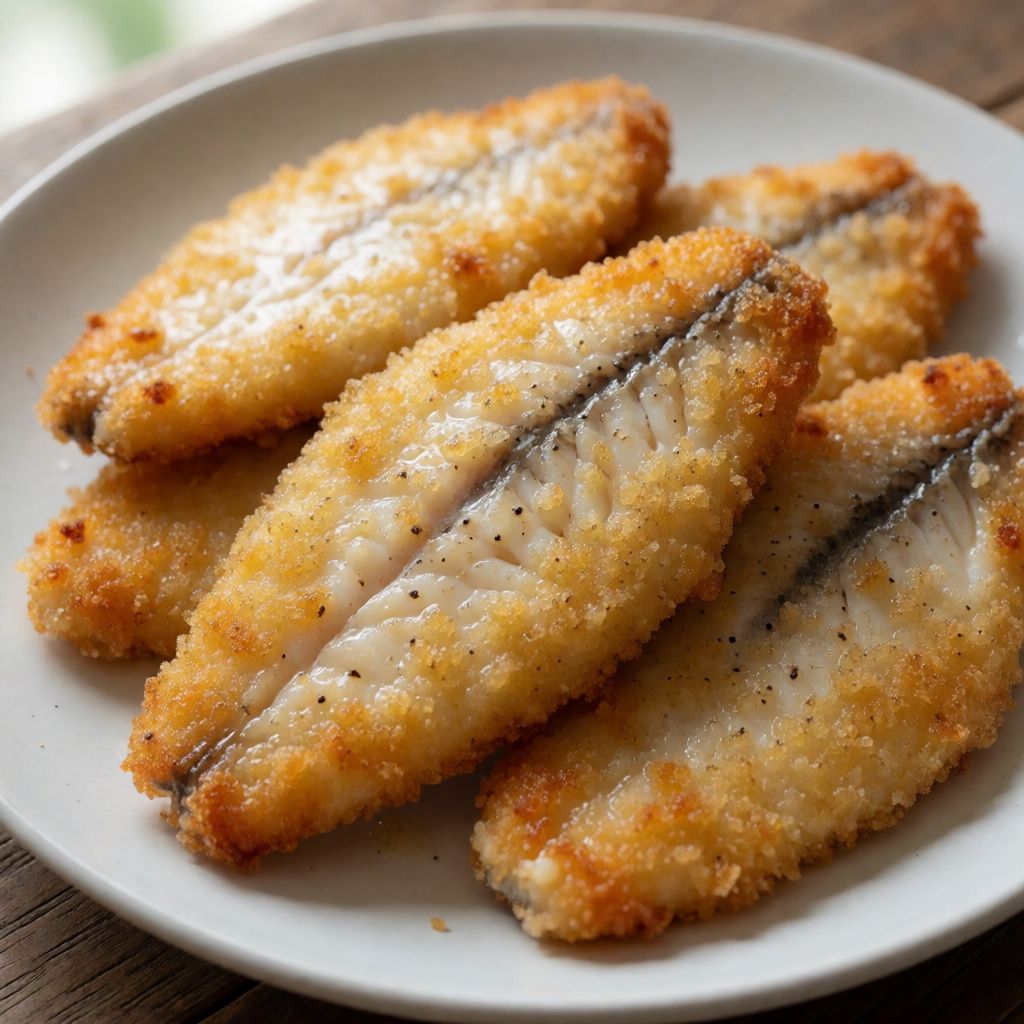
Pan-Fried Flour-Dusted Fish Fillets
Crispy pan-fried fish fillets in a seasoned flour coating, served with rye bread and remoulade.
Labels are worked out automatically from the ingredients and can be wrong. Check the packaging if it matters to you.
Ingredients
- 8 pcs Flounder Fillet or another flatfish
- 2 pcs Eggs
- 20 g Plain Flour
- 30 g Wholemeal Flour
- Salt to taste
- Black Pepper freshly ground, to taste
- 2 tbsp Butter
- 1 tsp Olive Oil
- 8 pcs Rye Bread Slices
- 100 g Remoulade
- 1 pcs Lemon cut into wedges, for serving
- 1 pinch Chervil or parsley











Steps
Beat the eggs in a bowl.
In another bowl, mix the plain flour, wholemeal flour, salt and pepper well.
Coat the fish fillets first in the beaten egg, then in the flour mixture.
Fry the fillets in butter and olive oil in a pan over medium heat, about 4-5 minutes per side.
8 minServe, for example, with rye bread, remoulade, lemon wedges and a sprinkle of chervil.
This is sole meunière's poorer, hungrier cousin — a thin flatfish fillet given the thinnest possible crust and fried fast, then dropped onto dense rye bread with a sharp, creamy sauce instead of a swirl of brown butter. The French gave fish fried-in-flour its name; German and Scandinavian kitchens gave it the open sandwich logic — bread as a plate you can eat, remoulade as the sauce that does the work meunière butter would otherwise do. Nothing mystical about putting them together. It's two economical ideas from two poor-fish traditions, shaking hands.
What decides whether it works is thickness, not time. Flounder fillet is a few millimetres of flesh — there's no deep interior to worry about, no "is it cooked in the middle" the way you'd ask of a chicken breast. The whole fillet goes from translucent grey to opaque white almost at once. So the only real question in this recipe is whether the outside — the egg-and-flour coat — sets and colours before that happens, or after.
Some say "medium heat" tells you something. It doesn't, not on its own — a thin pan and a thick pan read "medium" on the same dial and behave completely differently. What you're actually calibrating is this: the egg has to seize into a seal the instant it meets fat, fast enough to lock the flour on, slow enough that the flour underneath doesn't scorch before the fish three millimetres away turns opaque. Drop a corner of a fillet in first — if it sizzles and sets within a couple of seconds without smoking, that's your heat, whatever number your hob happens to call it.
Start with the fish, because everything else obeys its geometry. Flounder, like plaice, lemon sole, megrim — any flatfish — gives you fillets that are naturally thin and even, which is exactly why this technique exists: a round fish fillet of the same weight would be fat in the middle and thin at the tail, cooking unevenly under one coat of flour. If you can't get a flatfish, the honest substitute is any white fish cut thin and even by hand — a cod loin sliced into two or three flat steaks does the job, though it won't flake quite as finely.
The egg-then-flour sequence looks like the start of a breaded cutlet and isn't one — there's no breadcrumb stage, and that's deliberate. Egg alone on fish slides off in the pan; flour alone doesn't stick to wet flesh at all. The egg's job is to be glue, nothing more — a thin, even film for the flour to grip. Dip the fillet properly and let the excess egg drip off before it meets the flour; skip that and you get patches of egg pooling under the coat, which steam instead of fry and leave you with soft, slightly slimy spots in an otherwise crisp crust. That's the defect this two-bowl method exists to prevent.
Two flours, not one, for a reason: plain flour alone fries pale and a bit slick, more like a dusting than a crust. Wholemeal brings bran into it — actual grit, actual texture, and a faint nuttiness that plain white flour doesn't have. Push the ratio the other way and the coat gets heavy and falls off in flakes instead of staying put. The split given here — roughly two parts plain to three parts wholemeal — is a working balance, not a law; any coarse, wholegrain flour will do the wholemeal's job.
Butter and olive oil together isn't indecision, it's damage control. Butter alone, fried hard enough to crisp flour, burns its milk solids into bitterness before the fish is through — that's the actual failure behind the old "butter burns too fast" complaint, not some flaw in butter itself. A spoonful of a neutral oil — anything with no smell of its own, sunflower or a mild olive oil, not a heavily peppery extra virgin that fights the fish — raises the point at which the fat starts to scorch, while the butter still gives you its flavour and its colour. You're not choosing one over the other; you're letting the oil carry the butter past the point where it would otherwise give up.
Rye bread earns its place by not collapsing. A wet remoulade and warm fish on a soft white slice turns to paste in two minutes — dense, sour rye holds its shape and its crumb stays distinct underneath. That's the whole reason northern European open sandwiches default to rye: it's bread built to carry wet toppings without dissolving, not bread chosen for flavour alone. Remoulade — mayonnaise sharpened with pickle, mustard, capers, whatever your jar leans on — exists to cut the butter-fat richness of the fried fish; without it, this dish is just warm fried fish on toast, pleasant but one-note. Lemon wedges do the same cutting job at the table, in sharper, more sudden doses, and chervil (or parsley if that's what's in the fridge) is there for a green, slightly aniseed lift — leave it off and nothing structural changes, the dish just looks a little barer.
On an ordinary hob, in one wide pan, eight fillets don't all fit at once — crowd them and the ones in the middle steam each other soft instead of frying, which is the opposite of what this whole method is built to do. Fry in two batches and keep the first warm, loosely, under a plate rather than sealed tight, so the crust doesn't sweat and go soft while it waits. That short wait is the one bit of patience this dish asks for — everything else happens in minutes, but those minutes still want watching, not rushing. Count on two fillets a head and this feeds four properly, with bread and sauce as part of the plate, not an afterthought.