
 AI photo
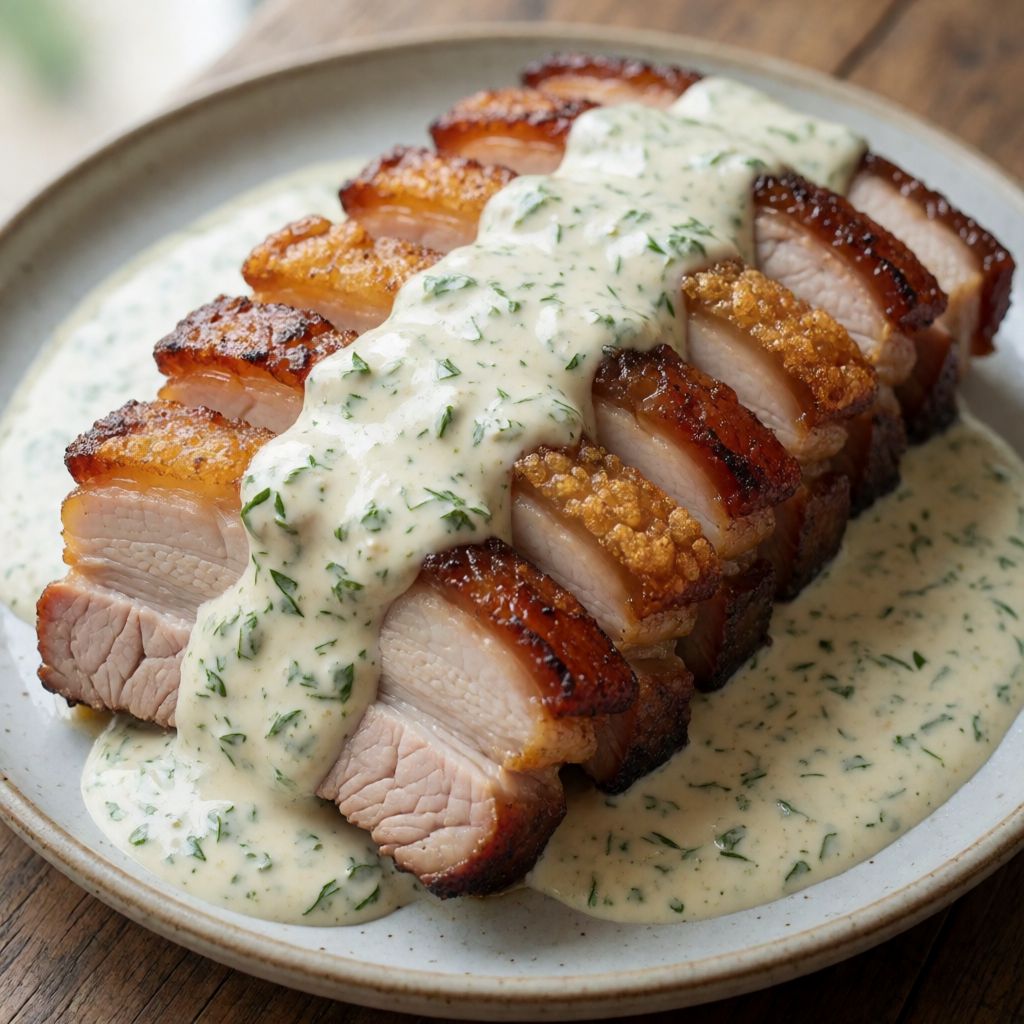
Roasted Pork Belly with Parsley Sauce
Crispy oven-roasted pork belly served with a creamy parsley and lemon sauce alongside tender boiled potatoes.
Labels are worked out automatically from the ingredients and can be wrong. Check the packaging if it matters to you.
Ingredients
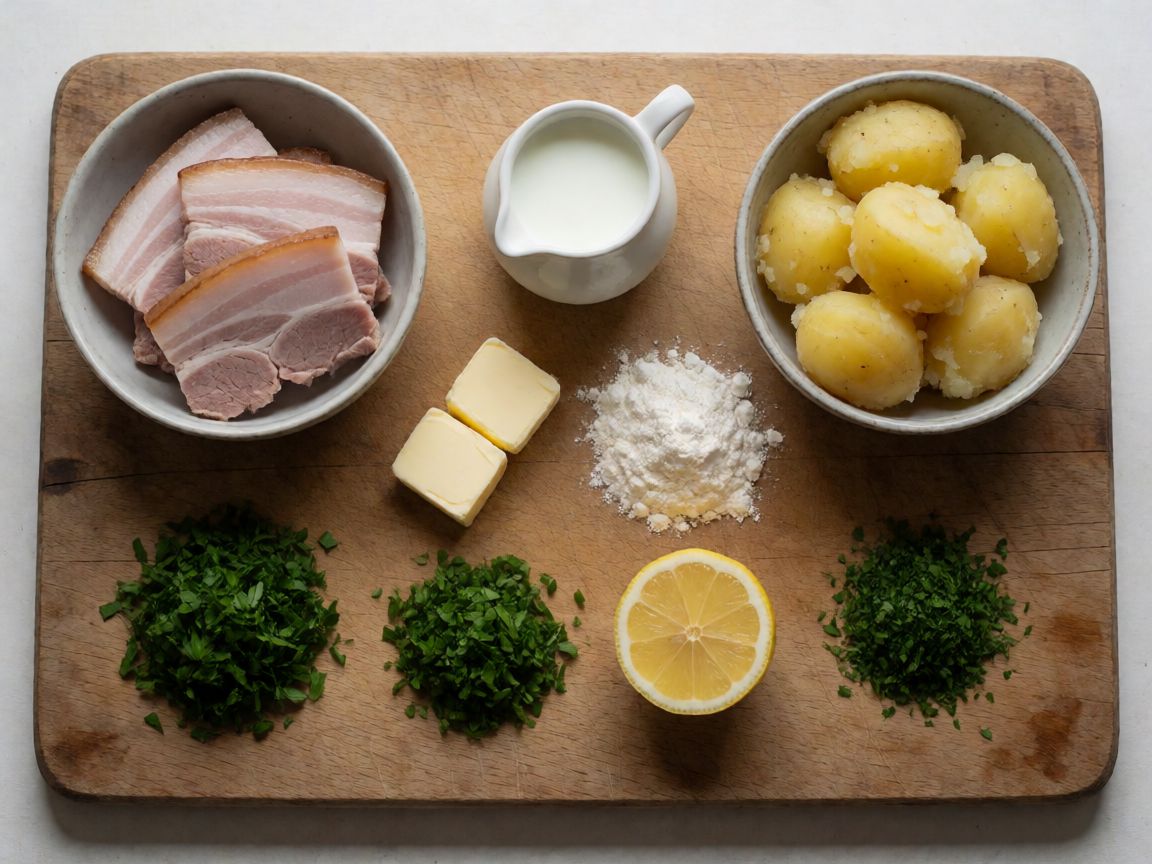
- 800 g Pork belly sliced
- 2 tbsp Butter
- 2 tbsp Plain flour
- 500 ml Milk
- 1/2 pcs Lemon juice and zest
- 2 bunch Parsley finely chopped
- pinch Salt to taste
- pinch Black pepper freshly ground, to taste
- 1 kg Potatoes boiled
- 1 bunch Parsley for sprinkling









Steps
Sprinkle the pork belly slices with salt and arrange them on a rack set over a baking tray lined with parchment paper.
Roast the slices in a fan oven preheated to 175°C for 30–40 minutes, turning a few times.
35 minPlace the potatoes in a pot with cold salted water, bring to the boil and cook for about 20 minutes.
20 minCheck that the potatoes are tender, then drain. Keep them warm in the pot with the lid on until the pork belly and sauce are ready.
Melt the butter in a saucepan over low heat, whisk in the flour until smooth, then gradually pour in the milk, whisking constantly.
Cook the sauce for about 5 minutes over medium heat, whisking continuously.
5 minSeason the sauce with lemon juice and zest, parsley and salt.
This is a Sunday roast that swaps the usual joint for pork belly, sliced thin, and the usual gravy for a parsley sauce that's really just an English béchamel with lemon in it. Nothing exotic — bread-and-butter British cooking, built on two mechanisms you need to understand rather than just follow.
First: the rack under the belly. Pork belly is mostly fat and connective tissue. Left flat on a tray, it sits in its own render and stews — the surface stays pale, flabby, the opposite of what you want. On a rack, the fat drips away as it melts and the slice is left to brown in dry heat. That's the whole trick of the dish. No rack, no crisp edge — you'll get boiled-tasting pork no matter how long you leave it in.
Second: don't chase time, chase colour and give. At 175°C fan the fat renders slowly enough not to burn the surface before the inside cooks through. Thirty-five minutes is a floor, not a target — what you're actually waiting for is the edges turning deep gold and the slice feeling firm, not springy, when you press it. Turning a few times isn't fussing, it's making sure both faces see the dry air, since a fan oven blows heat from one direction more than you'd think.
Some say longer in the oven always means crispier. No — once the fat has rendered out, there's nothing left to crisp. More time after that just dries the meat. Patience here means watching the first thirty-five minutes closely, not stretching the cook past the point the fat has already done its job.
The sauce is the other half of the lesson, and it's older than this recipe — parsley sauce has sat next to boiled ham and gammon in Britain for centuries, because a plain white sauce with sharp herb and acid in it is exactly what fatty, salty meat needs to not feel like too much. Economics, not magic: milk, flour and butter were always in the larder, parsley grew in the yard. Cheap sauce for an otherwise plain plate.
Butter and flour cooked together first — that's a roux, and its only job is to coat every grain of starch in fat before liquid touches it. Skip that, pour milk straight onto flour, and the starch grains clump and hydrate unevenly: lumps that whisking later won't fix, because by then the outside of each lump has already sealed. Cook the roux gently, no colour needed here, just enough heat to smell it turn from raw to biscuity. Then the milk goes in gradually, whisked the whole time, because starch wants to swell slowly — dump it all in cold and the sauce seizes before it can thicken evenly.
Milk: use whole milk if you can. The fat in it gives the sauce body; skimmed milk gives you a thinner, more watery result you'll have to cook longer to thicken, and longer cooking means more risk of it catching on the bottom of the pan.
Lemon juice and zest aren't decoration — they're the acid that cuts through pork fat and milk fat both, stopping the whole plate tasting flat and heavy. Any sharp citrus does the job; a splash of cider vinegar at the end would do in a pinch, though you'd lose the zest's perfume.
Parsley: flat-leaf has more flavour than curly, which is mostly texture and garnish. One bunch goes into the sauce finely chopped so it wilts into the heat without turning the sauce grey; the second is for scattering raw at the end, for colour and a fresher hit than the cooked herb gives.
Potatoes: starting them in cold water and bringing them up together means the outside and centre of each piece heat at roughly the same rate — drop them into already-boiling water and the outside overcooks and starts breaking down before the middle's done, especially if your pieces aren't perfectly even in size, which they never are in a home kitchen. A floury potato — Maris Piper, King Edward — holds together better here than a waxy one, which stays firm but can taste a bit stubborn next to a soft sauce. And once they're drained, the lid back on the pot is doing real work: it's holding heat and moisture so the potatoes don't dry out or go cold while you finish the sauce. That's patience built into the method, not just a virtue you bring to it.
For the belly itself, look for slices with a decent ratio of fat to meat — too lean and there's nothing to render, so nothing to crisp, and you're back to the flabby problem the rack was meant to solve.