
Meat & fish
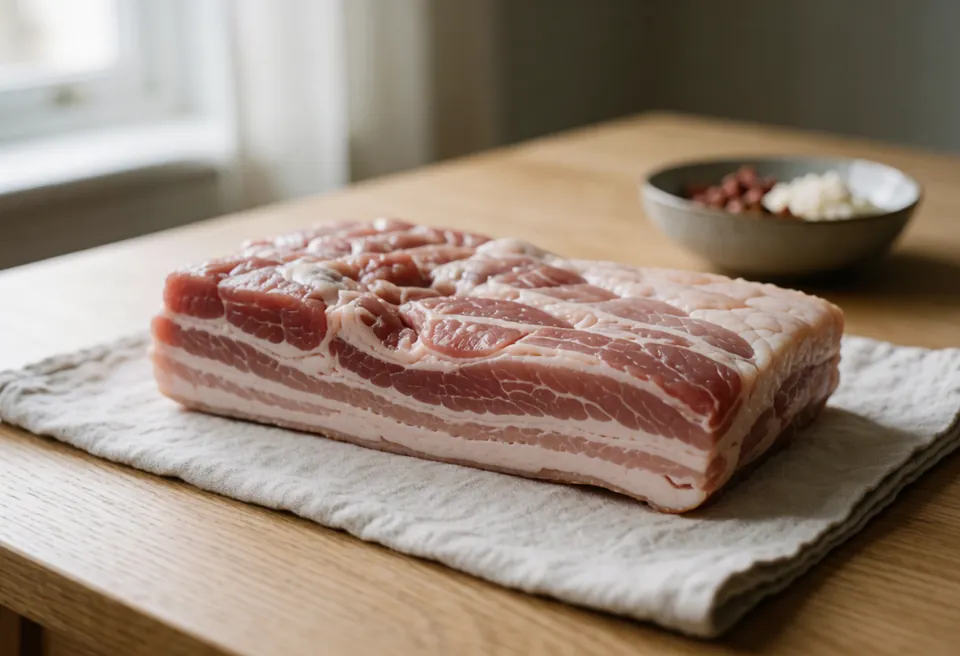
Pork Belly
Pork belly is a fatty cut with layers of meat and fat. It's used to make bacon and salo, pan-fried in slices, or braised in dishes like Asian-style pork belly.
518 kcal per 100 g
Nutrition per 100 g
518 kcal
| Protein | 9.3 g |
|---|---|
| Fat | 53 g |
| Carbs | 0 g |
| Fiber | 0 g |
Source: USDA FoodData Central, 2026-09-21. Per 100 g raw (per USDA FDC).
Good to know: Pork Belly
Let me tell you about pork belly, and why a thick piece rewards patience more than most cuts.
Pork belly is the strip from the animal's underside, where fat and meat lie in alternating layers, one on top of the other, like pages in a book. That layering is the whole point. Give a thick piece time over low heat and the fat softens, loses its stiffness, turns glossy and almost spoonable, while the connective tissue running through the meat goes tender and moist. Thin slices don't need any of this — cut thin, belly cooks fast, hot and crisp, the way it's done on a Korean grill.
Choose it by the stripes. You want clear, even bands of fat and meat, close together, not one thick slab of fat sitting on top of a thin slice of meat. The fat should look clean, the meat should feel firm, and the whole piece should smell fresh, never sour.
Some people say pork belly is simply "fatty bacon," nothing more. No! Bacon is usually belly that's been cured and often smoked — a finished product. Raw belly is an ingredient. Confuse the two, and you'll under-salt a fresh piece, thinking it's already cured, and wonder why the dish tastes flat.