
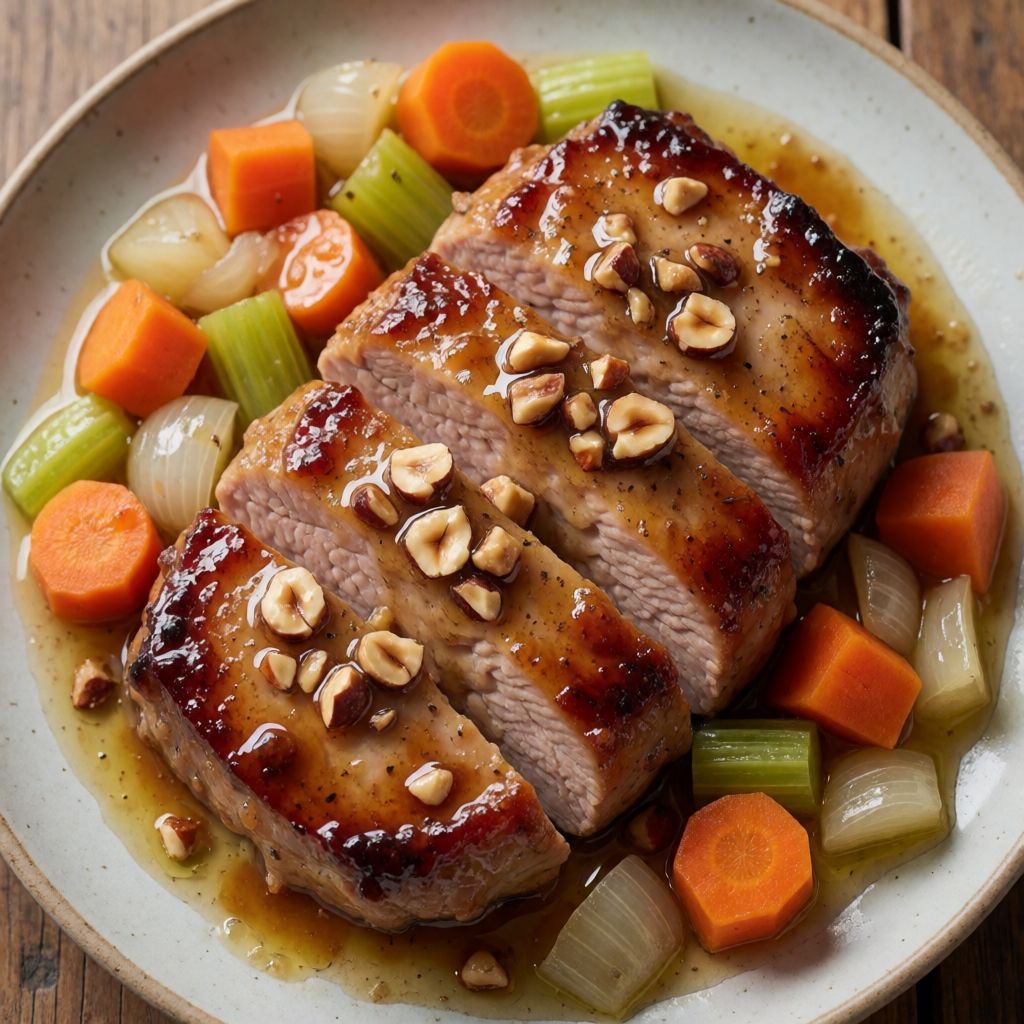
 AI photo
Pork Loin with Honey and Hazelnuts
A tender roast pork loin finished with a honey and hazelnut sauce.
Labels are worked out automatically from the ingredients and can be wrong. Check the packaging if it matters to you.
Ingredients
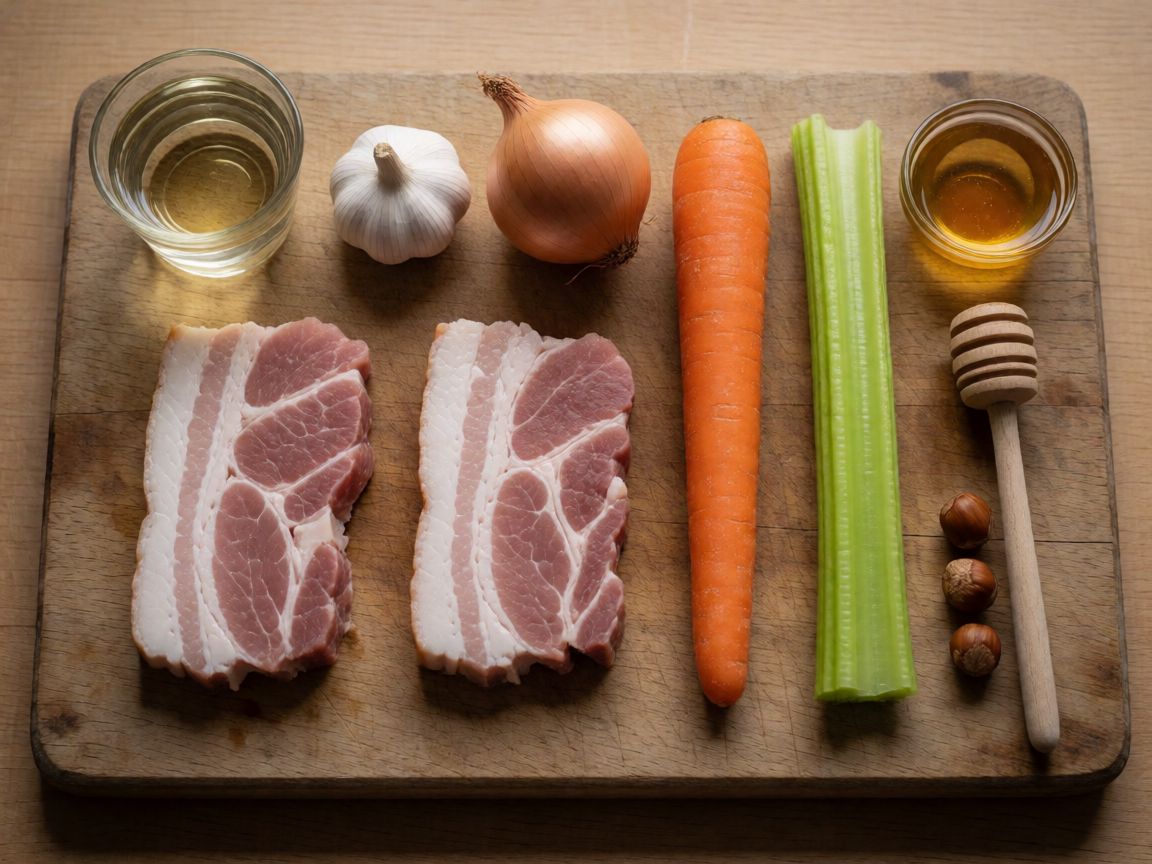
- 1.2 kg Pork Loin
- 1 clove Garlic
- 0.5 pcs Onion
- 1 pcs Carrot
- 1 pcs Celery stalk
- 100 g Olive Oil
- 250 ml White Wine
- 250 g Honey
- 200 g Hazelnuts
- 1 pcs Bouillon Cube
- Salt to taste
- 1 bunch Parsley
- 1 l Water
- Plain Flour to taste













Steps
Finely chop the garlic, onion, celery and carrot. Add the olive oil and fry in a roasting tin or pan.
5 minMeanwhile, prepare the stock from the bouillon cube and water.
Add the pork loin to the vegetables and brown on all sides until evenly golden, seasoning with salt.
Pour the white wine over the pork and let it evaporate.
Add the stock and place the tin in an oven preheated to 220°C. It is done when the internal temperature reaches 70°C.
Remove the tin from the oven and set the pork aside.
Pour the remaining sauce into a tall container and blend until smooth.
If the sauce is too thin, sprinkle in a little flour and whisk until smooth.
Slice the pork and place it back in the tin, coated with the sauce.
Top the meat with honey and hazelnuts, pour over the remaining sauce and sprinkle with parsley.
Reheat gently on the hob before serving.
5 min
This is a pork loin braised in its own vegetable stock, then finished with honey and hazelnuts — half Sunday roast, half the kind of dish where sweetness on meat is status, not dessert. The whole exercise is keeping one lean piece of meat moist through an hour and a half of heat, carried by a sauce made from the very vegetables it sat on.
What decides whether it works is the cut itself. Loin has no marbling running through it the way shoulder or belly does, so there's nothing basting it from inside — everything that keeps it from drying out has to come from the pan: the fond, the wine, the stock sitting underneath it. Browning it first isn't "sealing in the juices" — that's a persistent kitchen myth, and meat is not a freezer bag. What browning actually does is the Maillard reaction — colour and flavour that plain poached meat never earns.
The second thing that decides it is the internal temperature, 70°C, and that's not a number to guess at from the clock. It's already on the dry side for a cut this lean, which means a probe thermometer earns its place in this recipe more than a timer does. Pull the meat the moment it hits 70 — every extra minute past that is juice squeezed out that isn't coming back.
Honey and hazelnuts go on right at the end, warmed through for five minutes on the hob — not simmered with the meat, not baked in the oven. Cook honey too long and it just turns to caramel and a faint bitterness; keep it brief and you still taste honey, with nuts that stay nuts instead of going soft and sad in the sauce.
Onion, carrot, celery and garlic go in first, fried in oil — the standard soffritto, the base every fond and every sauce in this dish is built on. Don't fuss over the dice: all of it gets blended later, so rough chopping is not a shortcut, it's correct. Olive oil here is just the fat doing the frying and the browning; any oil with no smell of its own would do the same job — sunflower, a light rapeseed. Olive oil brings a little of its own character into a sauce rich enough to carry it.
White wine deglazes the pan after the meat browns — its acid lifts the fond, the brown stuck-on bits where most of the flavour is hiding. "Let it evaporate" doesn't mean boil it bone dry; the job is cooking off the raw sharpness of the alcohol, not banishing every drop of liquid. Some say you must reduce wine to nothing or the sauce tastes of drink — no, because a few minutes of simmering does that, and any dry white you'd happily drink in a glass is the right one. Skip anything sweet or fortified; it'll fight the honey later.
Stock from a bouillon cube is a shortcut, and there's no shame in it — it gives the sauce body and salt in two minutes instead of the two hours real stock would take. If you've got proper stock sitting in the freezer, use it, the sauce will taste rounder. The cube is the reason this dish is possible on a Tuesday rather than only after a weekend spent roasting bones.
Most roasting tins in an ordinary flat come without a lid. Cover the tin with foil for the oven stage so the top of the meat doesn't dry out while the bottom simmers in the stock, and take the foil off near the end if you want more colour on it. The oven dial reading 220°C is a promise, not a fact — every domestic oven runs a little hot or cold against its own number, which is exactly why the meat's internal temperature, not the dial or the clock, is what tells you to stop.
Honey and nuts on meat aren't a modern flourish borrowed from a dessert menu — dressing meat with honey and nuts is old, found from the Caucasus to medieval European tables, from back when honey was the only reliable sweetener and nuts were something that kept through a whole winter. Putting them on meat said: this is a feast, not an ordinary dinner. If you've no hazelnuts, any nut with a decent fat content works — almond, walnut — but hazelnut's slightly resinous oil is specifically what plays off honey; it's the same pairing that gave the world praline.
Flour at the end is insurance, not a given step: blend the vegetables and liquid first, and only reach for flour if the sauce runs off a spoon instead of clinging to it. Whisk it in a little at a time — dumped in all at once, it lumps before the heat gets a chance to cook it through. Cornflour mixed first with a splash of cold water does the same thickening job if that's what's in the cupboard. And 1.2 kg of loin for two people is generous on purpose — more Sunday joint than weeknight dinner, with the cold leftovers sliced into a sandwich the next day as the quiet second half of the reward. Parsley goes on raw, right at the very end, for the same reason it goes on any rich plate: something green and a little bitter to cut through all that honey and fat, not cooked, just sitting there doing its job.