
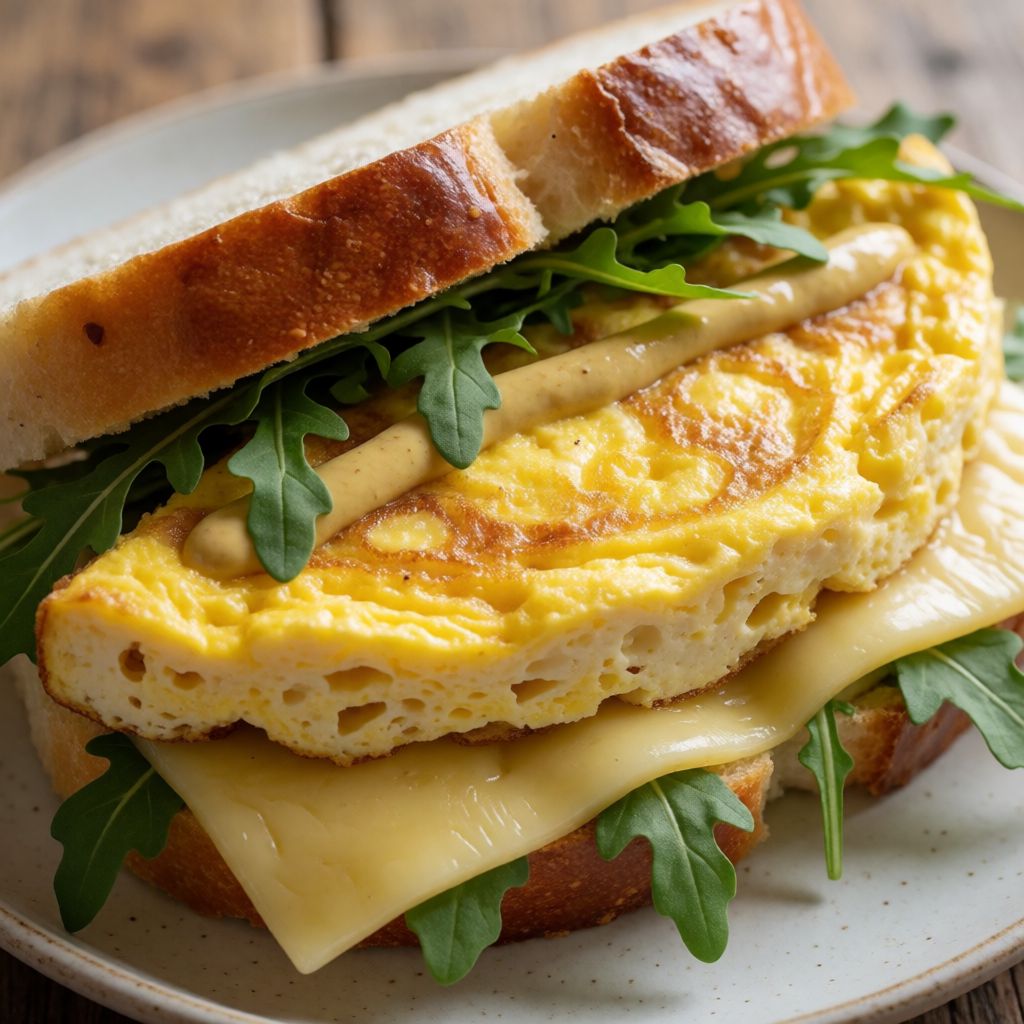
 AI photo
Frittata Sandwich
Little baked egg frittatas layered with rocket into a tidy sandwich, held together with a wooden skewer.
Labels are worked out automatically from the ingredients and can be wrong. Check the packaging if it matters to you.
Ingredients
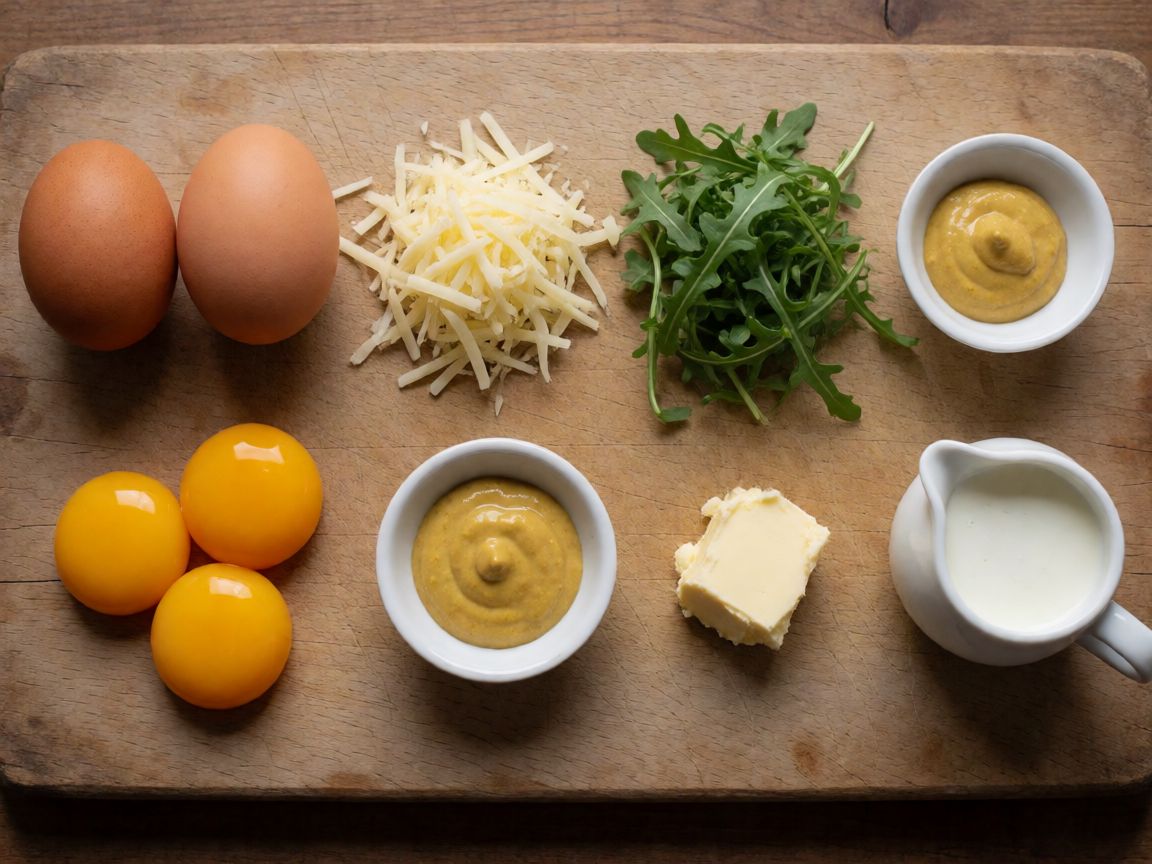
- 2 pcs Eggs
- 3 pcs Egg yolks
- 120 g Emmental
- 50 g Rocket
- 1 tsp Mustard
- Butter for greasing the moulds
- Salt to taste
- Black pepper to taste
- 100 ml Double cream









Steps
In a bowl, beat the eggs with the yolks, salt and black pepper.
Cut the Emmental into cubes and add to the egg mixture.
Add the mustard and double cream, and mix well.
Grease the moulds with butter and fill them halfway with the mixture.
Place the moulds on a tray and bake the frittatas in an oven preheated to 180°C.
10 minRemove the baked frittatas from the moulds.
Place one frittata on a plate, arrange the rocket on top and cover with a second frittata.
Secure the sandwich with a wooden skewer.
Repeat with the remaining frittatas and serve.
This isn't really a frittata in the Italian sense — no pan, no flipping, no browned skin. It's a baked custard, closer to a savoury crème brûlée than to the thing you'd make with leftover pasta and a wedge of onion. Two discs of set egg, cheese and cream, with a layer of rocket between them like a filling in a sandwich. The "bread" is egg. That's the whole trick of the name.
What decides whether it works is the ratio of yolk to white and the amount of cream. Three yolks to two whole eggs is a deliberate choice — yolks set softer and richer, whites set rubbery and dry if you push them too far. The cream dilutes the protein further, so the custard stays tender rather than turning into scrambled egg in a cup. Get this wrong — too many whites, too little cream — and you get a dense, bouncy puck instead of something you can bite through cleanly.
Doneness here is not a timer, it's a wobble. A proper baked custard should still tremble gently in the centre when you nudge the mould — if it's solid and firm to the touch all the way through, it's gone past the point where it's pleasant, and on the next few minutes of residual heat it will keep tightening into something rubbery. Ten minutes at 180°C is a starting point, not a verdict; your oven, your mould material, your mould size will all shift it.
The moulds matter more than the recipe lets on. You need something small, straight-sided, and the same size twice over, because the two discs have to match up into a sandwich — a ramekin, a metal pastry ring on a lined tray, even a muffin tin if you don't mind the dome shape. Butter isn't optional decoration here: it's what lets you turn the custard out in one piece rather than scraping half of it off the sides. A domestic oven doesn't give you the even, gentle ambient heat of a bain-marie, so don't expect restaurant uniformity — expect an edge that's slightly firmer than the centre, and work with that by checking the centre, not the edge, for the wobble.
Eggs and yolks: this is where richness lives. The extra yolks are not a luxury flourish, they're load-bearing — they bring fat and emulsifying lecithin without adding more water-heavy white, which is exactly what keeps the custard silky instead of spongy. If you only have whole eggs to hand, you can use five whole eggs instead of two-plus-three-yolks, but expect a firmer, slightly less luxurious set — not a failure, just a plainer version.
Emmental: cubed, not grated, because grated cheese melts into the custard and disappears, while cubes hold their shape and give you pockets of melted cheese scattered through the set egg — texture, not just flavour. Any firm, meltable cheese with a mild, nutty character works the same way: Gruyère, a mild Cheddar, even a block of mozzarella in a pinch, though mozzarella brings less flavour and more stretch. Avoid anything that weeps a lot of water when heated (fresh, wet cheeses) — that water will thin your custard and stop it setting cleanly.
Double cream does two jobs: it's fat, which carries flavour and keeps the custard from drying out under heat, and it's dilution, which — as above — stops the egg proteins binding too tightly. Single cream or whole milk will work but gives a looser, less velvety set; if you go that route, pull the custard out a touch earlier, since a thinner mixture firms up faster against the same heat.
Mustard is the one ingredient here doing a job out of proportion to its quantity — a teaspoon cuts through the richness of yolk, cream and melted cheese, the way mustard always does against fat (think of it alongside a roast, same logic). Leave it out and the sandwich tastes flat and one-note rich rather than balanced. Rocket is there for the same reason in a different register: bitterness and a bit of crunch against a filling that's entirely soft. Watercress or baby spinach leaves are the honest substitutes — anything peppery or mildly bitter and raw, not anything that wilts into nothing the moment it touches a warm surface.
The skewer isn't fussy plating, by the way. Rocket is slippery and the two custard discs have no structural grip on each other — without something physically holding the sandwich together, it slides apart the first time anyone picks it up. And have a little patience letting the frittatas cool slightly before you turn them out and assemble — straight from the oven they're fragile and will tear rather than release cleanly from the mould.