
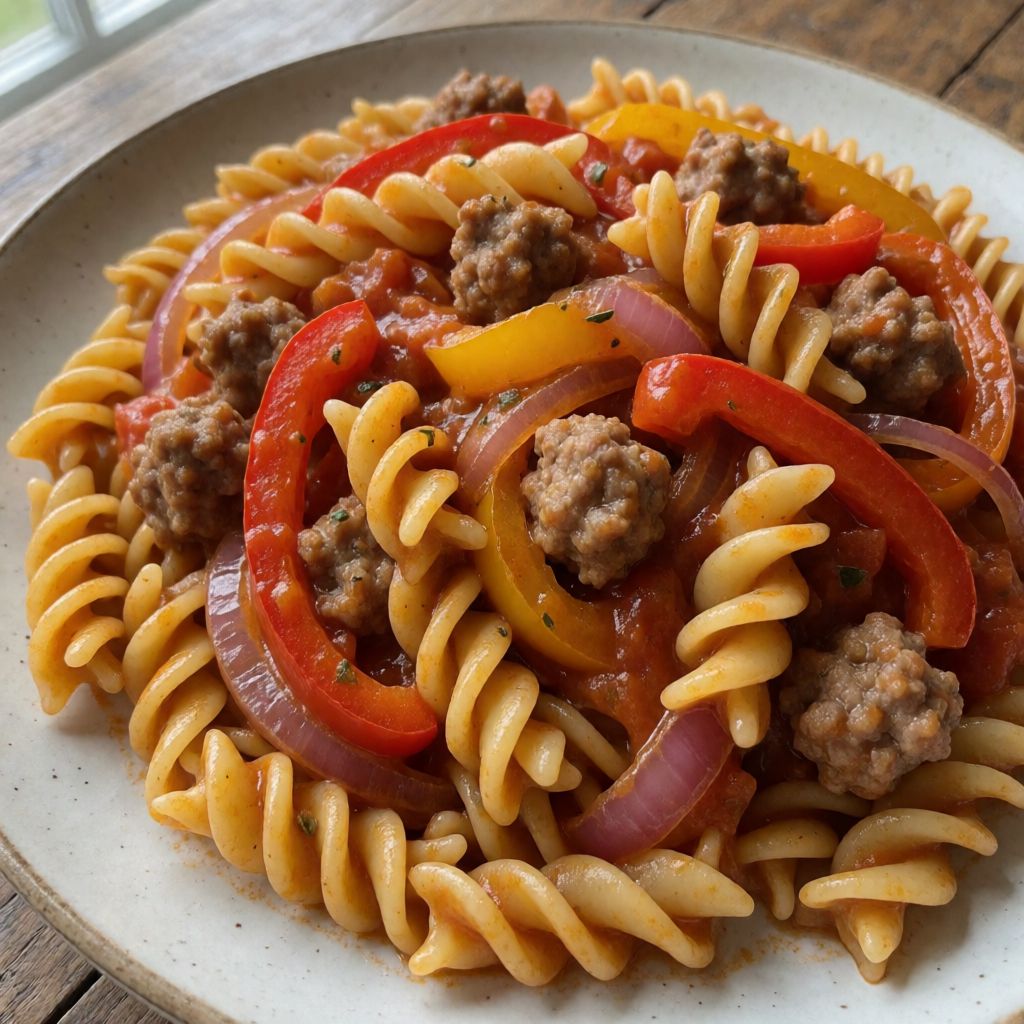
 AI photo
Fusilli with Peppers and Sausage
A quick pasta dish with fusilli, peppers and sausage, finished with a fresh tomato sauce.
Labels are worked out automatically from the ingredients and can be wrong. Check the packaging if it matters to you.
Ingredients
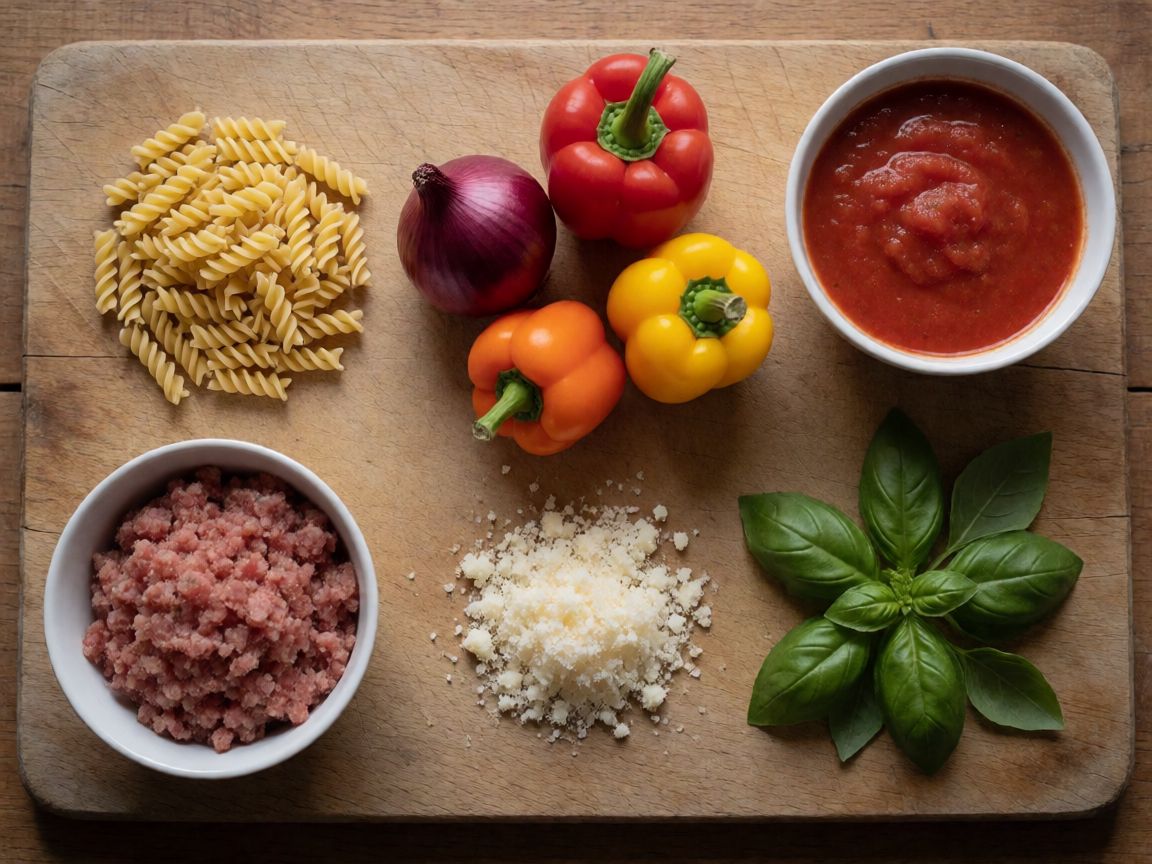










Steps
Fry the sausage in a dry pan without oil until golden and crisp; cook until it reaches an internal temperature of 70°C.
Heat 2 tbsp of olive oil and fry the peppers.
Cook the peppers over low heat.
10 minAdd the chopped red onion and the datterino tomato passata, continue cooking and season with salt.
This is a quick domestic pasta — not a show dish — where fusilli gets tossed through a loose pepper-and-tomato sauce carrying broken-up sausage meat. Nothing here needs a kazan or a long simmer; a wide frying pan on an ordinary hob does the whole job in the time it takes the pasta water to boil and the pasta to cook. What decides whether it works isn't skill, it's sequence: what happens to the sausage first, how patient you are with the peppers, and when the onion goes in.
Start with the sausage going into a dry pan. That's not a thrifty shortcut, it's the mechanism: a fresh sausage already carries plenty of fat in the meat, and if you add oil on top of that you're steaming it in its own grease instead of browning it — you get pale, sweating crumbs, not crisp, dark-edged ones. Dry heat forces the fat out of the meat and into the pan, where it browns the surface and leaves you a small puddle of flavoured fat behind. That fat doesn't get thrown away — it's the base the peppers fry in next. Cooked through means no pink juice when you cut a piece open; if you own a thermometer, that point sits around 70°C, which is simply where pork sets and anything in it that shouldn't survive, doesn't. It isn't a flavour target, it's a safety one, so don't chase it past the point where the meat looks done — overshoot and you just dry it out for nothing.
On the sausage: look for a coarse fresh pork sausage with a decent fat content and simple seasoning — fennel is the classic Italian note, but it's not compulsory. What matters for the mechanism is fat: a lean, finely emulsified sausage (the kind sold as 'healthy', low-fat) won't render enough grease to crisp itself or flavour the peppers, and you'll be back to adding oil anyway. In a British shop, a good Cumberland sausage with the skin slipped off works fine; it's coarser than most supermarket Italian ones and has the fat to match. Don't reach for the lean stuff thinking it's the better choice here — in this dish, fat is doing a job.
On the peppers: colour is a clue to ripeness, not a rule. A fully red pepper has had longer on the plant to convert its starches to sugar than a green one, so it fries sweeter and softens faster — that's why recipes like this lean red. If all you can get is green, it'll still work, just allow it a little longer under gentle heat and expect a sharper edge in the finished sauce rather than true sweetness. Use a wide pan, not a narrow saucepan — width lets steam escape instead of collecting under a lid you don't have, and without that escape the peppers stew limp rather than fry soft. A plate balanced over the pan, standard flat-kitchen trick, slows evaporation when you want it and should come off when you want colour.
On the passata: datterino tomatoes are small, intensely sweet, low in watery pulp — that's the whole reason they're specified, because they give you sauce without the acidity you'd need to cook off for twenty minutes to balance. Any good-quality passata will substitute, but if it tastes sharp rather than sweet, a pinch of sugar earns back what a lesser tomato is missing; don't oversalt to compensate for sourness, salt and acid are different problems.
On the cheese: Pecorino Romano is sheep's milk, salty and assertive — it's there to season the finished plate as much as to flavour it, which is why it's grated on at the end rather than cooked in. Parmesan will stand in, but it's milder and less salty, so taste the dish again once it's on before you reach for more salt — the cheese itself is doing some of that work.
On the oil: olive oil here isn't just a frying medium, its own fruitiness sits well with sweet cooked peppers — that pairing is the reason to keep it, not swap it for something neutral. If all you have is a flavourless oil, use it for the frying and finish the plate with a thread of good olive oil raw, off the heat, to get that aroma back where it actually shows.
On the basil: add it fresh and at the very end, off the heat. Basil's fragrance sits in oils that cooking drives off fast — hold it back until the pan is off the stove and it still smells like itself when it hits the plate. Dried basil has already lost most of that in the drying, so if it's all you've got, use more of it and earlier, treating it as background rather than a finishing note. And on the pasta: fusilli's ridges and twists are built to hold a chunky, broken sauce like this one rather than let it slide off, so if you swap pasta shapes, stay with something that has folds to grip — a smooth long noodle will just leave the peppers behind in the bowl.