
 AI photo
Fusilli with Pecorino
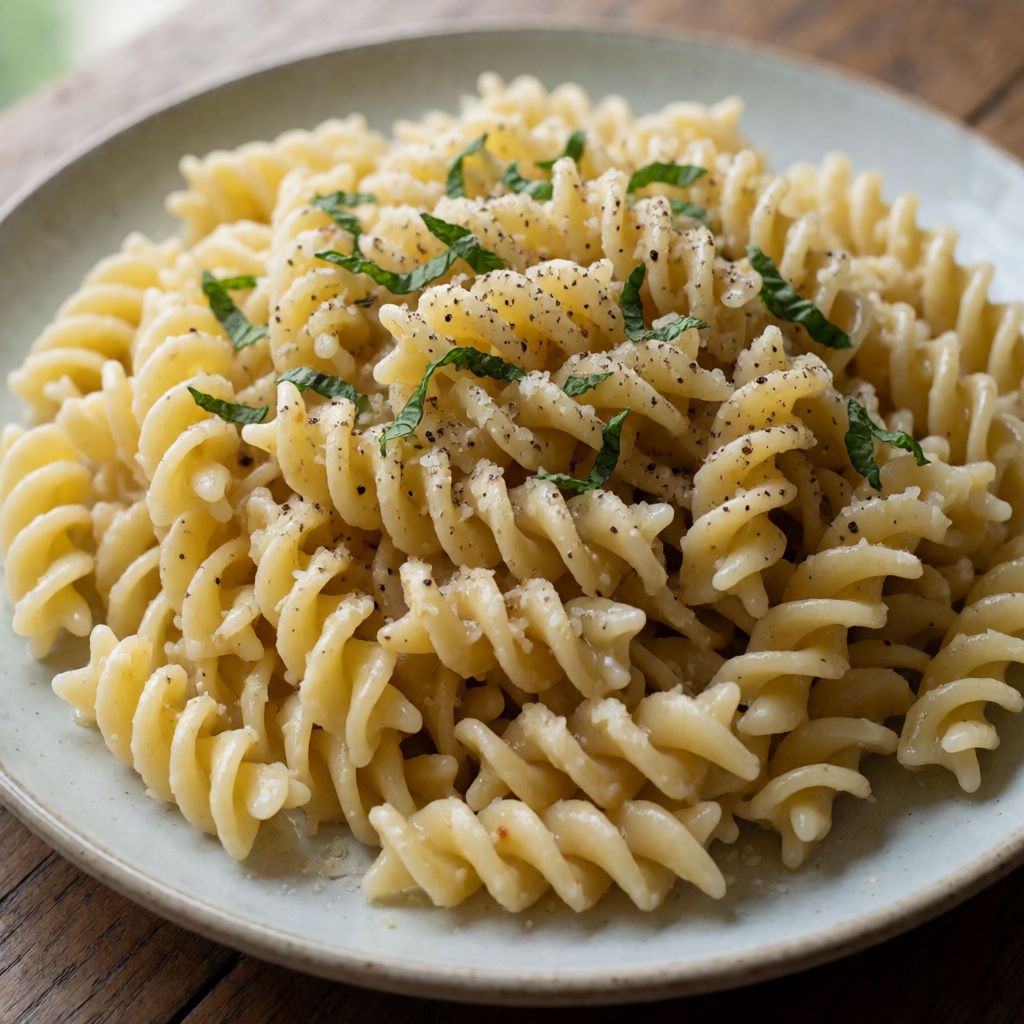
A quick, creamy pasta dish with grated pecorino, olive oil and black pepper, finished with fresh mint leaves.
Labels are worked out automatically from the ingredients and can be wrong. Check the packaging if it matters to you.
Ingredients
- 350 g Fusilli
- 60 g Pecorino Romano
- 60 g Pecorino Sardo
- 40 g Olive Oil
- Mint to taste
- Black Pepper to taste
- Salt to taste







Steps
Boil the fusilli in salted water until al dente.
Grate both types of pecorino onto a plate, add the olive oil and a pinch of black pepper.
Pour in a little cold water and mix well to a smooth, creamy consistency.
Transfer the cooked pasta together with the cheese mixture to a pan and toss until the pasta is evenly coated in the cream.
Sprinkle with a little more grated pecorino on top and garnish with mint leaves.
What was changed
Replaced Mint because it isn't available in UK shops; ordinary mint, already mentioned in the step, is used instead.
This isn't a sauce you cook. It's a cream you build cold, then let the pasta's own heat finish it in the pan. Two hard sheep cheeses, grated fine, loosened with oil and a splash of cold water into something like a thick paste — that's the whole trick before the pasta ever comes near it.
What decides if this works is restraint with heat. The cheese paste must never meet a flame, never meet boiling water. It meets hot pasta, and that's it — the starch clinging to the fusilli and the last warmth in the strands is what turns paste into cream. Toss too hard over too much heat and the fat and protein in the pecorino separate out, and you get grains floating in oily water instead of a cream coating each twist of pasta. The cue is simple: the cream should slide off a spoon slowly, not run, and the pasta should look lacquered, not wet.
Some say you need the pasta scalding hot, straight from the pot, to melt the cheese properly. No — because pecorino, being aged and salted hard, is already partway denatured. Hit it with real heat and it seizes rather than melts, the way an egg scrambles instead of thickening a custard. What you want is warm meeting warm, with the tossing doing the work, not the burner.
And mint in a cheese-and-pasta dish strikes some as a mistake, something borrowed from a mojito. It isn't. Hill shepherds in central Italy have paired wild mint with sheep cheese for as long as they've had both — the oil in the leaf cuts straight through the fat of the cheese the way lemon cuts through cream. It's there to clear your palate between bites, not to decorate the plate.
Fusilli is chosen for its ridges, not its looks. A cream this thick needs somewhere to sit, and the spiral grips it; a smooth tube would just let it slide to the bottom of the bowl. Any short pasta with grooves or folds — rigatoni, casarecce, even a decent conchiglie — will do the same job. Spaghetti won't; it's built for a thinner, oilier sauce, not a paste.
Pecorino Romano and Pecorino Sardo aren't interchangeable with each other by accident, they're chosen to balance one another. Romano is the sharper, saltier one — made purely from ewe's milk and aged hard, because for centuries that was the only way shepherds could carry protein through a season without refrigeration. Sardo is milder and a touch more buttery. Together they give you salt and roundness in one bite instead of just salt. If you can only get one, use more Sardo than Romano, or cut the Romano with a splash more oil to tame it. What you cannot do is swap in Parmesan and expect the same result — Parmesan is a cow's cheese, lower in fat, with a different salt curve, and it won't loosen into a cream the same way; it tends to clump where pecorino flows. Any hard, aged sheep's cheese with a dry, granular crumb will work in a pinch — a mature Manchego will get you closer than Parmesan ever will, though it isn't the same animal.
The olive oil here is never cooked, only stirred in raw, so it has to be an oil you'd happily eat off a spoon — proper extra virgin, with some flavour of its own. If you only have a neutral oil with no smell of its own, the dish will still hold together, but you lose one whole layer of taste, because here the oil isn't a cooking medium, it's a seasoning.
The cold water is doing a specific job: it lets the cheese dissolve gradually, without ever being shocked by heat, so you get a smooth paste rather than broken curds. This is the opposite of classic cacio e pepe, where you'd reach for hot starchy pasta water and work fast. Here the cheese is high-fat and melts easily on its own, so cold water, added a little at a time while you stir, keeps it under control until the pasta arrives to warm it through.
Black pepper wants to be cracked coarse, not ground to dust — you want to bite into it, not just taste a background heat. Salt should be added with a light hand to the pasta water and nowhere else until you've tasted the finished dish, because both pecorinos are salty enough to season the whole plate on their own.
In a flat kitchen, forget the idea you need anything like a kazan for this — a wide frying pan is exactly right, since the whole point is surface area for tossing, not depth for boiling. Build the cheese paste on a plate first and give it a minute before you touch the pasta to it; rushing that minute is the single most common reason the cream turns gritty instead of smooth. Patience here isn't a virtue, it's an ingredient, same as the cheese. And on servings — 350 g of pasta for one person is a generous bowl by any honest measure; plan on it comfortably feeding two normal appetites, or one after a long day when nothing less will do.