
 AI photo
Ginger Shots
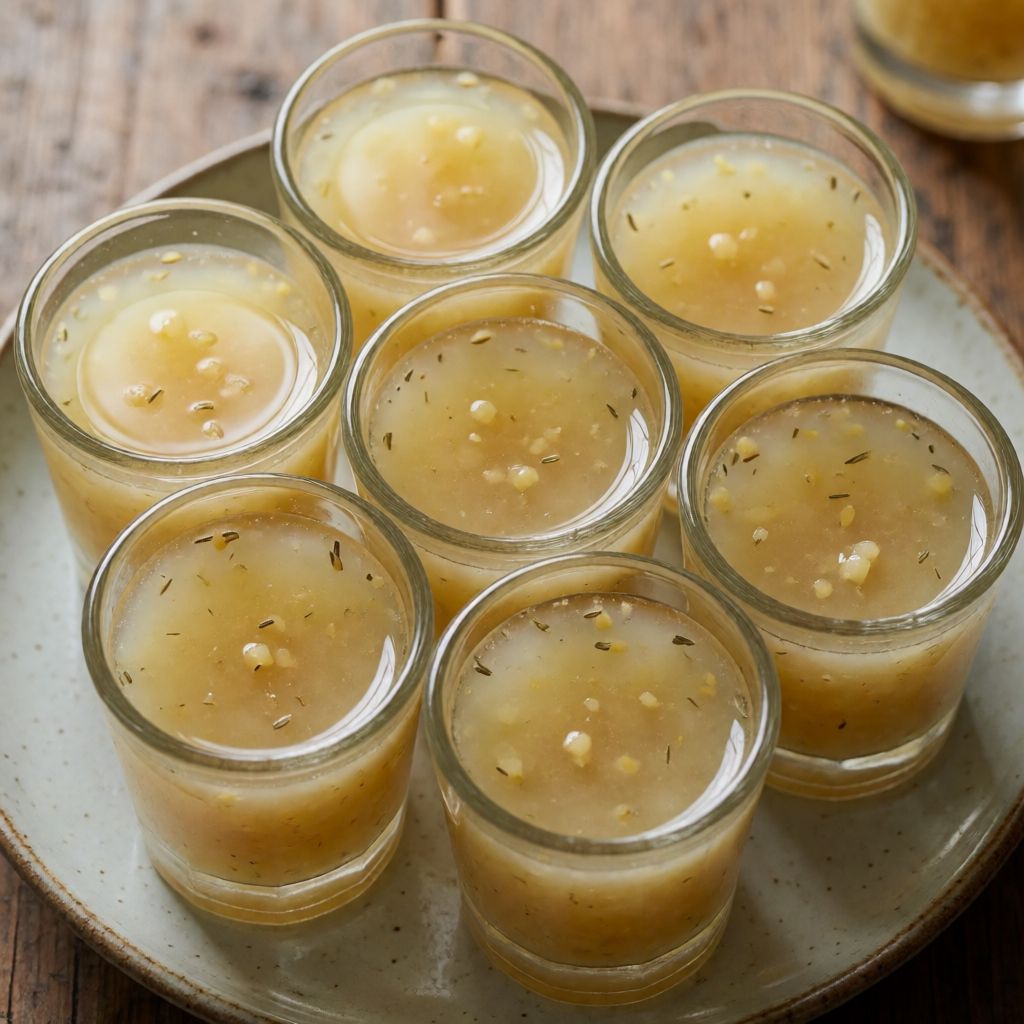
A soothing ginger shot with lemon, chamomile and thyme, sweetened with honey — perfect for a scratchy throat.
Labels are worked out automatically from the ingredients and can be wrong. Check the packaging if it matters to you.
Ingredients





Steps
Peel the ginger with the back of a spoon. Cut it into thin slices and place it in a pot with the water.
Boil, covered, for 20 minutes.
20 minRemove the pot from the heat, add the chamomile teabag, the thyme and the lemon juice.
Leave the mixture to cool to room temperature, strain it through a sieve, then stir the honey into the liquid.
Store the ginger shots in a bottle in the fridge and drink one shot in the morning, or several times a day for a sore throat or as needed.
Tip: the amount of juice from lemons can vary a lot.
If needed, add more lemon juice if the juice from the 3 lemons in the recipe turns out to be too little.
This quantity makes about 400 ml of the drink.
This is not a drink you sip for pleasure — it's a dose. A shot, meant to be knocked back in one go, aimed at a sore throat or a morning that needs waking up, not at thirst. Keep that in mind and the whole recipe makes sense: everything in it is built to concentrate, not to dilute.
What decides whether it works is timing of heat, not length of it. Ginger needs the boil — that's how you pull the sharp, warming compounds out of the root and into the water. But chamomile, thyme and lemon juice need the opposite: gentleness. Boil them too, and you cook off the very things you added them for — chamomile's soft apple-like scent, thyme's volatile oil, the brightness in the lemon juice. So there are two temperatures in this recipe, not one: a real boil for the ginger, then heat switched off for everything else, steeped like tea rather than simmered like soup.
The lid matters more than it looks. Twenty minutes at a boil with no lid and you'll lose a good third of your water to steam — the shot ends up stronger than planned, and shorter than planned, which is a worse trade than it sounds, because the whole point is a measured, repeatable dose, not a guess. A plate over the pan does the same job as a lid if your lid doesn't fit; the aim is simply to keep the water where it is.
Ginger: this is the one ingredient you can't swap out — it's the whole reason the shot exists. Choose a piece that's firm and heavy for its size, with skin pulled tight. A wrinkled, light piece has already dried out in storage and given up moisture and pungency; it'll still work, you'll just need more of it, and the taste will be flatter. Watch the water as it boils rather than the clock: it should turn the colour of weak tea and start to smell sharp through the kitchen. Twenty minutes is a floor, not a target — a young, juicy root will get there faster, an old woody one might want longer.
Lemon juice: the recipe gives you a volume to hit, 200 ml, not a reliable count of fruit. Three lemons is a guess dressed up as a measurement — lemons sold in UK supermarkets are often picked under-ripe and vary wildly in juice by season, so squeeze into a jug and top up with a fourth if you're short. Treat the fruit count as a shopping list, the millilitres as the actual instruction.
Chamomile and thyme: both go in after the heat is off, steeped like tea in the hot-but-not-boiling liquid. That's an infusion, not a decoction — it pulls out aroma without cooking it away. The substitution rule here is simple: any mild herbal infusion with no strong character of its own will do the same job — linden, even a plain weak black tea in a pinch, though that brings tannin and a bit of bitterness you don't want. Thyme can be dried or fresh; dried is more concentrated, so a tablespoon of it is already doing the work of a small handful of sprigs.
Honey: stirred in only once the liquid has cooled to room temperature. There's an old claim that heated honey turns toxic — it doesn't, nothing poisonous forms in a kitchen pan. What actually happens is simpler and still worth respecting: heat drives off the floral top notes that make a good honey taste like itself rather than just sweet syrup. Add it hot and you've paid for a nice honey and got sugar water. Any honey sweetens the drink; a honey with real flavour only earns its price if it goes in cold.
The cooling stage before straining and sweetening isn't dead time, it's an ingredient in its own right. Rush it — add the honey while the liquid's still hot because you're impatient — and you quietly throw away the most fragile half of the recipe. Four hundred millilitres from this much water and juice is roughly four to six shots, depending how generous you pour; keep it in the fridge in a bottle with a lid, since loose aromatics in open air fade fast, same reason you covered the pot in the first place.