
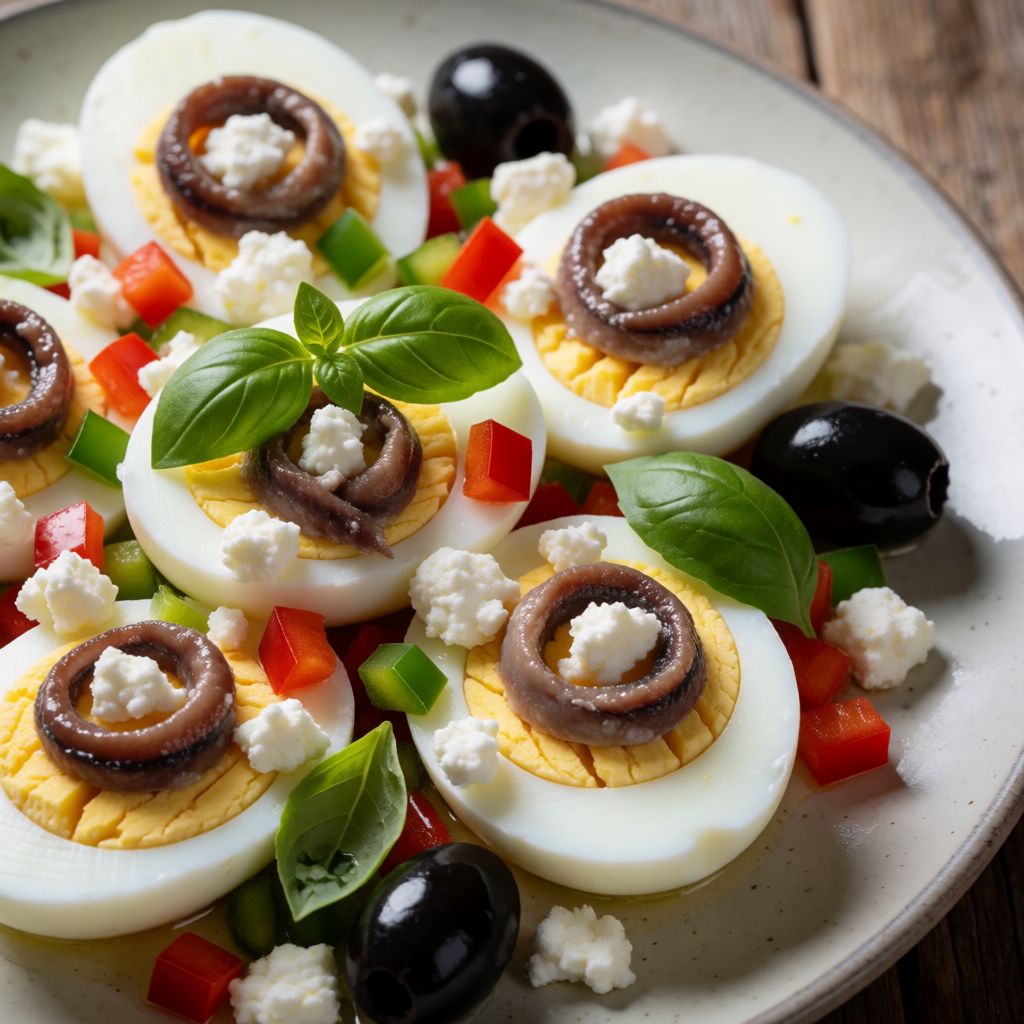
 AI photo
Greek-Style Eggs
A Greek-style stuffed egg starter with feta, roasted red pepper, anchovies and olives.
Labels are worked out automatically from the ingredients and can be wrong. Check the packaging if it matters to you.
Ingredients
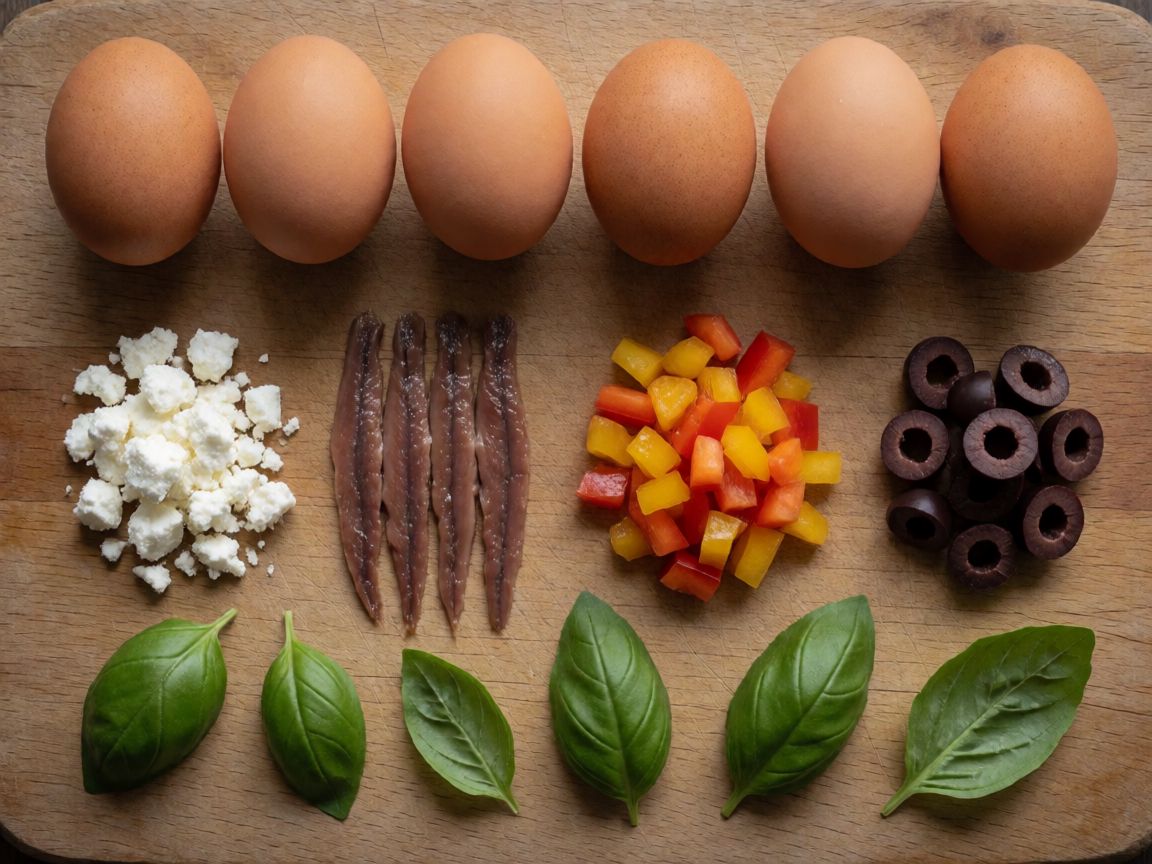
- 8 pcs Eggs
- 100 g Feta
- 4 pcs Anchovies
- 50 g Red pepper
- 10 g Black olives, pitted
- 6 pcs Basil
- 10 g Olive oil
- Salt
- Black pepper








Steps
Roast the red pepper in the oven: wash it, pat it dry with paper towel, remove the stalk, and place it on a baking tray lined with baking paper.
30 minTransfer the pepper to a bowl to cool and cover with cling film.
Boil the eggs: place them in a pan and cover with cold water, timing 8-9 minutes from boiling.
9 minCool the eggs under cold running water so they peel easily.
Peel the eggs and cut them in half lengthways, scoop the yolks into a separate bowl, and arrange the whites on a plate.
Peel the pepper and cut it into small cubes. Cut the feta into small cubes in the same way.
15 minFinely chop the anchovies and add them to the pepper and feta, then add the pitted black olives.
Mash the yolks with a fork and add them to the bowl with the rest of the filling.
Season with chopped basil, salt, black pepper and olive oil. Mix thoroughly.
Fill the egg white halves with the prepared filling using a teaspoon.
Put the eggs in the fridge.
55 minArrange lettuce leaves on a plate and lay the Greek-style eggs on top. Serve to your guests.
This is a deviled egg with a Greek passport. The idea is old and not especially Greek: boiled egg, split, yolk pulled out, mashed with something salty and fatty, pushed back in. Russians and the French do their own versions; here the filling is feta, anchovy, roasted pepper, olive — the whole Mediterranean larder instead of mayonnaise and mustard. What decides whether it works is not the filling, it's the egg underneath it, and most people get the egg wrong before they even open the fridge.
An egg boiled wrong ruins this dish twice: a grey-green ring round the yolk tells you it was overcooked, and a yolk that won't come out clean because it's half-set in the white tells you it's undercooked. Nine minutes from a full boil, then straight under cold running water — not into a bowl of water that warms up and stops cooling — gives you a yolk that's just firm enough to mash but not chalky, and a white that releases from the shell instead of tearing. The cold shock does a second job too: it stops the sulphur in the yolk reacting with the iron in the white, which is the actual chemistry behind that unwanted green ring, not "overcooking" in some vague sense.
Some say you should salt the boiling water to help peeling. It doesn't — salt affects taste, not the bond between membrane and shell. What actually helps is a shock of cold after heat, and eggs that aren't fridge-fresh that morning (a few days old peel cleaner, because the air pocket inside grows as the egg sits, and that pocket is what lets the shell separate).
Start with the eggs themselves, since eight of them carry the whole dish. Size matters more than brand — a hen's egg varies enough that "8-9 minutes from boiling" is really a guide for a medium-large egg, and a smaller one will overshoot into that grey ring faster. If your eggs are very fresh, expect peeling to be fiddly whatever you do; that's not your fault, it's the chemistry of a tight membrane in a young egg, and it's worth buying them a few days ahead for this reason alone.
The red pepper is roasted whole, skin on, until it collapses — you're not timing it by the clock so much as by the smell changing from raw-vegetable to something sweeter and slightly charred, and by the skin blistering and loosening from the flesh. The cling film afterwards isn't decoration: trapping the steam while it cools is what lets the skin peel off in sheets instead of you scraping at it with a knife. Skip the roasting and use a jarred roasted pepper if you're short on time — the texture's a touch softer but the sweetness is already there, and that's the point of roasting in the first place: it isn't about colour, it's about converting raw bitterness into sugar.
Feta needs no real substitute — that's the saltiness and crumble the dish is built around — but if you can't get it, a firm, salty sheep's or goat's cheese that doesn't melt into paste when cut will do the same job. Don't reach for a soft cow's-milk cheese; it'll turn the filling into a smear instead of keeping its little cubes of texture against the egg white.
Anchovies are there for depth, not fishiness — chopped fine, they more or less dissolve into the mix and you taste salt and umami rather than "fish." If you genuinely dislike them, a few extra capers do a similar job of cutting through the fat of the yolk and cheese, though you lose a little of that savoury backbone.
Olives, pitted and black, and basil, torn or chopped at the last minute so it doesn't bruise and blacken, round it out. The olive oil at the end should be one with actual character — a plain, flavourless oil defeats the purpose here, since this dish has no cooking fat doing work elsewhere to carry flavour; the oil you drizzle in is pulling its full weight.
The fridge rest at the end — the better part of an hour — isn't padding in the recipe. It's the filling settling into the egg white, the flavours actually meeting each other instead of sitting side by side. Serve it straight from the pan and you'll taste egg, then feta, then pepper, one after another. Give it the rest and you taste all of it at once. That's patience working as an ingredient, same as it does leaving a roast to rest before you carve it — nobody skips that part on a Sunday, so don't skip it here either.