
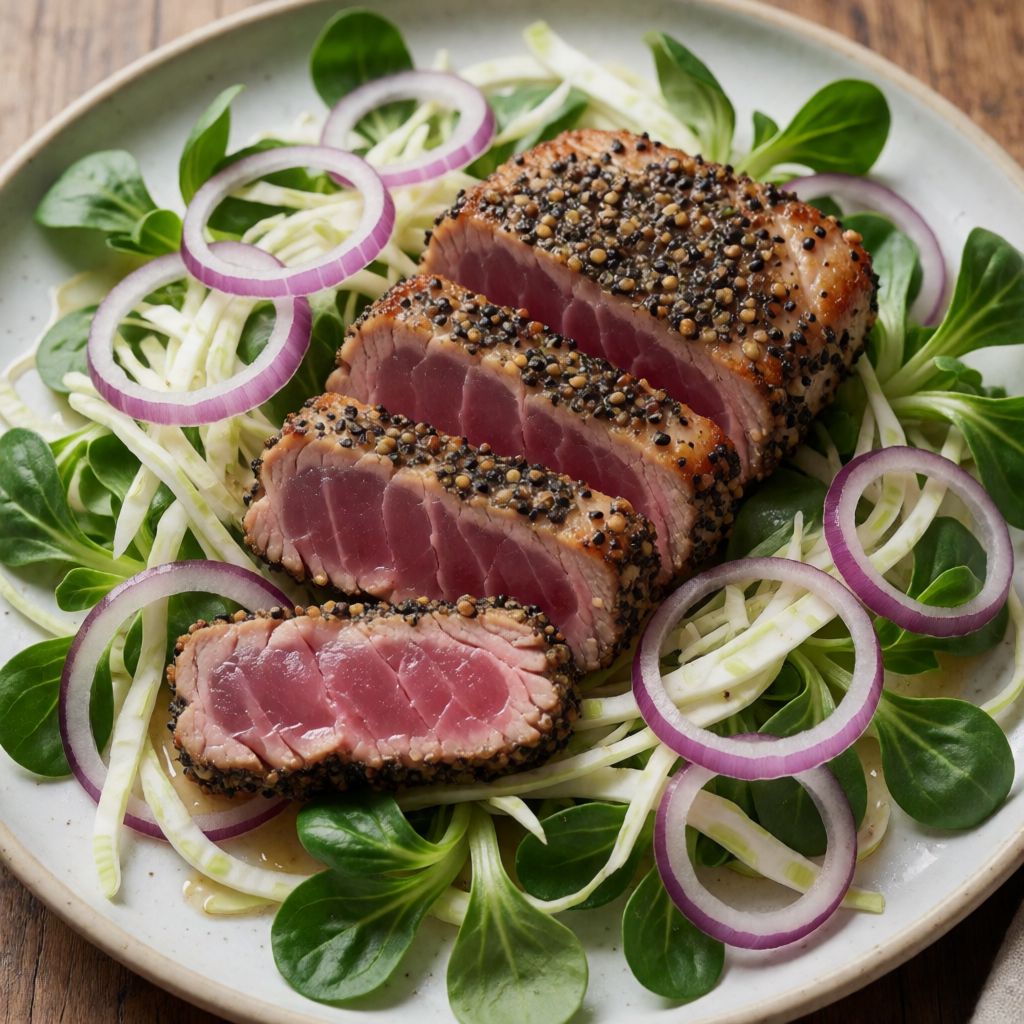
 AI photo
Grilled Pepper-Crusted Tuna
A quick seared tuna coated in cracked pepper, served with a crisp fennel and lamb's lettuce salad.
Labels are worked out automatically from the ingredients and can be wrong. Check the packaging if it matters to you.
Ingredients
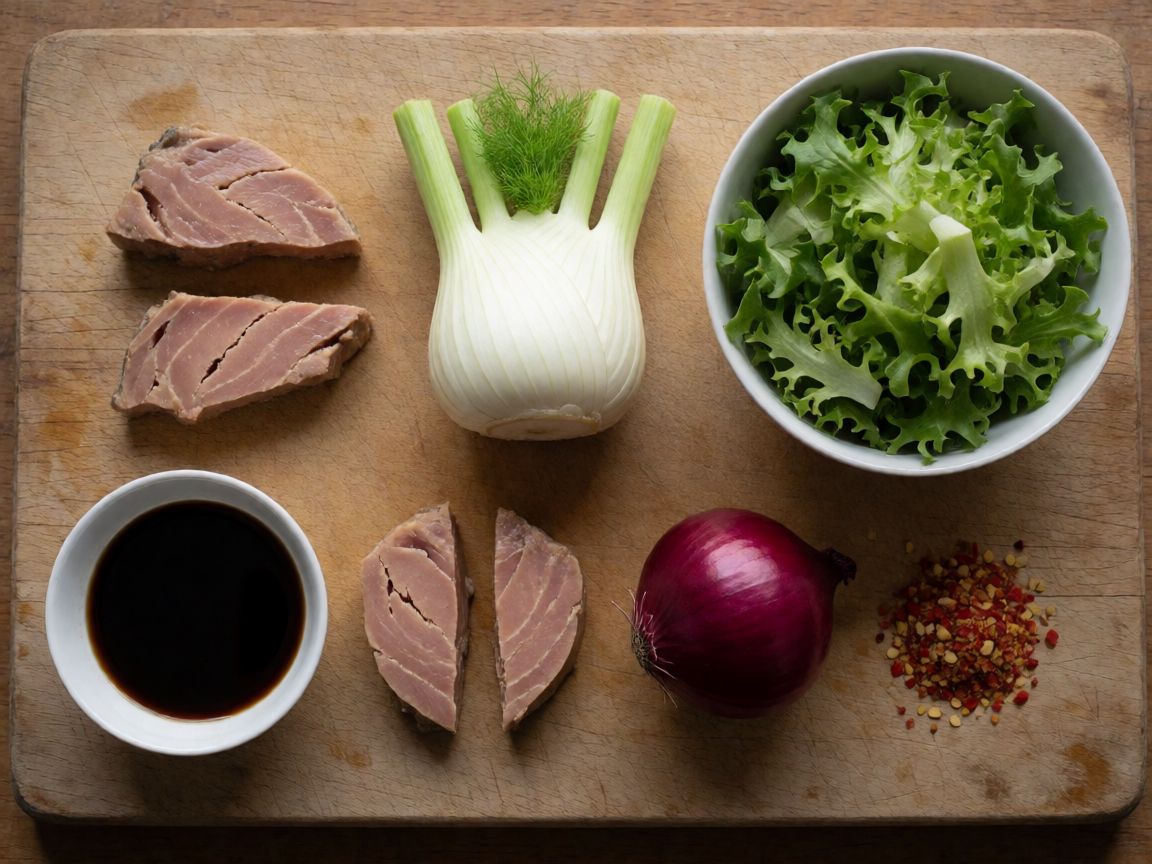
- 4-5 pcs Tuna fillet
- 1 pcs Fennel
- 200 g Lamb's lettuce salad greens
- 1 pcs Red onion
- Olive oil to taste
- Balsamic vinegar to taste
- Creole pepper mix to taste
- Salt to taste






Steps
Generously crush the pepper mix on a plate and coat the tuna slices in it on both sides.
In a salad bowl, combine the lamb's lettuce, thinly sliced fennel and thinly sliced red onion.
Grind a little more pepper, season with salt to taste and dress with a vinaigrette of olive oil and balsamic vinegar.
Sear the tuna on a very hot griddle pan for 2 minutes on each side. It is done when the thickest part reaches 63°C.
4 minAdd a pinch of salt and serve with the prepared salad.
This is a tuna steak treated exactly like a sirloin — crusted hard on the outside, left rose-coloured in the middle, with nothing accidental about it. The pepper crust isn't seasoning, it's armour: a layer that browns and crunches while the fish underneath barely feels the heat that passed through it. What decides whether it works is heat and time pulling against each other — a pan hot enough to set that crust in seconds, and a cook who pulls the fish off before the centre turns the same colour as the crust.
Some say fish needs cooking through, the way chicken does, or you're taking a risk. No — because tuna isn't riddled with little joints and cavities where bacteria can hide, the way a chicken carcass is. It's one dense block of muscle, closer to beef than to cod. The only part exposed to the outside world is the surface, and that's exactly the part your furnace-hot pan deals with in the first few seconds. Cook it all the way through and you haven't made it safer, you've made it dry and stringy, because lean muscle with almost no fat running through it has nothing to protect it once the water inside cooks out.
The salad isn't a side thought, it's the mechanism's other half. Raw fennel and red onion, sliced thin as you can manage, bring crunch and a clean aniseed-and-sulphur bite that cuts through the richness of the fish — tuna carries more fat than its colour suggests, nothing like the lean white fish people expect. Balsamic and oil wake the vegetables the same way salt wakes up meat: not flavour added on top, flavour switched on.
Tuna fillet: buy it like you'd buy a steak, not like you'd buy a fillet of plaice. Good tuna looks like raw beef — deep, almost bruised red, firm when you press it, no slackness. If the piece is thin or uneven, the crust will burn before the centre has any chance of staying rose; look for something at least a couple of fingers thick, even if that means four pieces instead of five for the same plate.
Creole pepper mix: the point of crushing rather than grinding is that coarse shards toast in the heat instead of turning to fine black dust that scorches and tastes of ash. If you can't find a Creole blend, make your own — black peppercorns, dried chilli flakes, maybe a little allspice, crushed under a pan base or in a mortar. Keep sugar out of any pepper crust you build for high heat; sugar caramelises fast and burns faster, and bitter crust ruins the fish under it. On the pan itself — be honest about your hob. A thin non-stick frying pan won't hold the heat a crust needs; it cools the moment the cold fish touches it. Use the heaviest flat or ridged pan you own, let it sit empty on full heat for a few minutes, and test it the way you'd test a hot griddle for steak: flick a drop of water on and it should skitter and vanish instantly, not sizzle lazily.
Fennel and red onion: the criterion is crunch and raw bite that survives contact with the dressing instead of wilting into it. Fennel gives aniseed; if you don't fancy it, celery or kohlrabi do a similar crunchy, watery job without the liquorice note. Red onion gives sulphur sharpness that the vinaigrette is partly there to tame — if raw onion usually fights you, slice it thinner, or let it sit in cold water for a few minutes before it goes in the bowl; that draws off some of the sharpest compounds without softening the crunch.
Lamb's lettuce (sold in most UK shops as lamb's lettuce or corn salad, usually already washed in a bag): it's chosen for being mild and tender, a cushion for the crunchier vegetables and the firm fish. Any soft, mild leaf without bitterness will do — baby spinach, pea shoots. Avoid rocket or watercress here; their pepperiness duplicates what the crust is already doing and the two fight instead of layering.
Olive oil and balsamic vinegar: unlike oil used for frying, where you want something with no character of its own, dressing oil is there to be tasted, so use an olive oil with actual flavour, not a neutral one. Balsamic's job is to bring a little sweetness and body that rounds off the onion's edge — if you're out of it, a sherry vinegar with a small pinch of sugar stirred in gets you most of the way there; a thin, sharp vinegar on its own will make the salad taste unfinished.
One last thing worth knowing, since this is a kitchen used to a Sunday roast: searing fish like this is really the same logic you already use on beef — fierce, short, direct heat, pulled off while the centre is still a different colour from the crust. Tuna gets this treatment because it's sold and cut like meat, by the loin, not whole like most fish, so the steakhouse method simply crossed over to it. There's no mystery tradition behind it, just a fish that happens to behave like beef on a hot pan.