
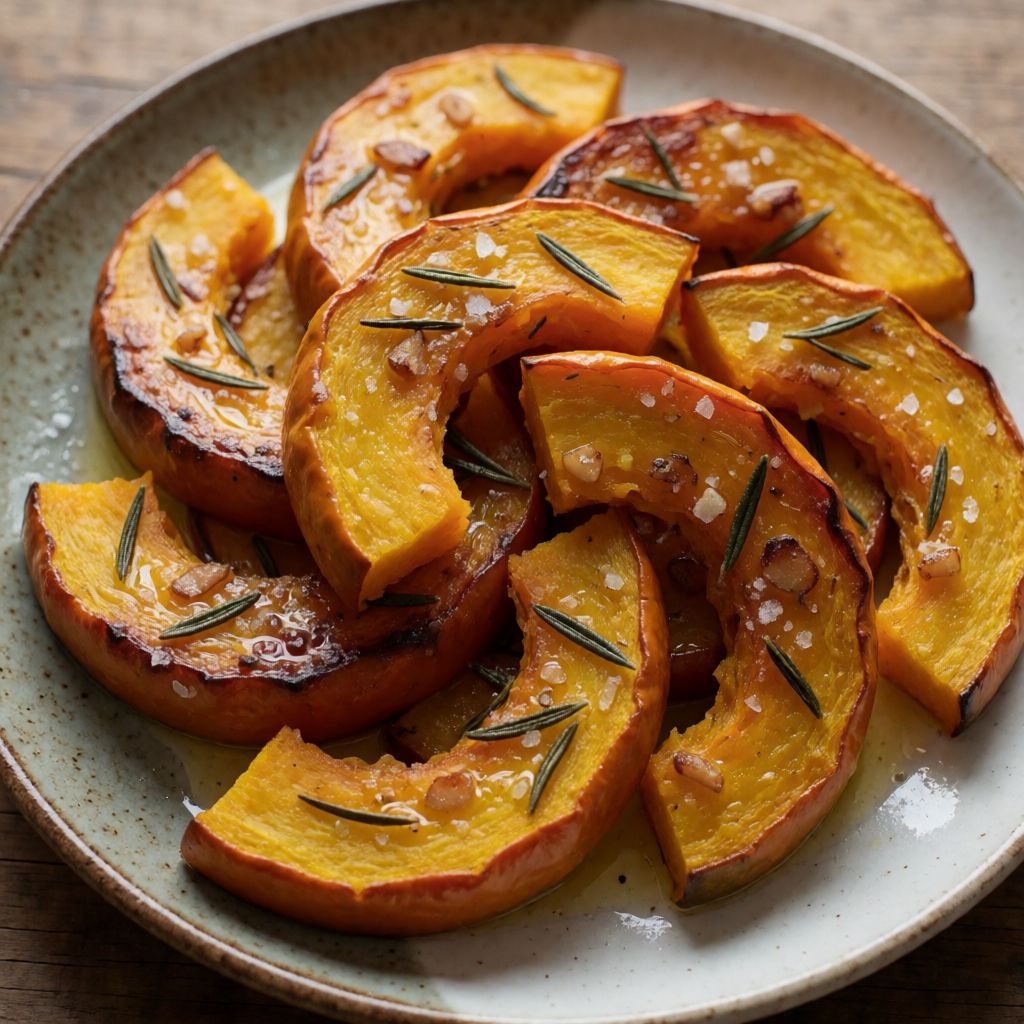
 AI photo
Pan-Fried Pumpkin
A simple side dish of pumpkin cubes pan-fried with garlic and rosemary until tender.
Labels are worked out automatically from the ingredients and can be wrong. Check the packaging if it matters to you.
Ingredients





Steps
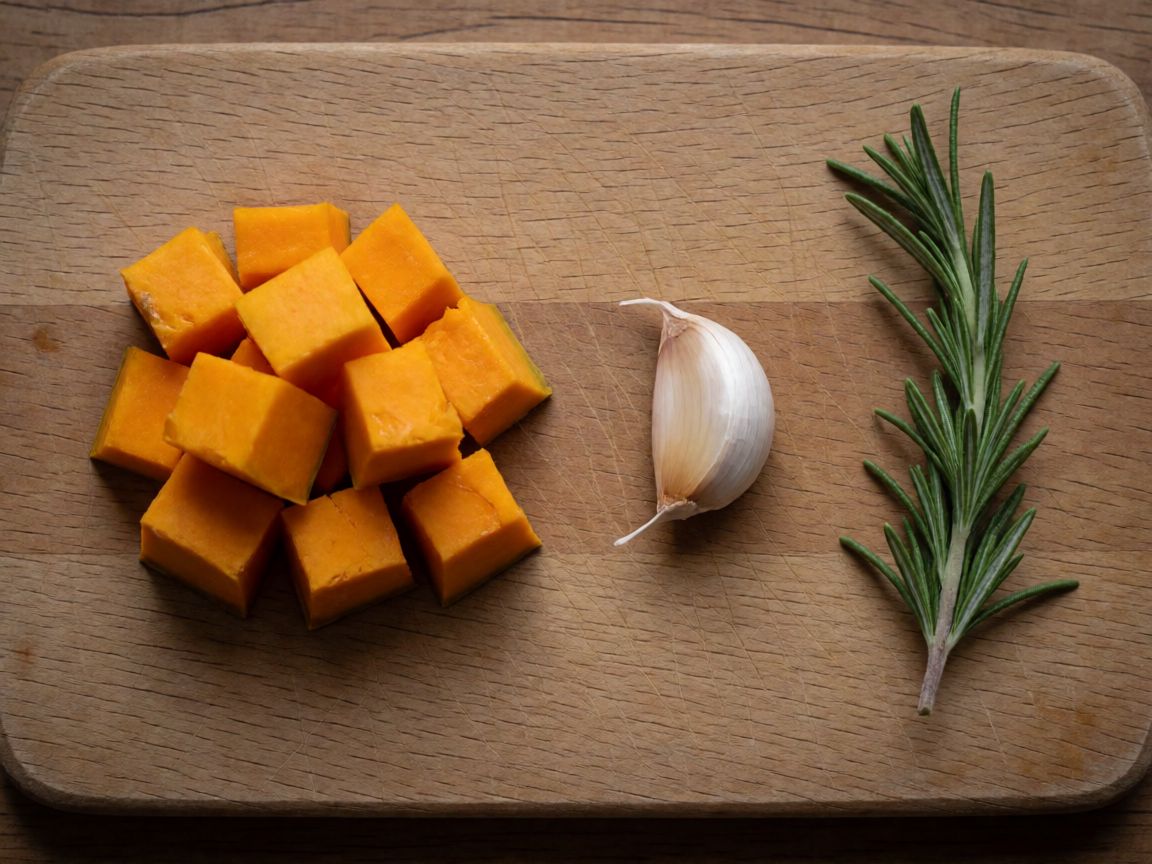
Thoroughly clean the pumpkin, peel off the skin and cut into small cubes.
In a non-stick pan, heat the garlic with olive oil and rosemary until the garlic turns golden.
Add the diced pumpkin. If needed, add a tablespoon of water.
Cover the pan with a lid and cook over high heat.
Reduce the heat and cook for a further 5 minutes on low heat.
5 minCheck it's cooked by mashing a piece of pumpkin with a fork.
Add salt, remove the pan from the heat and serve.
This is not roasted pumpkin, cumbersome and sweet from an hour in the oven — it is pumpkin that spends most of its life in steam, with a scent fried into it beforehand. The whole method turns on one small move: heating garlic and rosemary in oil until the garlic is gold, so the fat carries their smell before the pumpkin ever touches the pan. Skip that, dump everything in cold together, and you get boiled pumpkin that merely sat near garlic — not the same thing.
Some say a non-stick pan means you can skimp on the oil. No — here the oil is not there to stop sticking, it is the thing that carries flavour into the vegetable. Pumpkin itself has almost no fat to dissolve aromatics into, so if the garlic and rosemary do not do their work in the oil first, they never do it at all.
The heat does two different jobs and that is why it changes. High heat at the start gets the little splash of water into steam fast — that steam is what actually cooks the inside of the cubes while the oil fries the outside that touches metal. Low heat afterwards lets the sugars inside the pumpkin soften and the cubes hold shape, without scorching the oil or the garlic that's still sitting in it. One heat for both jobs would either leave the middle raw or burn the bottom black.
Forget counting minutes past that first bubble. You know it's done when a piece gives to the back of a fork without a fight — not mush, just no resistance. Time in the recipe is the floor, not the finish line.
Pumpkin itself is the variable most people get wrong. Watery pumpkin — the big pale kind sold whole for carving — breaks down into soup before it ever forms a cube with a fried edge. You want dense, close-grained flesh: in a British shop that is usually a butternut squash sold as such, or a Crown Prince if you can find one. Neither is cheating; they're closer in behaviour to the Italian zucca this dish comes from than most things labelled "pumpkin" on a UK shelf in October.
Cut the cubes small and even on purpose, not for looks. Small cubes mean more surface touching the hot pan, which means more of the sugar at the edges caramelises while the middle still steams through in the same few minutes. Uneven cubes just mean some pieces are done and mushy while others are still raw in the centre — and no amount of extra time fixes that, it only burns the small ones worse.
The garlic clove is there to perfume the oil, not to be a main event — leave it whole, bruised if you like, so it releases slowly and you can fish it out or leave it in the pan at the end, your call. Rosemary works the same way: one fresh sprig, bruised a little between your fingers first so the oil gets at the resin inside the needles. If you've only got dried, use less — maybe a pinch — dried rosemary is more concentrated and turns bitter-woody fast in hot oil.
Oil: this is one dish where you do want the oil's own character, since it's an Italian-style fry, not a neutral base. A everyday olive oil, not your best bottle, does the job — frying dulls the finer notes of a good extra virgin anyway, so save that for drizzling over something raw another day.
Salt goes in at the very end, and that's not habit, it's mechanics. Salt pulls water out of vegetable cells by osmosis — put it on raw pumpkin before cooking and you draw moisture out into the pan before the heat's had a chance to set the cube's shape, and you end up with watery, collapsing pieces instead of ones that hold together with a fried edge.
If your pan has no lid — plenty of ordinary kitchens don't — a plate set over it does a rough version of the same job, trapping some steam rather than none. It won't seal as tight, so check a minute or two earlier than you would with a proper lid, and keep that tablespoon of water close in case it runs dry before the pumpkin softens. Patience matters here more than people expect from something this quick: watch the garlic instead of walking off, because gold to burnt is a matter of seconds, and once it's burnt the whole dish tastes of it.