
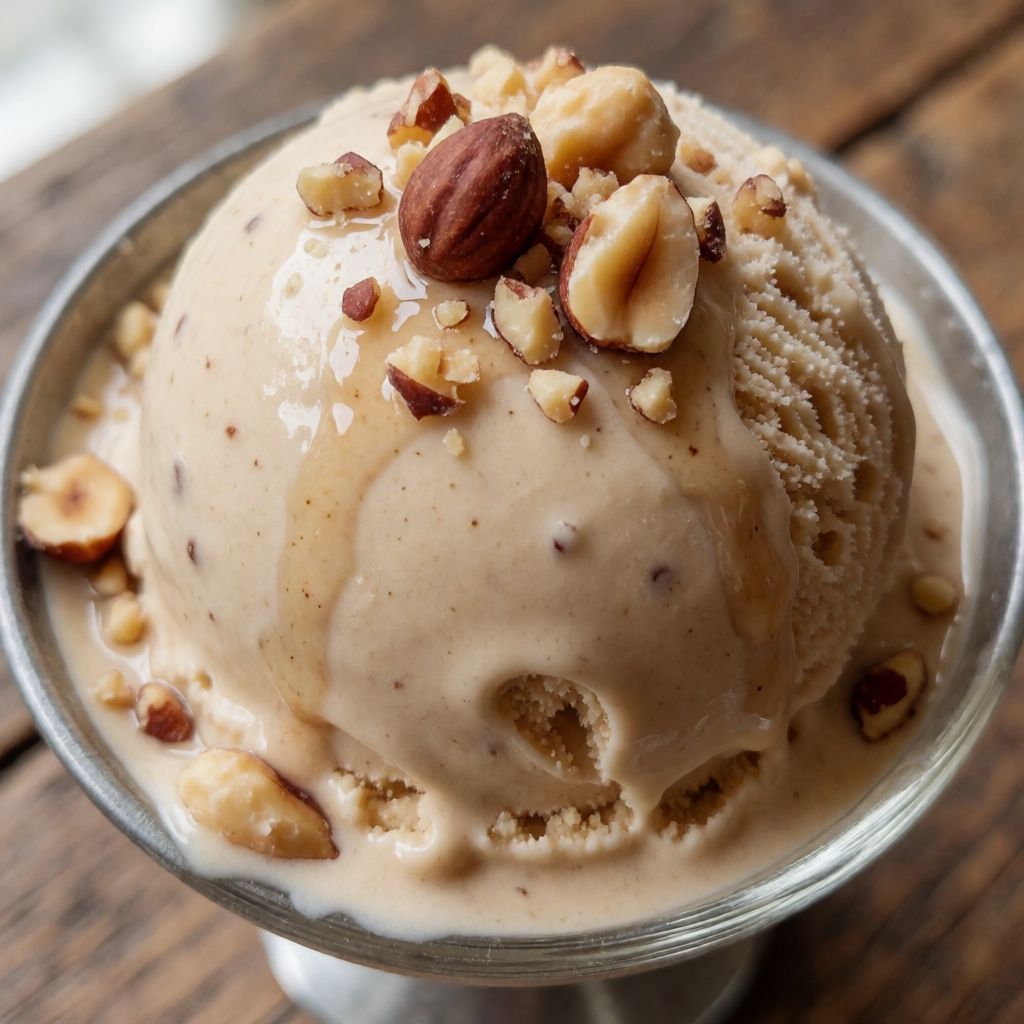
 AI photo
Hazelnut Ice Cream
A creamy homemade hazelnut ice cream made with eggs, milk, cream and sugar.
Labels are worked out automatically from the ingredients and can be wrong. Check the packaging if it matters to you.
Ingredients
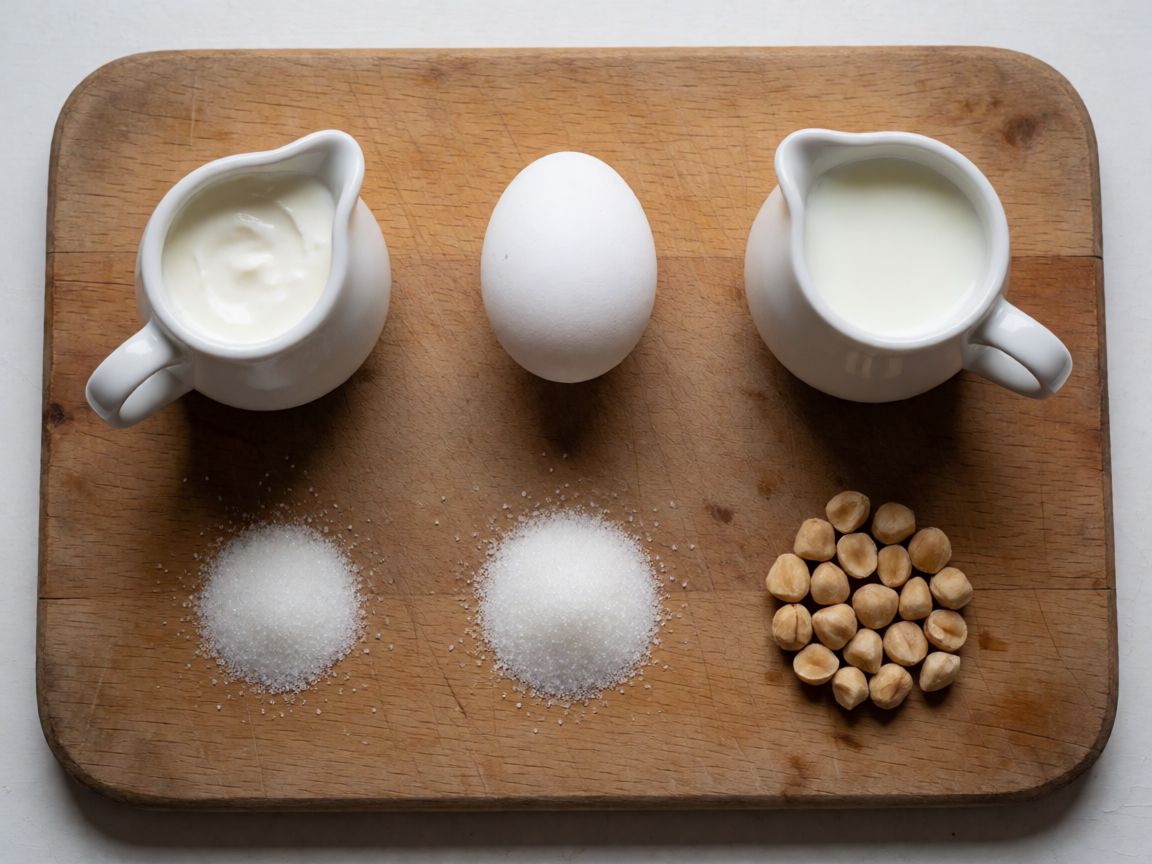
- 250 ml Double cream
- 1 pcs Egg
- 450 ml Milk
- 4 tbsp Caster sugar
- 75 g Hazelnuts




Steps
Blend the hazelnuts with one tablespoon of the sugar.
5 minAdd the milk to the ground hazelnuts and mix well.
2 minIn a separate bowl, whip the double cream.
5 minIn another bowl, beat the egg white until stiff peaks form.
5 minIn a third bowl, beat the egg yolk with the remaining sugar using a mixer, then stir in the ground hazelnut mixture.
5 minPlace the beaten egg white on top of the yolk, sugar and hazelnut mixture, then add the whipped cream on top.
2 minGently combine all three mixtures using a folding motion with a spoon, working from top to bottom.
3 minTransfer the mixture into a container and place it in the freezer.
240 min
Forget the churn. This is ice cream built the old way — the way kitchens managed before anyone owned a machine that paddles air into cream while it freezes. Here you beat the air in first, by hand, in three separate bowls, and the freezer's only job afterwards is to make that air-filled mixture rigid. That's the whole mechanism: a foam, frozen solid, not a liquid turned slowly into crystals.
What decides whether it works is almost entirely in your wrist, not your freezer. Whip the cream to soft peaks, no further — overwhip and you've started making butter, and butter doesn't fold. Beat the white to stiff peaks that hold a point when you lift the whisk. Then fold, don't stir: a spoon cutting down through the middle and turning up at the edges, bowl rotating under your other hand. Stirring collapses the bubbles you just spent ten minutes building, and a collapsed foam freezes into something closer to a flavoured ice cube than ice cream — hard, glassy, no give to it.
Some people think you need an ice cream maker for a proper result, because that's what the machine is for. No — the machine does exactly what your whisk and spoon do here, just continuously and while cold. A machine beats air in as ice crystals form, which keeps the crystals tiny. You're doing the beating ahead of time instead, so the crystals that do form later have less room to grow large, because the mixture is already full of trapped air pockets breaking them up. Different route, same destination, and your arm instead of a motor.
Double cream is doing two jobs, and both need its fat content, which sits around 48%. First, whipped, it carries the air that gives this its texture — a cream below about 35% fat simply won't hold a peak, the fat globules aren't dense enough to clump together and trap bubbles, so skip single cream or anything labelled 'light'. Second, once frozen, fat is what keeps ice cream soft enough to scoop at freezer temperature instead of setting like a block of frozen milk. If you've only got whipping cream, it'll work, just slightly less rich. Nothing under that line will whip at all.
The egg does two different things depending on which half you're using. The yolk, beaten with sugar, thickens slightly and carries fat and lecithin — a natural emulsifier that helps bind the nut-milk, the cream, and the air into one mixture instead of three that separate in the freezer. The white, whipped to stiff peaks, is pure air-carrying structure, nothing else; it's the lightest of the three bowls and that's exactly why it goes in first against the yolk mixture, so the heavier cream folds in last and doesn't crush it on the way down. Because the egg stays raw here, use one that's properly fresh — the kind with a firm, domed white when cracked into a saucer, not a flat spreading one. That's not tradition talking, that's just what a fresh egg looks like.
Milk carries the ground hazelnuts and dilutes the richness so this doesn't eat like a slab of butter — whole milk, for the fat it still has in it; skimmed will taste thin and won't carry the nut flavour as well, since fat is what flavour dissolves into.
Caster sugar is simply sugar ground fine enough to dissolve fast, into cold milk and into a whisked yolk, without sitting there gritty. If you've only got granulated, give it a few seconds in a blender first — the function is fineness, not the brand on the bag.
Hazelnuts: buy them whole if you can, because pre-ground nut flour has usually been sitting in a bag for a while, losing the oil that is its whole flavour. Toast them lightly first if you want more depth — not required by this method, but it's the kind of improvement that costs you nothing but five extra minutes and a dry pan. Almonds or walnuts will work in the same mechanical role — ground with sugar, suspended in milk — but you lose that particular roasted-caramel note hazelnuts give, which is really the point of making this one rather than a plain vanilla.
One practical note for a domestic freezer, since you don't have a blast chiller: use a wide, shallow container rather than a tall narrow tub. A shallow layer freezes through faster and more evenly, so the ice cream sets as one texture rather than firm at the edges and half-liquid in the middle after four hours. And the four hours in the method is a floor, not a target — a full domestic freezer, door opened repeatedly for the Sunday roast, cools slower than you'd think. Press cling film onto the surface before the lid goes on, or you'll get a skin of ice crystals on top from the moisture in the air inside the freezer condensing there. That's patience doing its other job: not just waiting, but keeping the air out while you do.