
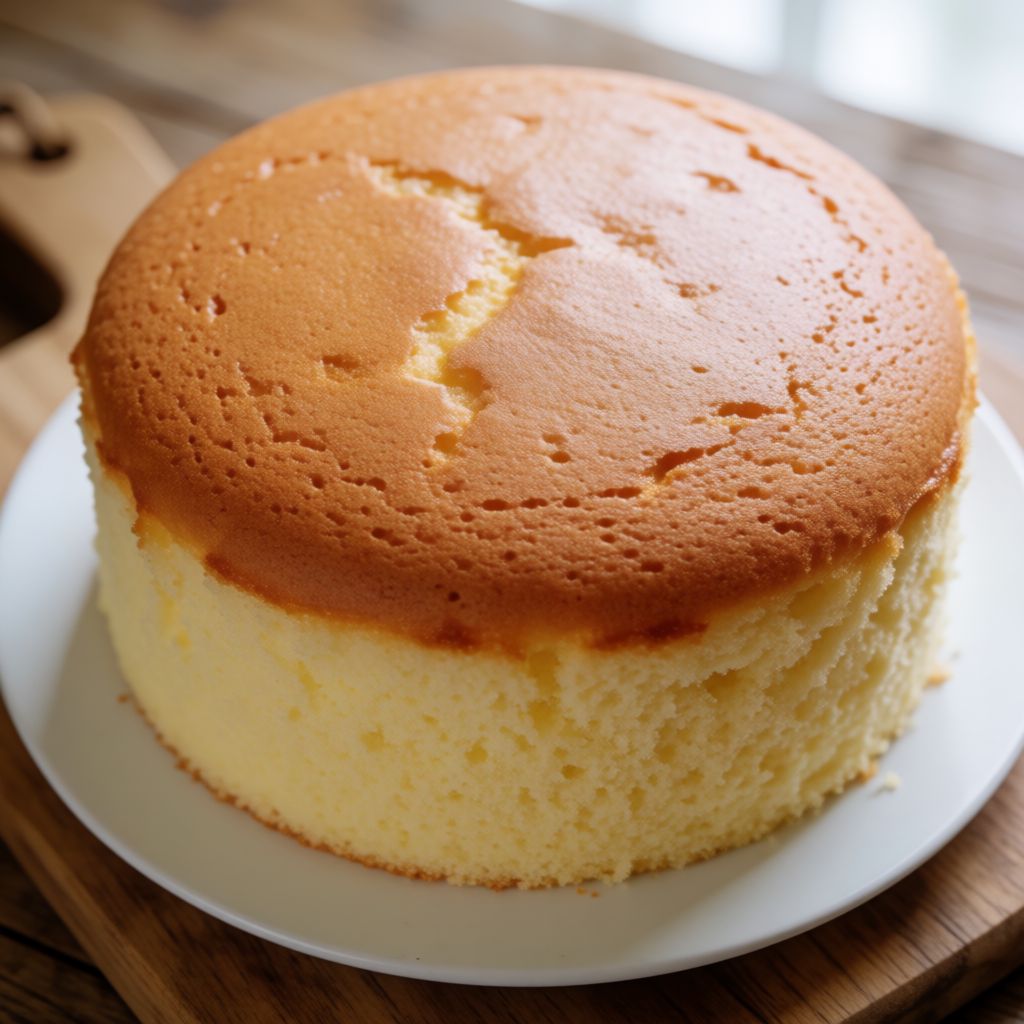
 AI photo
Hot Milk Cake
A light sponge cake made by stirring hot milk and butter into a whipped egg batter, finished with a dusting of icing sugar.
Labels are worked out automatically from the ingredients and can be wrong. Check the packaging if it matters to you.
Ingredients
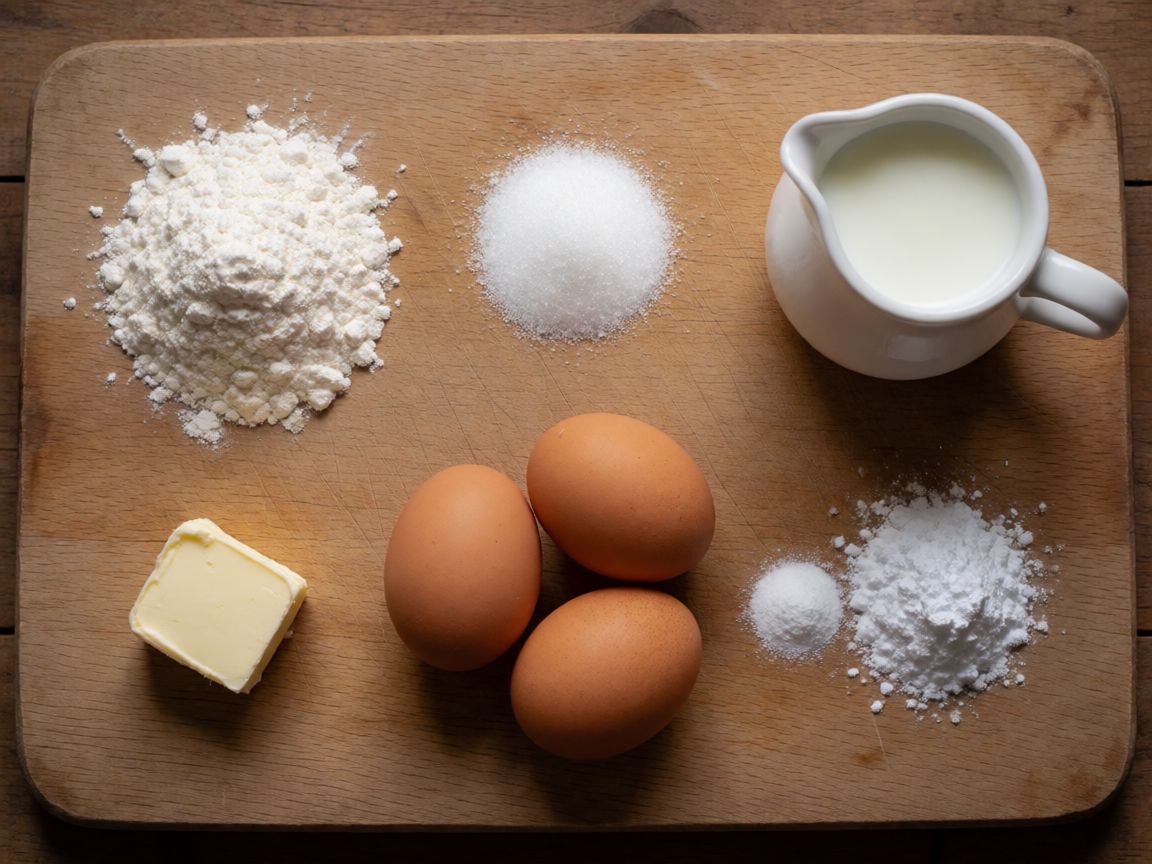
- 170 g Flour
- 160 g Sugar
- 3 pcs Eggs
- 60 g Butter
- 120 ml Milk
- 15 g Baking Powder
- 1 tbsp Icing Sugar for dusting







Steps
In a bowl, beat the eggs with the sugar for at least 10 minutes until the mixture doubles in volume.
10 minSift the flour and gently fold it into the egg mixture with a spatula.
Add the sifted baking powder and mix in gently.
In a small saucepan, heat the milk with the butter until the butter melts and the milk is hot.
Gradually pour the hot milk into the batter, stirring constantly.
Grease a 22cm cake tin with butter and dust it with flour, then pour in the batter.
Bake in a fan oven preheated to 150°C for about 35 minutes, or in a conventional oven at 170°C for 40–45 minutes.
40 minLet the cake cool completely, dust with icing sugar and serve.
This is a sponge that rises mostly on air, not on baking powder. The eggs do the real work - ten minutes of beating isn't decoration, it's physically whipping thousands of tiny bubbles into the egg-sugar foam, the structure that holds the cake up once it's baked. Baking powder is backup here, a nudge, not the engine. Keep your eggs at room temperature so they take air quickly; if you cut the beating to five minutes "because it already looks fluffy", the foam is thinner and the cake comes out low and dense no matter how much powder you throw at it.
The second mechanism is the hot milk, and it sounds backwards: pouring hot liquid into a whipped foam - won't it deflate? A little, yes, but you're trading a touch of air for moisture. The heat half-cooks the starch in the flour before the cake ever sees the oven, and that's what gives this sponge its damp, almost custardy crumb instead of the dry spring-back of a plain Victoria sponge. Pour it in gradually, stirring as you go, not in one go - a flood of hot liquid hitting cold batter all at once can set little pockets of egg before they're mixed through, and you end up with cooked threads running through the crumb instead of one smooth texture.
Myth worth clearing up: some say any heat shock kills a whipped foam outright. Not true - it's the speed and volume of the shock that matters, not the fact of it. A trickle, stirred in as it arrives, barely registers; a dump does the damage. That's the entire reason the method insists on "gradually", and it's the one place in this recipe where rushing actually costs you something.
Eggs here do double duty as structure and leavening, which is why the ingredient list is short and the fat modest. Use them at room temperature - cold eggs take air more slowly, and your ten minutes quietly becomes fifteen for the same result. Sugar isn't only sweetness: beaten in with the eggs, it coats each bubble and slows the foam's collapse while you're folding in flour. Caster sugar dissolves into the eggs faster than granulated; if that's all you have, beat a bit longer, or you'll feel a faint grit in the finished crumb. This amount - three eggs, a 22cm tin - gives six honest slices, not twelve; cut this cake thin and you lose the point of it, which is lightness, not quantity.
Use plain flour, not a "strong" bread flour - you want low gluten, because this cake isn't built on chew, it's built on held-in air, and a tough gluten net would fight the foam rather than support it. Sift it and fold it in gently, for the same reason as above. Baking powder is insurance against the one spot in the tin where the foam ends up thinnest; it isn't meant to do the main lifting, which is why 15g against 170g of flour is a modest amount, not a generous one.
Butter goes in melted, not creamed, so any unsalted, fairly neutral butter will do - no need for the costly cultured kind, since most of its flavour cooks off into the crumb anyway. Milk wants some fat in it for tenderness; whole milk is right, semi-skimmed works but leaves the crumb a shade leaner on the tongue. Worth a short digression here: hot-milk sponges like this one come from kitchens where eggs and butter were the expensive part of a cake and flour and sugar were the cheap part. Whipping air into eggs stretches a cake's height for nothing - three eggs and 60g of butter give you a tall, light sponge that a butter cake would need two or three times the fat to match. That's not a trick, it's arithmetic worked out before eggs were cheap and routine.
Grease and flour the tin for the same reason you flour potatoes before they go near the fat for a roast - a thin dry layer stops the batter bonding to the metal as it sets, so it releases clean instead of tearing at the edges. On temperature: the recipe gives fan at 150°C, conventional at 170°C, and that 20-degree gap isn't fussiness - a fan pushes hot air onto the cake from every side at once, so it transfers heat faster at a given setting than a still conventional oven does, the same reason your Sunday roast potatoes crisp quicker in a fan oven and need watching sooner. Use whichever oven you have, but don't split the difference between the two settings - that satisfies neither.
Forget counting to 35 or 40 minutes as a verdict; those are starting points for your particular oven, not a promise. Judge by a skewer coming out dry and the top springing back under a light press rather than denting. A sponge held up by air and a little powder will visibly sink in the middle if you pull it while the centre is still wet - there's nothing yet to hold the shape once the oven's heat stops pushing from underneath. And let it cool fully before the icing sugar goes on: dust a warm cake and the sugar meets rising steam and turns to wet patches instead of an even, dry snow. Patience here isn't virtue for its own sake - it's the only thing between you and a soggy-looking top.