
 AI photo
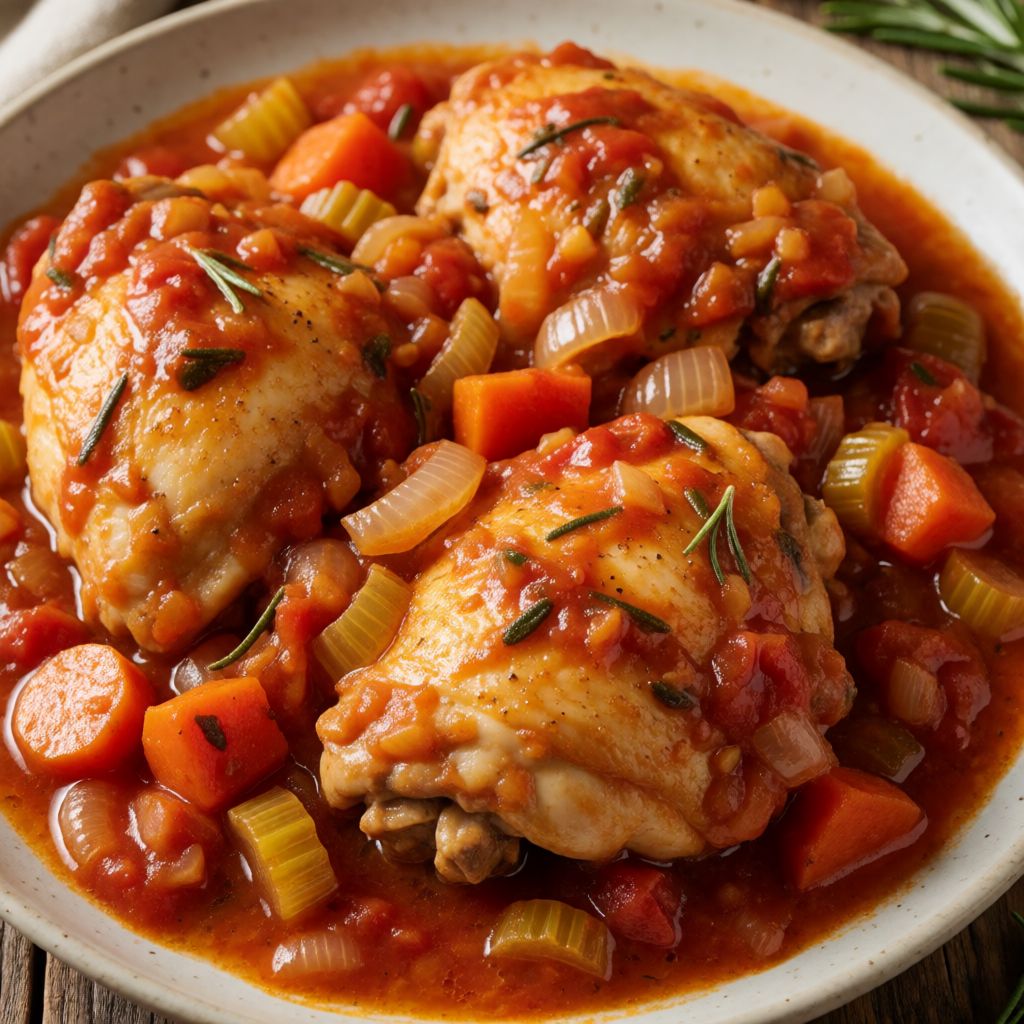
Chicken Cacciatore
A rustic one-pot chicken braised with onion, carrot, celery, red wine and tomato, finished with rosemary.
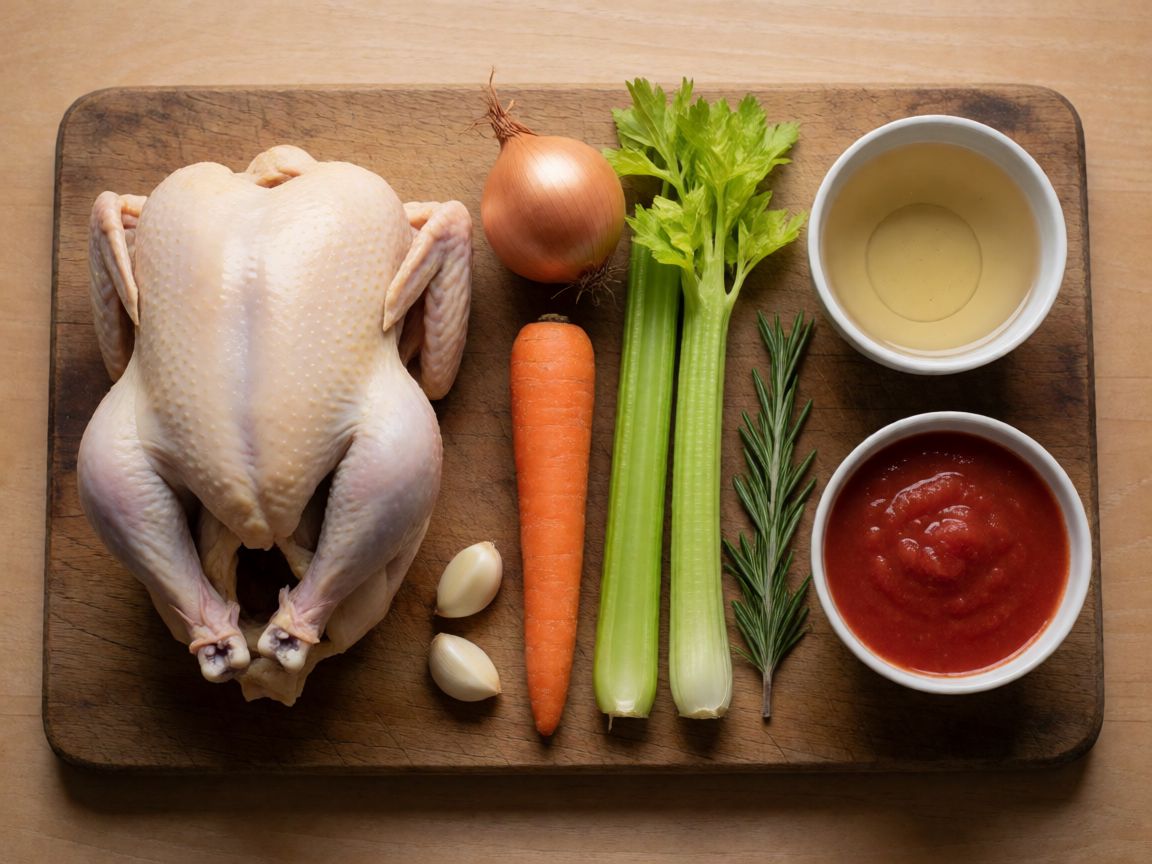
Ingredients









Steps
Cut the onion, carrot and celery into large pieces and blend to a smooth paste.
Transfer the vegetable paste to a pan with a little olive oil and fry for a few minutes, adding the garlic and rosemary.
Add the chicken, cleaned and cut into pieces, and cook for about 7–8 minutes, turning to brown evenly.
8 minPour in the red wine and let it evaporate, cooking a few more minutes so the chicken absorbs the flavour. Season with salt and remove the rosemary and garlic cloves.
Pour in the tomato passata and dilute with a glass of water. Cover and simmer for 30–35 minutes, turning the chicken occasionally. It is done when the inside reaches 74°C.
35 minServe the cacciatore hot.
Cacciatore means "hunter's," and the name is older than the chicken that usually fills it now. A hunter doesn't always come home with game, so this is a sauce built to rescue whatever did show up — hare, an old rooster past laying, anything tough that needed softening. Chicken is just the easiest meat to drop into a method invented for disappointment.
What decides whether it works is the order of events, because the pan does three separate jobs and each one ruins the next if you rush it. First the vegetables melt into the oil until they vanish — not fried to colour, just given up as flavour. Then the chicken browns in that same oil, skin down, until it stops gripping the metal and lets go by itself; that's the real signal, not a stopwatch. Then wine, then tomato, then a long quiet simmer under cover.
Some say you sear meat to "seal in the juices." No — meat has no seal, the juices leave regardless of how hot your pan was. What searing actually does is build flavour on the surface that no amount of simmering can fake later. Brown the chicken for taste, not for a myth about moisture.
Buy a whole chicken rather than pre-cut pieces if the price difference bothers you — it usually does, a whole bird costs less per kilo because the butcher hasn't done the work for you. Bone-in pieces matter here: bone and skin give up gelatin and fat into the sauce over the simmer, which is most of why the finished dish tastes rounder than one made from boneless breast. Forget checking if the juices run clear to test doneness — that test lies both ways, clear juice can still sit over undercooked meat near the bone. A thermometer reading 74°C in the thickest part, or the leg joint moving loose and easy, is honest. A clock is not.
The blended onion, carrot and celery is the Italian answer to what the French call mirepoix and what you'd recognise as the base under a roast — except here it's pulped smooth on purpose, so it disappears into the sauce rather than sitting as visible chunks under the meat the way veg does under a British joint. That's the whole point of blending it: no texture to notice, only flavour and a little natural sweetness and body it leaves behind. If you're short a vegetable, know what each is doing before you drop it — onion and carrot bring sweetness, celery brings a bitter backbone that stops the sauce tasting flat. No celery, use a bit of pale leek; no carrot, a touch more onion.
Garlic cloves and the rosemary sprig go in whole and come back out before the tomato arrives — they're there to perfume the oil, not to be eaten, and pulled early so they don't turn bitter and stringy through half an hour of simmering. This is infusing fat, a different job from seasoning meat, and it's why they're discarded rather than minced in.
Red wine does two jobs at once: its acid cuts through the fat rendered during browning, and it lifts the browned bits stuck to the pan — that crust is flavour, not mess, and the wine dissolves it back into the sauce. Let it bubble down properly; you'll smell the sharp alcohol sting fade into something that just smells of red wine, and that's your cue, not a number of minutes. Any dry wine with real acidity works in its place; without alcohol at all, a splash of wine vinegar cut with water does the acid job, though it won't bring quite the same depth.
Passata is tomato already smoothed and strained — if you only have tinned chopped tomatoes, blitz them and you're in the same place. The sauce isn't meant to be thick going in; it thickens over the simmer as water cooks off, not from flour, so resist adding more tomato to compensate for impatience. Salt goes in after the browning stage, not before — salted chicken skin pulls moisture to its own surface and won't brown properly in a hot pan, it'll steam instead, and that's the real reason behind seasoning late here rather than any rule for its own sake. Use olive oil if you can; its own flavour is part of what you're building in this dish, unlike recipes where a neutral oil is the right call. If you only have a wide domestic pan with no proper lid, a plate set over it does the job for the final simmer — the point is trapping steam, not the shape of the thing doing it.