
 AI photo
Castagnole with Ricotta
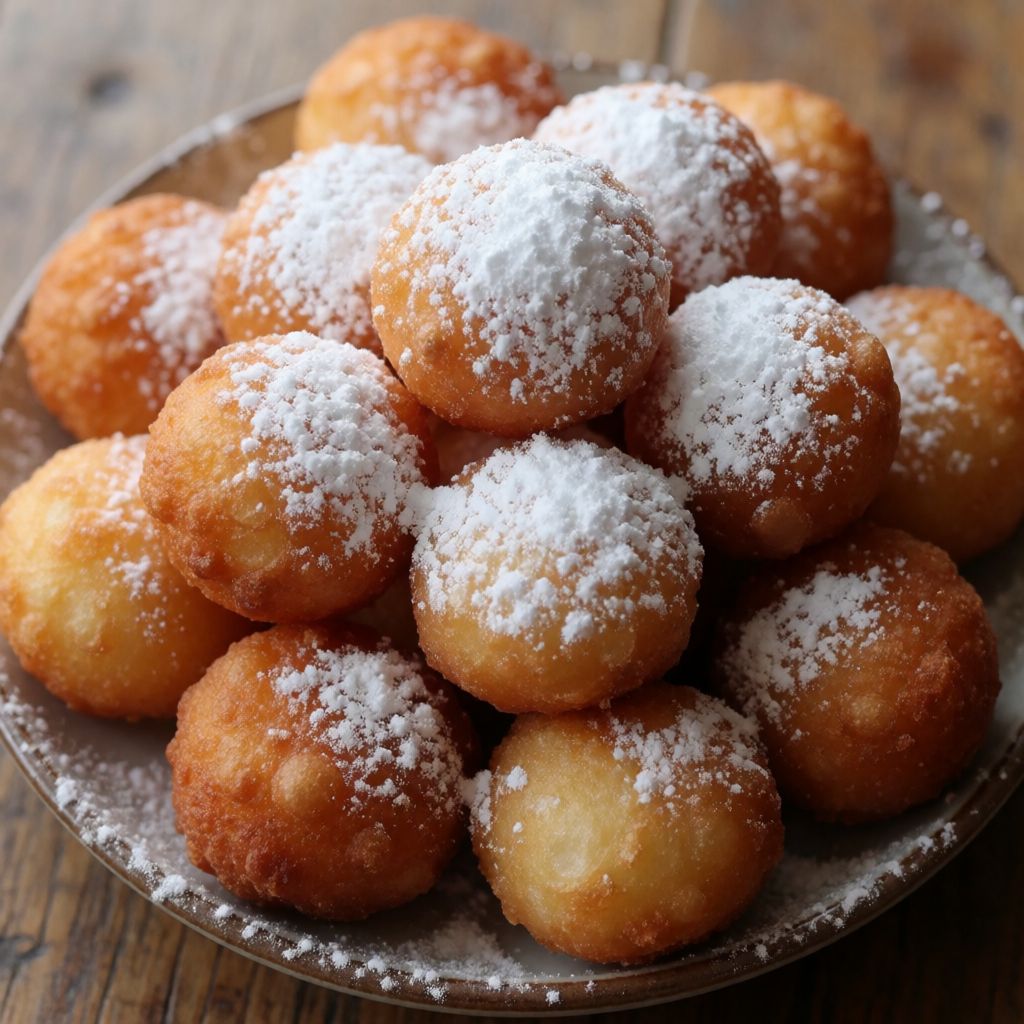
Soft, orange-scented fried dough balls made with ricotta mixed into the dough, finished with a dusting of icing sugar.
Labels are worked out automatically from the ingredients and can be wrong. Check the packaging if it matters to you.
Ingredients
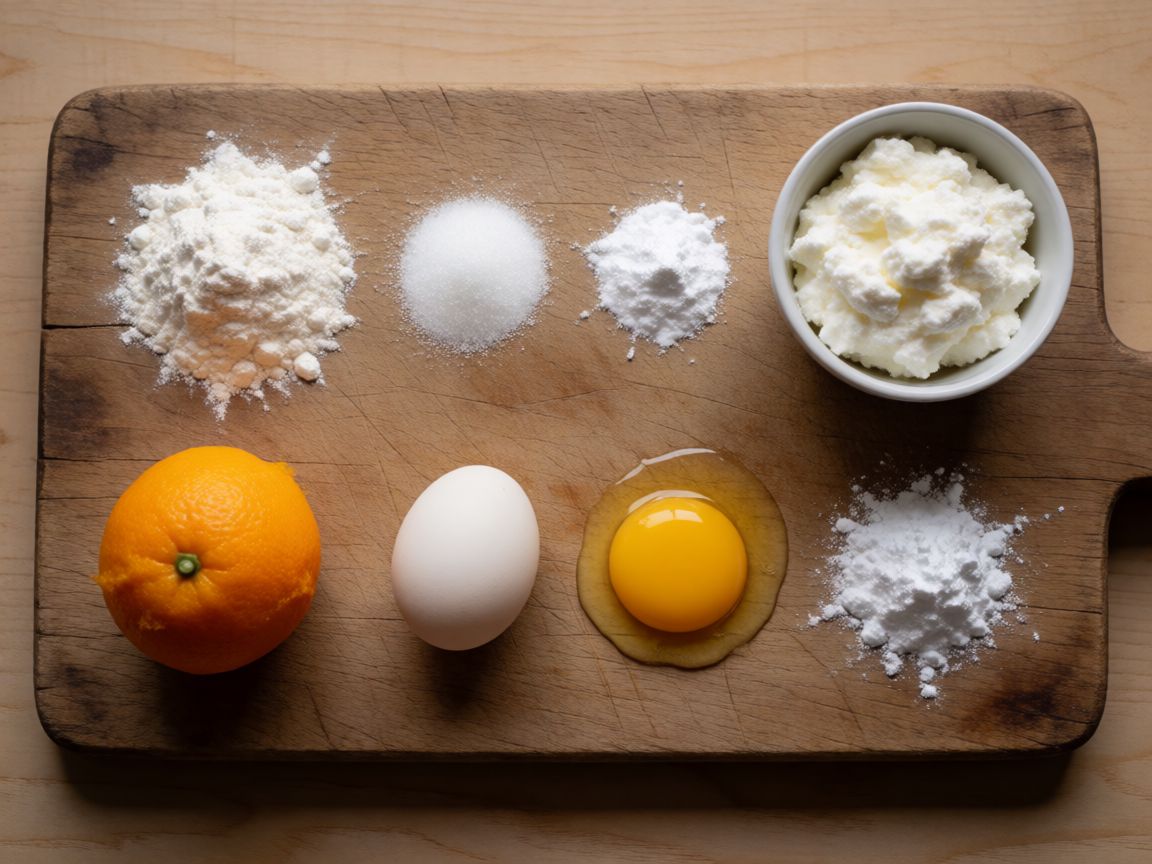
- 170 g Plain flour
- 75 g Caster sugar
- 8 g Baking powder
- 1 pinch Salt
- 300 g Ricotta
- 1 pcs Egg
- 1 pcs Egg yolk
- 1 pcs Orange zest
- Vegetable oil for frying
- Icing sugar for dusting










Steps
On a work surface, mound the sifted flour and make a well in the centre. Add the baking powder, a pinch of salt and the sugar.
Add the ricotta, orange zest, the egg and the egg yolk.
Mix with your fingers, then knead the dough energetically, dusting your hands with flour if needed.
Shape the dough into balls about 3–4 cm in diameter.
Pour vegetable oil into a frying pan and heat it.
Add the balls and fry until evenly golden and cooked through inside.
40 minTransfer the cooked castagnole onto paper towel.
Transfer to a serving plate and dust with icing sugar. Serve warm.
Castagnole are the Italian answer to doughnut holes — little fried balls of dough, no filling, no fuss, built around ricotta instead of the usual enriched yeast dough. The name comes from "castagna", chestnut, because that's the size and shape they land at — not because there's a trace of chestnut in them. Think of them as what Carnival does with leftover ricotta before Lent: cheap, quick, fried, gone in two bites.
What decides whether they work isn't the recipe, it's the oil. Too cool and the dough drinks it, you get a pale greasy ball with raw centre. Too hot and the outside sets into a shell before the inside has had a chance to puff — you'll bite into something that's crust around a wet, flour-tasting middle. You're looking for the oil to be hot enough that a small knob of dough dropped in sizzles and rises to the surface almost at once, steadily, not violently. No thermometer needed — that rise-and-sizzle is your cue, and it tells you more than a number would, because your hob, your pan, your oil all shift that number anyway.
The ricotta is doing real work here, not just flavour. It's wet, loose curd — it replaces the milk and some of the fat you'd otherwise need, and it keeps the crumb soft rather than bready. That's also why these don't need yeast and a rise: baking powder does the lifting, fast, because this is a fried sweet meant to be made and eaten within the hour, not proofed overnight.
Flour is just structure — plain flour, nothing strong or "00" needed, because there's no gluten development to chase, no stretch required. You're not building a dough that has to hold gas from yeast; you're binding wet ricotta and egg into something that holds its shape as a ball and doesn't fall apart in hot oil. If you've only got self-raising flour in the cupboard, drop the baking powder — using both will push these up too fast and too far, and a ball that expands quicker than its crust can set will crack open and let oil in.
Baking powder is the one piece of genuine leavening chemistry in this dough, and it's measured properly here — 8g against 170g flour is a proper dose, not a pinch. It needs moisture and heat to start working, and both arrive the moment the ball hits hot oil: that's your puff. Old, tired baking powder is a real and common failure — if yours has sat open in a cupboard through a house move, test a pinch in warm water first; if it doesn't fizz, it won't lift your castagnole either.
Ricotta — go for the firmer kind sold in tubs at the chiller, drained, not the wet stuff that pools liquid at the bottom of the tub. Too much excess water and your dough goes slack, needing more flour to compensate, which then makes the castagnole dense and heavy rather than light. If ricotta's hard to find, cottage cheese blitzed smooth, or well-drained curd cheese, will do the same structural job — something soft, mild, and not too wet.
Egg and the extra yolk: the whole egg gives structure and a bit of lift, the extra yolk adds richness and colour without adding more water the way a second whole egg would. If you're short an egg, one whole egg alone still works — you'll just lose a little of that golden, tender crumb.
Orange zest is there because ricotta on its own tastes of very little — it's a blank, and the zest gives these something to actually taste of beyond fried dough and sugar. Lemon zest does exactly the same job if that's what's in your fruit bowl; the point is oil from citrus skin, not juice, which would add unwanted liquid.
For the frying oil itself, the criterion is simple: anything with no flavour of its own, so it doesn't fight the orange — sunflower, vegetable, groundnut oil, whatever's cheapest at the supermarket. Don't reach for olive oil here; it has its own taste and a lower smoke point, and at the heat these need, it'll turn bitter before the castagnole are done.
On the domestic hob: you haven't got a deep fryer with a thermostat, and that's fine — a wide, deep-ish pan with a few centimetres of oil does the job, you just have to pay attention instead of trusting a dial. Keep paper towel and a plate standing by rather than a proper rack — that's the ordinary-kitchen version of draining, and it works. Just don't stack the castagnole while hot straight onto the serving plate before they've drained; trapped oil under a hot fried ball is how you end up with a greasy patch and a soggy bottom on the one that looked perfect two minutes ago.