
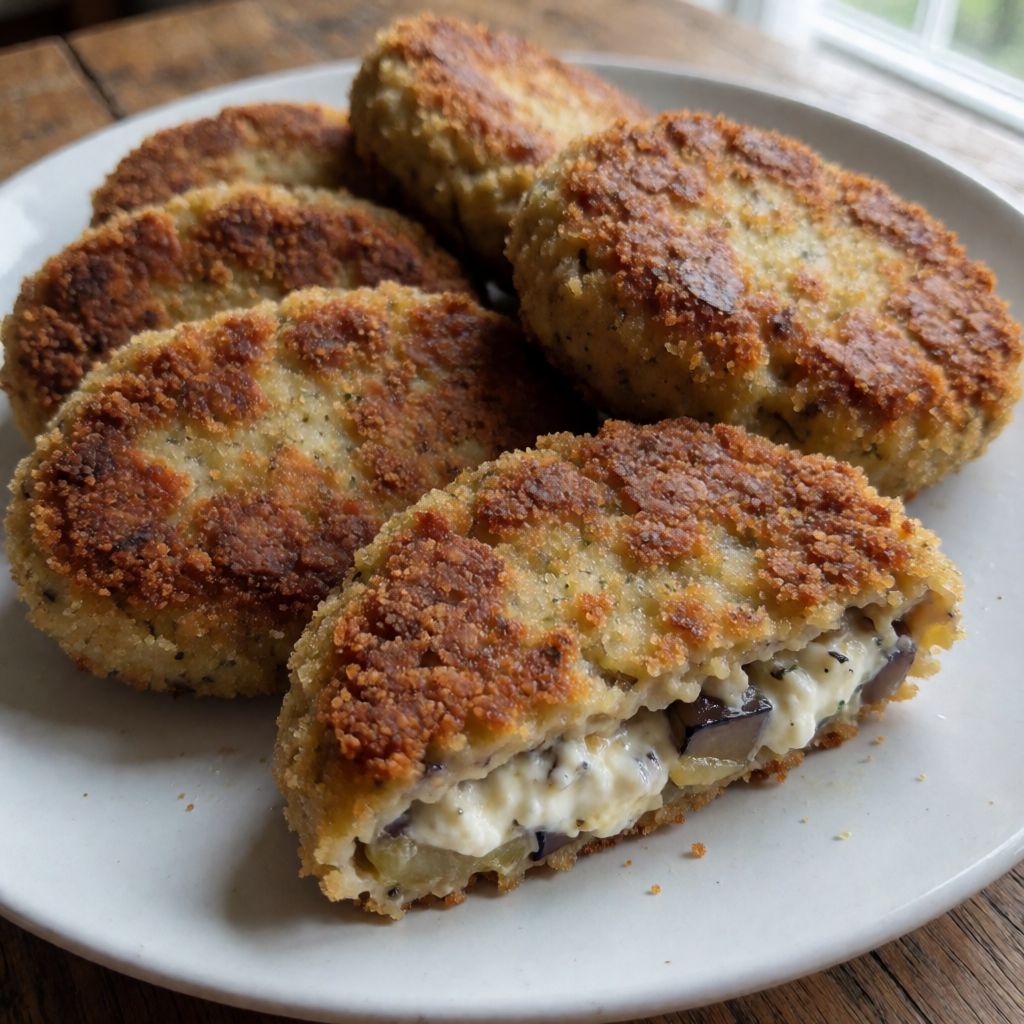
 AI photo
Ricotta and Aubergine Cutlets
Soft ricotta and aubergine cutlets, baked until golden – a simple, comforting side dish.
Labels are worked out automatically from the ingredients and can be wrong. Check the packaging if it matters to you.
Ingredients
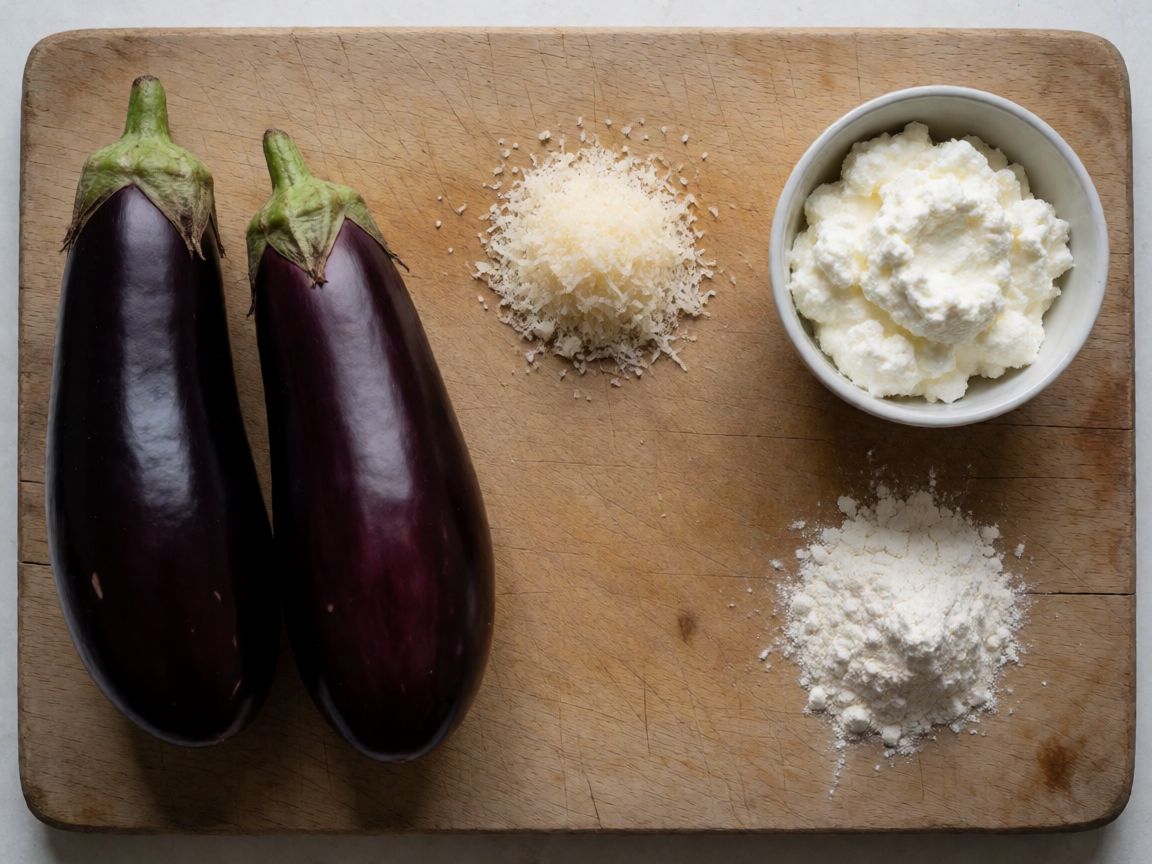
- 2 pcs Aubergine
- 150 g Parmesan
- 500 g Ricotta
- 150 g Plain flour
- Salt to taste





Steps
Wash the aubergines thoroughly, cut into pieces and boil in a small saucepan in a little boiling water, stirring occasionally.
10 minIn a bowl, mix the ricotta with the Parmesan and plain flour, add the aubergines mashed into a purée with a fork, and season with salt to taste.
Put the mixture in the fridge for at least 30 minutes.
30 minLine a baking tray with baking paper. With damp hands, shape the mixture into balls, taking a handful at a time.
Place the balls on the tray and bake in an oven preheated to 180°C until golden on each side.
15 minServe the cutlets immediately, hot or warm.
This is not a fried cutlet pretending to be healthy by going into the oven — it's a different animal from the start. There's no egg here, no breadcrumb coat. The structure comes from fat: ricotta and parmesan, chilled hard in the fridge, then set by oven heat into a crust while the inside stays soft. Take away the chill and you don't get a cutlet, you get a puddle with a brown skin.
What decides whether this works is moisture, not seasoning, not even the oven. Aubergine holds a lot of water, and boiling adds more. If you mash it in wet and loose, the whole mixture refuses to hold a ball shape — it slumps on the tray before the heat has a chance to firm the outside. So the real work in step 2 is judging the purée: it should sit on the fork, not run off it. If it's too slack, let it drain a minute in the sieve before you fold it into the cheese.
Some say aubergine must be salted and left to weep its bitterness out before you cook it, same as your grandmother did. No — that was true of the old, seedy, bitter varieties grown decades ago. What you buy in a British supermarket today is bred mild on purpose. Boiling it straight, as this recipe does, softens it enough to mash and carries off what little bitterness is left in the cooking water. Save the salting ritual for recipes that actually need it.
Aubergine here is bulk and a little smoke of flavour, nothing more — it's not the aubergine you'd grill whole for baba ganoush, so don't hunt for a special variety. Two medium ones, cut into rough chunks so they boil evenly and mash easily, is right for four people as a side, roughly three or four cutlets each. If you've only got one big aubergine or a bag of small ones, weigh rather than count — you want around 300–350g of flesh once cooked, and a kitchen scale settles the argument better than eyeballing pieces.
Parmesan does the seasoning and most of the savour — ricotta on its own is close to flavourless, almost like a blank page, and parmesan is the pen. Buy a block, grate it yourself; the ready-grated tubs dry out and lose exactly the sharp, salty punch you're relying on here. If parmesan's dear that week, or you've only got a wedge of mature cheddar or pecorino in the fridge, use that — the rule is a hard, dry cheese with real bite, not a soft melting one. A soft cheese adds no structure and no punch, just more water you don't need.
Ricotta is the body of the dish, and this is where economics explains tradition rather than magic: ricotta was originally made from the whey left over after hard cheeses were pressed — a way of not wasting the liquid, cheap because it used up a by-product. That history is why it pairs naturally with parmesan in Italian cooking — one is the luxury, the other is what's left when you make the luxury. Buy it fresh, not the long-life tub at the back of the shelf, which tends to be wetter and blander. If ricotta isn't to hand, drained cottage cheese or curd cheese, pressed a little in a sieve, will behave close enough — the test is the same: it should hold its shape on a spoon, not run.
Plain flour here isn't for gluten or chew — you don't want these cutlets bready. It's there to soak up the moisture that aubergine and ricotta both bring to the bowl, so the mixture firms rather than oozes. That's also why plain flour, not a strong bread flour, is right: you need absorption, not elasticity. If you're short on flour, a few spoons of fine breadcrumbs or even cooked rice flour will do the same drying job, though the texture inside goes slightly grainier.
Salt is the easy one to underestimate. Ricotta mutes seasoning the way cream does — it coats the tongue before the salt gets a chance to speak. Taste the raw mixture before you shape it, not after it's baked; by then it's too late to fix, and a cutlet that tastes of nothing but warm cheese is a cutlet that's failed, however pretty it looks.
On the oven: 180°C is enough heat to dry and colour the outside of a smallish ball of cheese and vegetable without scorching it before the centre's had time to firm — these aren't thick enough to need anything higher, and a hotter oven would just brown the skin while the middle stays raw and runny. Forget counting to fifteen minutes and watch instead: the underside should turn an even gold, dry enough to lift cleanly off the baking paper without tearing or sticking, and that's your cue to turn it. Domestic ovens run hot or cold against their own dial by ten or fifteen degrees either way, so trust the colour of the cutlet over the number on the door.