
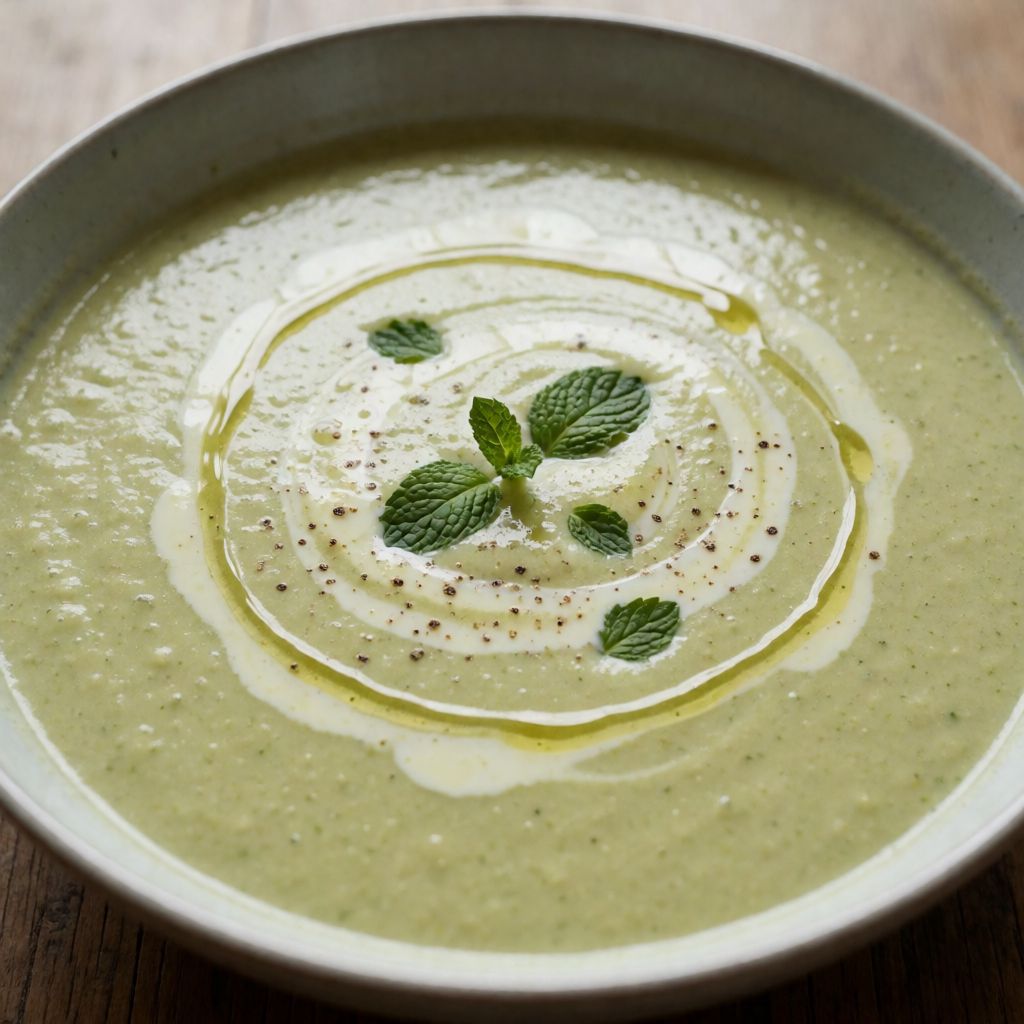
 AI photo
Courgette and Mint Cream Soup
A light, silky cream soup made from courgettes and fresh mint, finished with a splash of milk.
Labels are worked out automatically from the ingredients and can be wrong. Check the packaging if it matters to you.
Ingredients
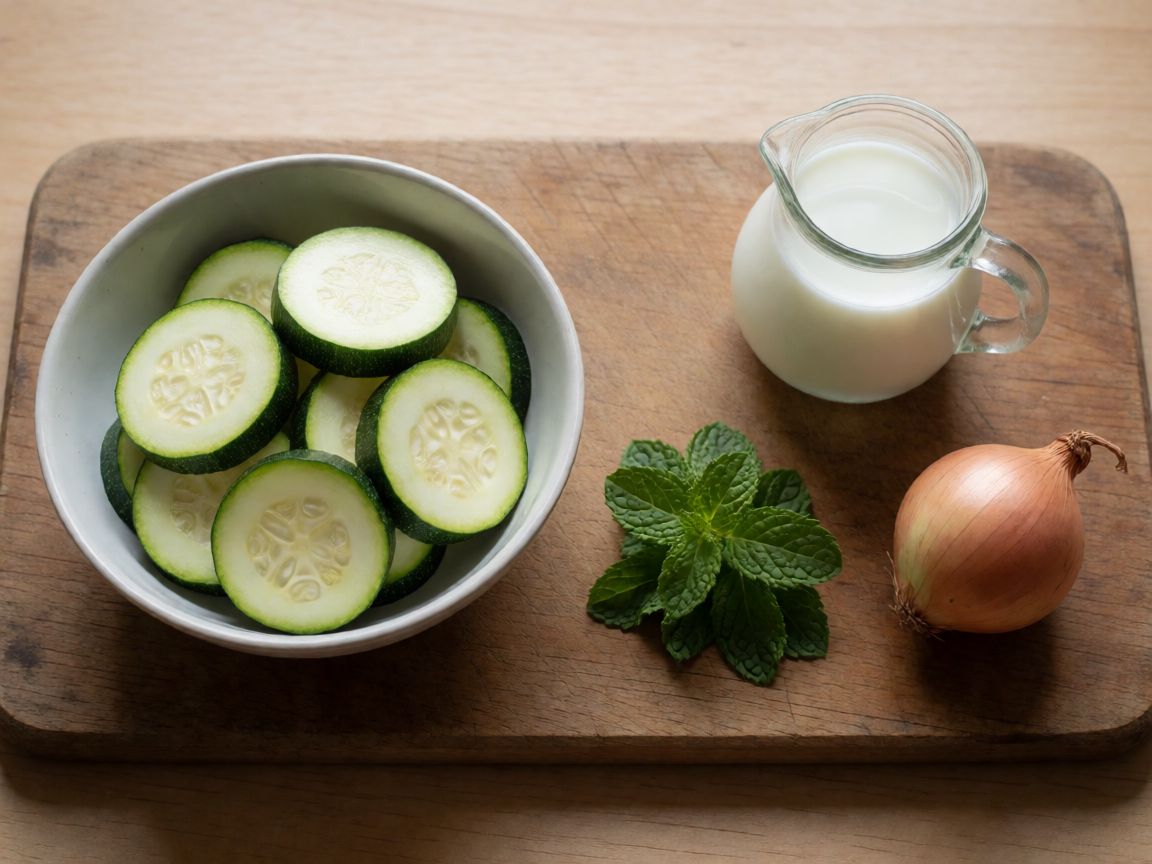







Steps
Wash the courgettes thoroughly under running water, trim the ends and dice them finely.
Wash the fresh mint leaves, pat them dry with a paper towel, then finely chop with a knife.
Peel and finely chop the onion, place it in the bottom of a pot and add a little olive oil.
Sauté the onion until golden, then add the courgettes and cook for about 10 minutes.
10 minOnce the courgettes are soft, add the chopped mint, and season with salt and pepper to taste.
Remove from the heat, pour in the milk and blend with an immersion blender until smooth.
Ladle the cream soup into bowls and garnish with fresh mint leaves.
This is a two-vegetable soup that pretends to be richer than it is — courgette and onion, cooked gently, then loosened with milk and lifted by raw mint right at the end. No stock, no cream, no flour to thicken anything. The body comes from the courgette itself: it's almost entirely water held together by very little else, so as it softens it collapses into its own juice, and that juice, blended, is the "cream" in the name. 600g of courgette and one onion make four starter-sized bowls — this is a light soup, meant to open a meal, not carry it.
What decides whether it works is restraint at two points: how dark you let the onion go, and when you add the mint and milk. Onion that's gone past gold into brown has crossed from sweet to bitter — there's no saving it after that, only starting again. And milk poured in before the pot comes off the heat will split if it goes anywhere near a boil; courgette's slight acidity plus heat is enough to curdle it into grains. Off the heat, it just becomes soup.
Mint isn't a seasoning you cook here — it's one you crush in at the end and let the warmth of the soup carry, not simmer. Boiled mint goes grassy and flat; raw and chopped into hot (not boiling) liquid, it stays sharp and cool at once, which is really the whole point — courgette on its own is a watery, polite vegetable with almost no character, and the mint is doing most of the talking.
Courgette — buy it firm, skin that doesn't give under your thumb; a soft one has already started turning to water inside and you'll get more puddle than texture. Dice it small, finger-nail sized, not for neatness but because a bigger piece cooks unevenly — the outside collapses to mush while the centre stays raw and slightly bitter, since this vegetable has almost no structure to start with and loses what little it has from the outside in. Out of season or pricey, young marrow does the same job, but scoop out the seedy core first — too much seed and the soup turns watery and faintly bitter.
Onion — the one ingredient actually building flavour here, through browning, not just sitting in the pot. Diced small and started in a little oil over gentle heat, it goes from sharp and white to translucent to pale gold — sugars just starting to caramelise but not yet burning. That's the window you want. Push past it and those same sugars turn bitter, and bitterness in a base note doesn't cook back out later — it just sits under everything else. If judging colour by eye is hard on a domestic hob where heat is never quite even, go by smell instead: raw and biting, then sweet, then, too late, scorched.
Milk — its only job is to loosen the purée and add a little fat and sweetness, nothing more. Whole milk gives the soup some body; if semi-skimmed is what's in the fridge for tea, it still works, just thinner and a touch chalkier — skimmed milk is mostly water with ambition and is best left for tea, not soup. No need for cream or crème fraîche on top: adding fat to a dish whose whole appeal is lightness doesn't improve it, it just mutes it.
Mint — has to be fresh. Dried mint is close to a different herb at this point: the cooling, sharp oils that make fresh mint taste alive are the first thing lost in drying and storage. If dried is all you have, use a third of the amount and expect a flatter result — it'll season the soup but won't lift it. Pat the leaves dry before chopping; wet leaves bruise under the knife instead of cutting clean, and bruised mint turns dull and slightly metallic faster than you'd think.
Olive oil — here it's the medium that lets the onion soften without catching, not a flavour meant to carry through the finished bowl. Any oil with no strong character of its own does the same job — sunflower, rapeseed, whatever's in the cupboard. If you've got a good olive oil, save it for a drizzle over the bowl at serving, where you'll actually taste it, instead of burying it under cooked onion.
Patience is the ingredient missing from the list. Rush the onion and it stays raw-tasting under a surface gold; rush the courgette and it's crunchy in the middle, soft at the edges, instead of evenly collapsed. Ten minutes in the recipe is a floor, not a deadline — go by how the courgette looks: matte, slack, sitting in its own released liquid rather than on top of it. That's when it's done, not when the clock says so.