
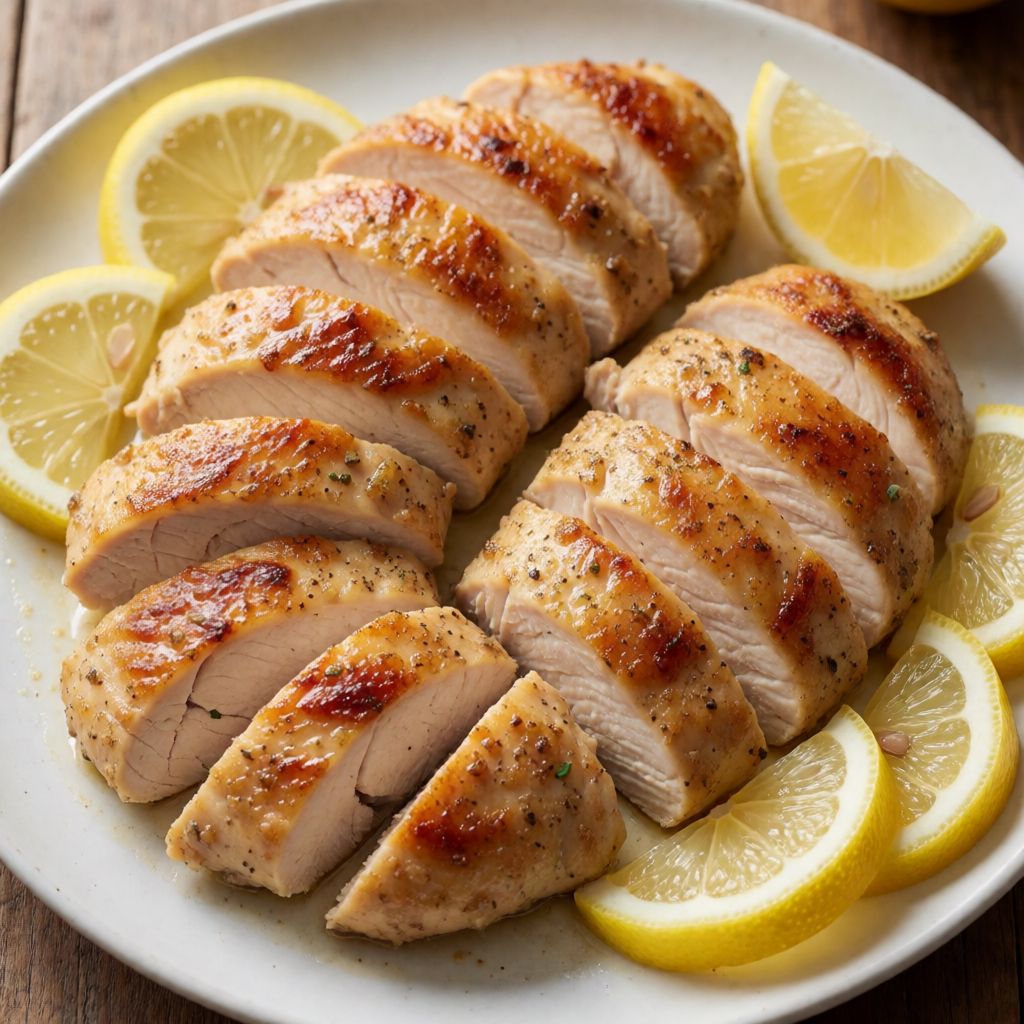
 AI photo
Chicken Fillets with Lemon
Oven-baked chicken breasts with lemon and rosemary, served with a fresh lamb's lettuce and tomato salad.
Ingredients
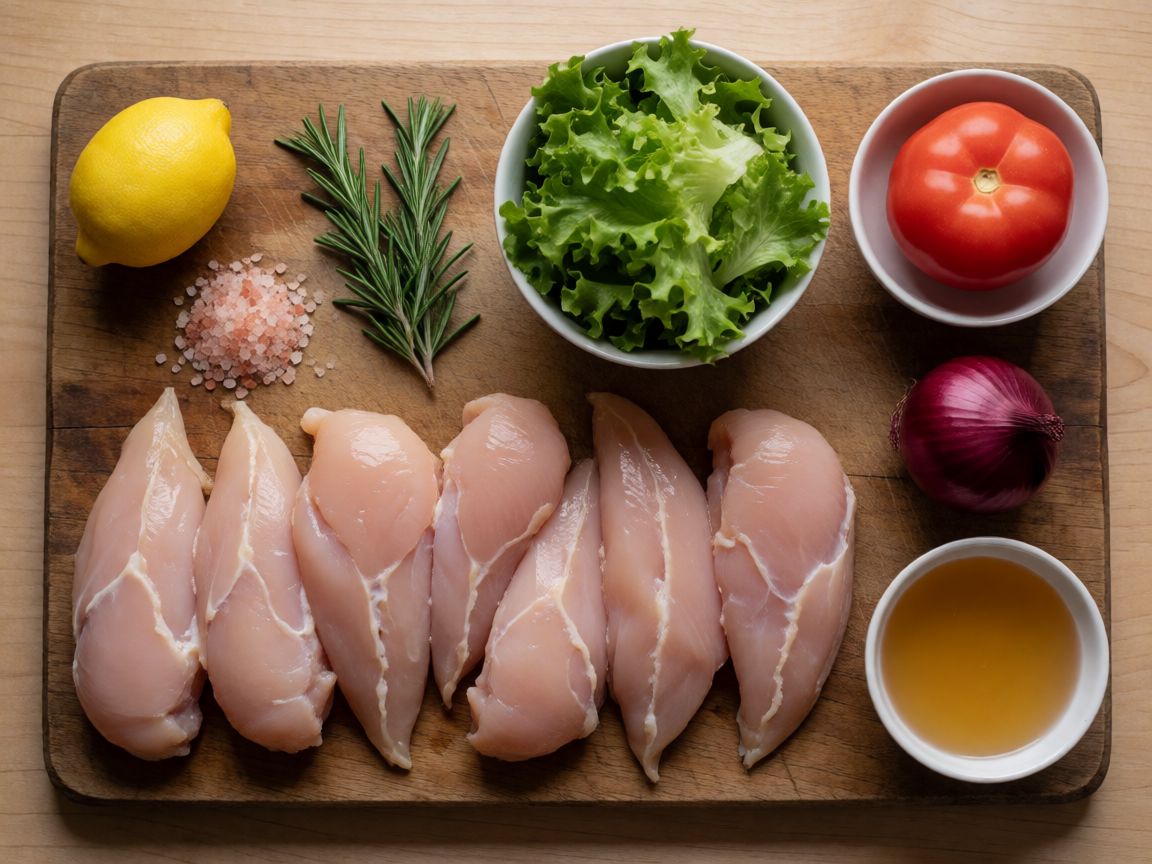
- 8 pcs Chicken breast
- Olive oil to taste
- 1 pcs Lemon
- Himalayan pink salt to taste
- Black pepper to taste
- Rosemary to taste
- 250 g Lamb's lettuce for the salad
- 200 g Datterini tomatoes
- 1 pcs Red onion
- Apple cider vinegar to taste










Steps
Place the chicken fillets on a baking tray lined with baking parchment.
2 minSeason with Himalayan pink salt and black pepper, then drizzle with a mixture of 1 tablespoon of olive oil and lemon juice.
3 minSprinkle with fresh rosemary and bake at 180°C. It's ready when the inside reaches 74°C.
15 minServe with lamb's lettuce, red onion and datterini tomatoes, seasoned with a pinch of salt and black pepper, and dressed with a vinaigrette.
5 min
This is a weekday dish wearing the clothes of a Sunday roast but doing none of the Sunday roast's work. Two chicken breasts per person, rubbed with oil and lemon, into a hot box, out again in a quarter hour, next to a cold crunchy salad. No basting, no carving at the table, no gravy boat. The oven here is not a slow friend the way it is for a joint of beef on a Sunday — it's a fast, blunt instrument, and the whole recipe is built around managing that bluntness.
What decides whether this works is one fact about the meat: breast has almost no fat running through it. A leg of lamb or a pork shoulder has fat to melt and baste the fibres from the inside as they cook; breast has nothing like that. So the muscle fibres tighten and squeeze out their own water the moment they go past doneness, and there's no fat waiting to replace what's lost. That's the whole mechanism of dry chicken breast — not bad luck, not a bad bird, just protein pushed past the point where it holds water. The 74°C the recipe gives you is not a target to aim past for extra safety, it's the ceiling. Past it you're not cooking the chicken any more, you're drying it.
Chicken breast: buy it with the breastbone's shape still faintly visible in the cut, not shaved thin and uniform — overly flattened fillets from the supermarket chiller are often tenderised by machine, and machine-tenderised meat cooks even faster and dries even sooner, because the fibres are already torn open. Eight fillets for four people is two each, which is generous for a weekday plate — if your fillets are large, one each is enough, just watch the thermometer harder, because a thick fillet and a thin one sitting on the same tray will never finish at the same minute.
Olive oil here has one job: carry the rosemary's aromatic oils onto the meat's surface and stop it catching on the parchment, since there's no fat in the breast to do that basting itself. Any oil with no smell of its own works just as well for the cooking side of it — sunflower, a mild rapeseed, whatever you keep for frying. Extra virgin olive oil earns its place for its own flavour, not because some rule demands it; use it where you'll taste it, meaning the marinade and the salad dressing, and save a cheaper oil for anything that's just there to stop sticking.
Lemon juice in the marinade does two things, not one. It seasons, and its acid starts to loosen the surface proteins before heat even touches them — which is useful in small doses and a defect in large ones. Leave a thin fillet sitting in lemon juice too long and the surface goes pale and slightly mealy, the same mechanism that turns raw fish into ceviche. Ten minutes of prep, as the recipe has it, is short enough that this never becomes a problem; don't marinate this overnight thinking you're doing the chicken a favour.
Himalayan pink salt is just salt with a blush of iron and trace minerals too small to change anything on your tongue. It's sold on romance, not chemistry. Ordinary table salt or any sea salt seasons the chicken exactly as well — spend the difference in price on better tomatoes instead.
For the salad, lamb's lettuce — mâche, if you've seen it under that name — is soft and a little nutty, with none of rocket's bitter edge, and it wilts fast once dressed, so it goes on the plate last, dressed last, never sitting dressed in a bowl waiting for the chicken to finish. Datterini tomatoes are small, thin-skinned and sweet because they're grown to concentrate sugar rather than bulk; if you can't find them, any ripe cherry tomato on the vine does the same job — the criterion is small, sweet, thin-skinned, not the Datterini name specifically. Slice the red onion thin: the thinner the slice, the more surface meets the vinegar in the dressing, and the more its raw sulphurous bite gets mellowed before it reaches your mouth, rather than hitting you like it would in a thick ring. Apple cider vinegar gives the vinaigrette a gentle, fruity acid; this is not the place for the malt vinegar in the cupboard from the fish and chips habit — that's aggressive enough to fight the tomatoes instead of lifting them. A rice vinegar or a light white wine vinegar substitutes fine if that's what's open.
One honest note on your oven: the dial says 180°C, but domestic ovens routinely run ten or fifteen degrees away from what they claim, and fan ovens cook faster than conventional ones at the same number. That's why the thermometer reading at the centre of the fillet is the real instruction here and the 180°C is only where to start looking. Patience is short in this dish — fifteen minutes, not an hour — but it still matters in the one place it always does: let the chicken sit a minute or two off the heat, under an upturned plate if you've no lid for it, before you cut in. That short pause is what keeps the juice in the meat instead of on the board.