
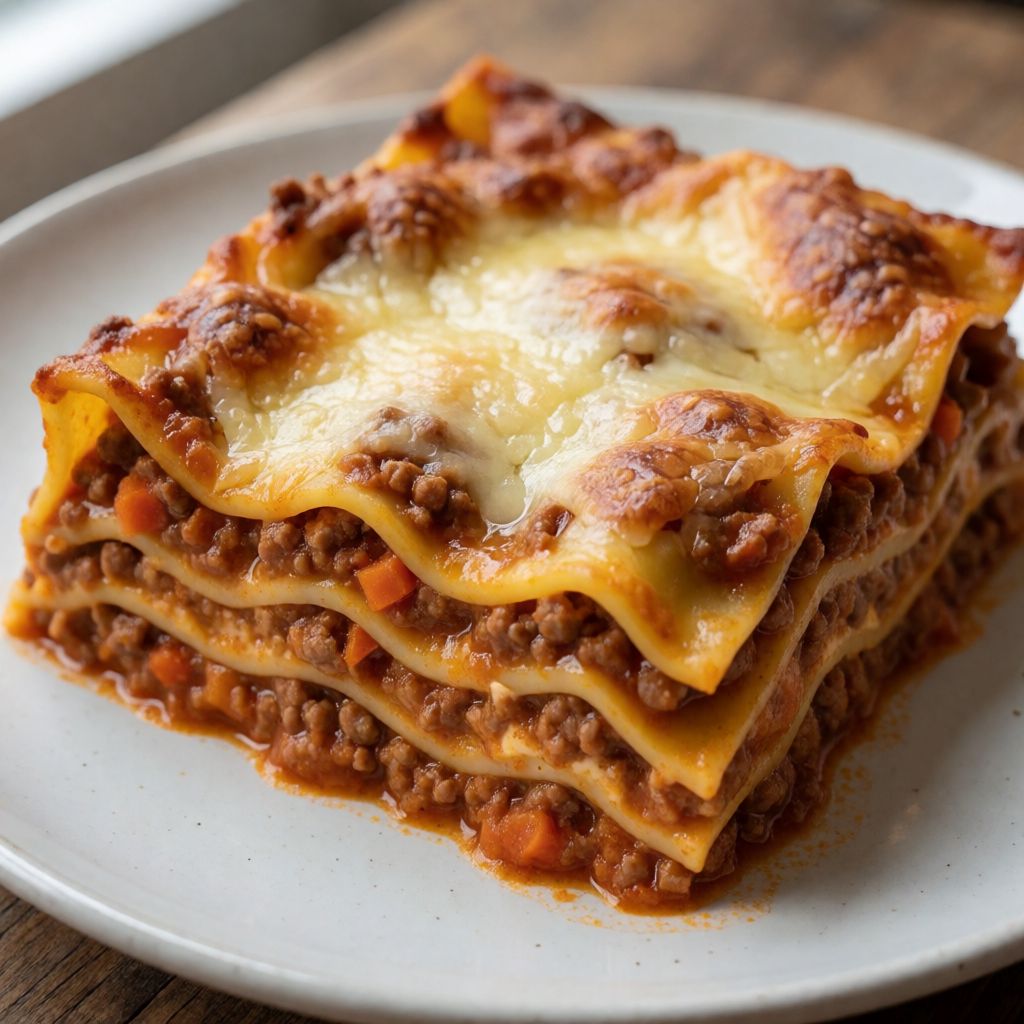
 AI photo
Beef Lasagne Bolognese
A classic layered pasta bake with beef and pork ragù, béchamel sauce and Parmesan.
Labels are worked out automatically from the ingredients and can be wrong. Check the packaging if it matters to you.
Ingredients
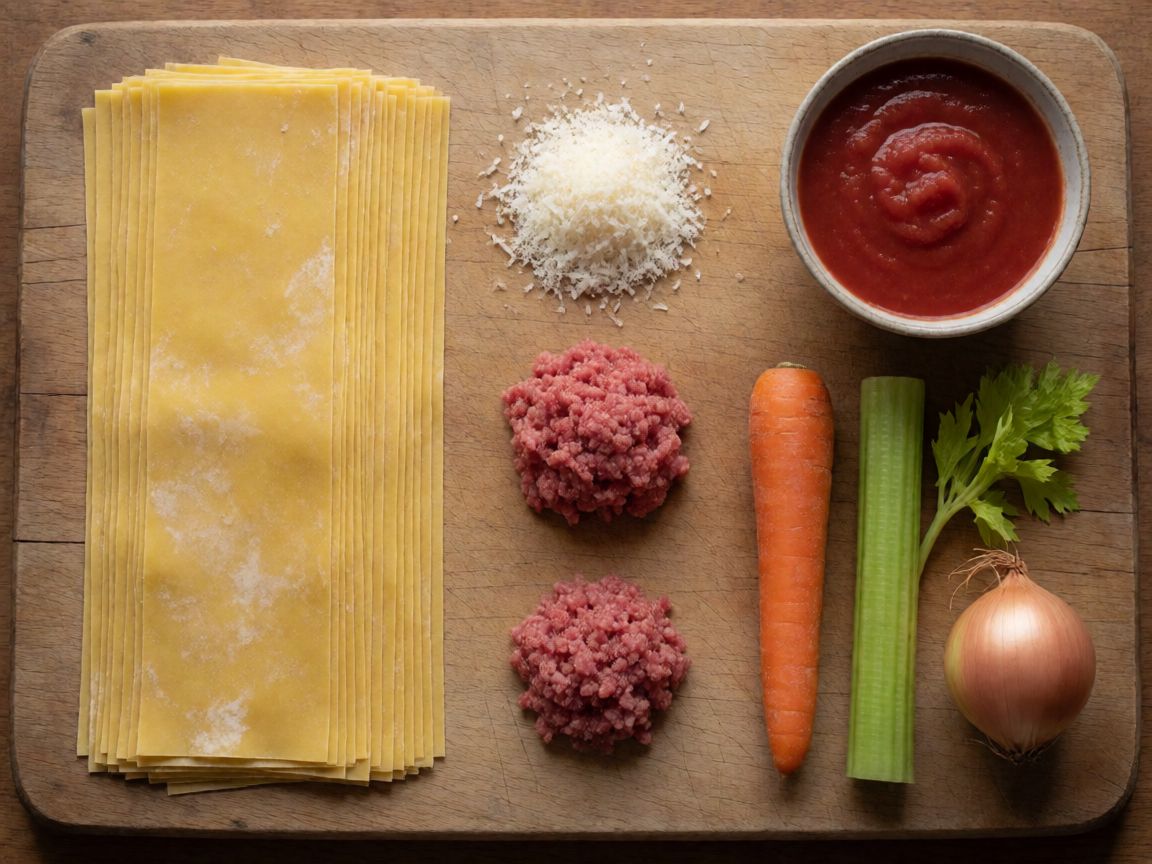
- 18-20 pcs fresh spinach lasagne sheets
- 250 g Parmesan
- 500 g Beef mince
- 250 g Pork mince
- 400 g Tomato passata
- 1 pcs Carrot
- 1 pcs Celery stalk
- 1 pcs Onion
- Olive oil to taste
- 1 pcs Butter
- Salt to taste
- Black pepper to taste
- 250 ml White wine
- 50 g Milk
- 1 l Milk
- 100 g Butter
- 50 g Plain flour
- Nutmeg to taste















Steps
Melt the butter in a saucepan, add the flour and whisk until smooth.
Pour in the milk, add salt, black pepper and nutmeg, and cook over medium heat, stirring constantly, until the sauce thickens.
Finely chop the celery, carrot and onion and sauté gently in olive oil with butter until soft.
Add the beef mince and pork mince and brown over high heat, stirring often with a wooden spoon, until golden.
Pour in the white wine and let it evaporate.
Add the tomato passata and a ladleful of hot water. Simmer the bolognese sauce for at least 2 hours over low heat, stirring occasionally and topping up with hot water as needed.
120 minAdjust the seasoning with salt and black pepper, stir in the milk and remove from the heat.
Spread a thin layer of béchamel over the base of the dish, then add a layer of spinach pasta, béchamel, bolognese sauce and Parmesan. Repeat the layers, finishing with pasta, béchamel, bolognese sauce and Parmesan.
Bake the lasagne bolognese at 200°C for about 30 minutes.
30 minRemove from the oven and let it rest for a few minutes before serving.
Lasagne is not really a pasta dish. It's a sauce-making exercise that happens to get dressed in pasta sheets at the end. Get the ragù and the béchamel right and the lasagne assembles itself; get them wrong and no amount of careful layering saves you.
The whole thing stands on two separate liquids that have nothing to do with each other until the oven forces them together: a meat sauce built slowly from a soffritto, and a white sauce that's really just flour and butter learning to hold milk without turning to paste. What decides the dish isn't the number of layers or how neatly you stack them — it's whether the ragù had the two hours it needs, and whether the béchamel was stirred enough to stay silky instead of lumping.
Some say lasagne is a weekend-only, special-occasion thing because it's complicated. It isn't complicated — it's slow, which is a different problem. Nothing here needs skill you don't have; the meat sauce needs time you have to actually give it, usually while doing something else nearby, like you would letting a Sunday roast sit once it's out of the oven. Rush the ragù and you get a sauce that tastes of tinned tomato and little else, because the long low simmer is what breaks the meat down and lets the tomato's acidity round off into something savoury rather than sharp.
The soffritto — carrot, celery, onion, finely chopped — isn't decoration, it's the flavour base the whole ragù is built from. Cook it gently in a fat with no taste of its own (a neutral olive oil, or the butter here) until it goes soft and sweet, not browned. Colour at this stage means bitterness later; softness means the vegetables have given up their water and sugar into the pan, which is the actual point of the exercise. If you only have onion in the house, use onion — the dish survives, just loses a little depth.
Two minces, beef and pork, go in together because beef alone gives you a leaner, slightly dry sauce, and pork brings the fat back that makes it coat the pasta instead of pooling under it. Brown it properly, in a pan hot enough that the meat sears rather than stews in its own liquid — if the pan's too crowded or too cool, you get grey mince, and grey mince means watery sauce, because the moisture never left. The wine goes in next and needs to actually cook off, not just be added — its job is to lift the fond off the bottom of the pan and then disappear, leaving acidity behind, not a wine taste.
Then the passata and water, and here's where the two hours earn their place. Marcella Hazan famously simmered her ragù for hours on the lowest possible heat, and she wasn't being precious about it — at a gentle simmer, connective tissue in the meat slowly breaks down into gelatine, thickening the sauce from the inside rather than by reduction alone. Skip ahead to thirty minutes and the sauce is still raw tomato with meat floating in it; the long cook is what turns "cooked" into "finished." Top up with hot water, not cold, so you never stop the simmer to let it recover temperature.
The béchamel's enemy is heat applied too fast. Melt the butter, whisk in the flour, and you've made a roux — cook it only until it loses its raw-flour smell, a minute or so, no colour needed. Pour the milk in gradually, off a hotter heat if you're nervous, whisking the whole time: this is what stops lumps, because the flour has no chance to clump into pockets before it's surrounded by liquid. Nutmeg isn't tradition for tradition's sake — it was cheap, it cuts the flatness of a plain milk sauce, and it became habit because it worked, the way tea takes milk here because strong tea needed softening long before anyone wrote the rule down.
Spinach pasta is the one ingredient with a real reason behind its colour: it's blanched spinach worked into the dough, nothing more mystical than that, and it reads as "fancier" mostly because it was the version served in nicer restaurants. If you can't find it, plain egg lasagne sheets do the identical job — the colour changes, the mechanism doesn't. Fresh sheets matter more than their colour, though: fresh pasta is already partly hydrated, so it cooks through in the oven using the moisture of the sauces around it; dried sheets need extra liquid in the dish or they'll stay chalky at the edges, which is the real reason some lasagnes come out dry at the corners and nobody can say why.
Parmesan here does two jobs — salt and a savoury edge from its age — and it's worth buying a wedge and grating it yourself, because pre-grated versions are cut with anti-caking starch that stops it melting properly into the layers. If Parmesan isn't to hand, any hard, aged grating cheese with real saltiness will do the same work; a young mild cheese won't, because it has nothing to contribute beyond stretch.
This feeds six, generously, and it's worth remembering that's the whole reason lasagne exists as a dish rather than a plate — it's built for a table, not a portion, which is also why resting it a few minutes before cutting matters: straight from the oven, the layers are still loose with heat; given five minutes, the béchamel firms just enough to hold a slice together instead of sliding apart on the plate.