
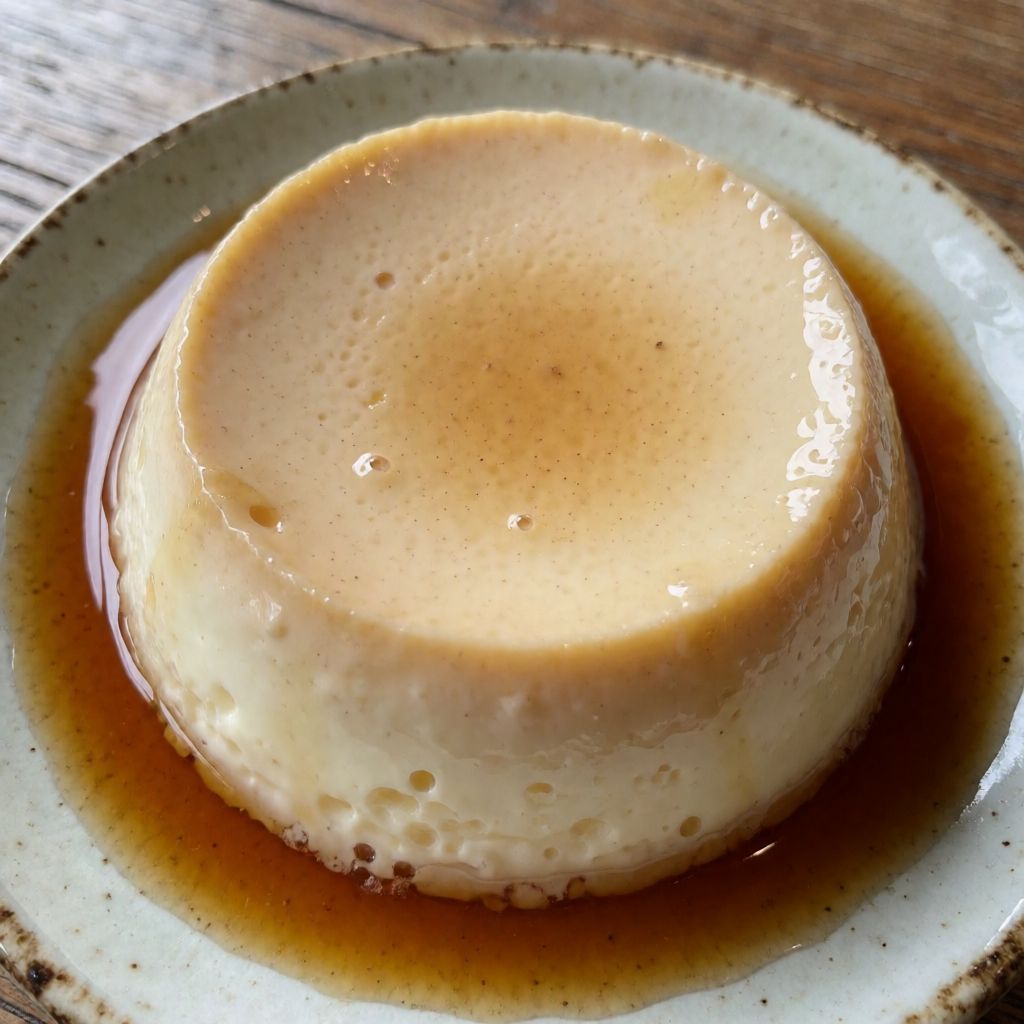
 AI photo
Latte in piedi: a Bolognese dessert similar to crème caramel
A traditional Bolognese dessert of baked milk and eggs, similar to a crème caramel.
Labels are worked out automatically from the ingredients and can be wrong. Check the packaging if it matters to you.
Ingredients
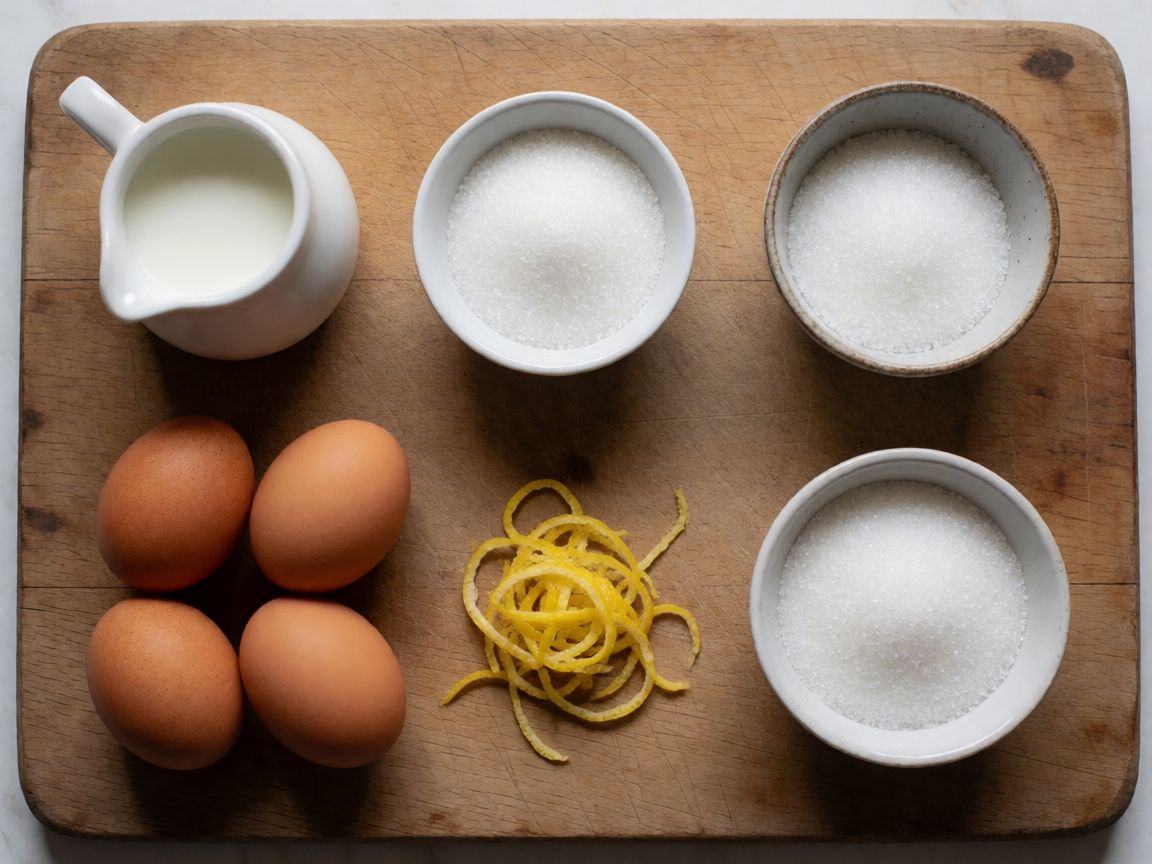
- 600 ml Milk
- 80 g Caster sugar
- 4 pcs Eggs
- 1 pcs Lemon zest grated, from one lemon
- 2 tbsp Water
- 80 g Caster sugar for the caramel





Steps
Melt the sugar with the water in a small saucepan. Bring to the boil without stirring until the syrup turns a caramel colour.
10 minPour the caramel into the base of the mould, spreading it evenly over the surface. Set the mould aside.
2 minWarm the milk gently, then let it cool.
10 minIn a bowl, whisk the eggs with the sugar and add the grated lemon zest.
5 minPour the warm milk into the egg mixture in a thin stream, stirring constantly.
3 minPour the mixture into the caramel-lined mould and cook in a covered water bath until it sets to a creamy consistency.
45 minLet the dessert cool completely before turning it out onto a serving plate.
120 minServe at room temperature or chilled from the fridge.
This is a baked custard: eggs, milk, sugar, a bit of lemon, poured over burnt sugar and cooked slowly in water until it sets. In Bologna they call it "latte in piedi" — milk standing up — because that is exactly the trick. Ordinary milk lies flat in a glass. This milk, once it has eggs and gentle heat in it, holds its own shape on a plate. The name is the whole recipe in three words.
It comes from poor kitchens, not rich ones — eggs and milk were what a household always had, sugar was the one thing worth spending on, and burning a little of it into caramel made a cheap dessert taste like it cost more than it did. No cream, no flour, no oven tricks. Just proportion and heat control.
What decides whether it works is not the ingredients, there are only five, it is the temperature the custard actually reaches. Milk and egg set into a smooth gel somewhere well under boiling; push them past that and the proteins seize into curds with water weeping out between them — the custard full of little holes, like a bad flan you've maybe met at a buffet and blamed on bad luck rather than bad heat. The water bath exists for exactly one reason: to put a buffer of near-boiling water between the flame and the custard, so the custard itself never gets anywhere near a boil. Cover it, because a lid stops condensation dripping down and pitting the surface — in your kitchen a plate over the dish does the same job as a proper lid, nobody needs a kazan for this.
The caramel has its own law: no stirring while it cooks. Stir sugar syrup and you drag in stray crystals, which seed the whole pot, and instead of a smooth amber glass you get a grainy, sandy mess that never pours evenly. Judge it by colour and smell, not minutes — it goes from clear syrup to straw to the deep amber-brown of a strong tea, and the smell turns from sweet to faintly bitter right at the point you want it. Pull it off a shade before you think it's ready; it keeps darkening in the hot pan for a few seconds after the flame's gone.
The long rest at the end — two hours, not negotiable — is not dead time, it's the second half of the caramel's job. Hard caramel poured into the mould stays hard glass while the custard bakes around it. Only as everything cools does moisture from the custard slowly dissolve that glass back into a runny amber sauce. Flip the dessert out warm and you'll crack a tooth on a caramel disc still stuck to the base. Let it sit, properly cold, and the caramel pours itself out as sauce when you turn it.
Milk: use whole milk, the same jug you'd pour into tea, not the skimmed one. The fat is what carries flavour and gives the custard body — skimmed milk sets thinner and tastes of nothing in particular. There's no infusing step here, the milk is only warmed to take the chill off and dissolve nothing more than itself, so there's no reason to reach for anything special.
Eggs: four whole eggs against 600 ml of milk is the ratio that actually sets this amount of liquid into something you can turn out onto a plate. Fewer eggs and it stays a thick drink; more and it turns rubbery, closer to an omelette than a custard. Whisk the eggs with the sugar until they're just combined, not frothy — air beaten into the mixture becomes bubbles in the oven, and bubbles become the same little holes the wrong heat causes, just from a different direction.
Two batches of sugar, two different jobs: one stays white and sweetens the custard, the other gets burned on purpose for the caramel. Don't try to save a pan by doing both in one go — they want different heat at different moments, and a lemon-scented custard base has no business sitting over a flame hot enough to caramelise.
Lemon zest, not juice: zest carries the aromatic oil from the peel without the acid a squeeze of juice would bring, and acid near warm milk is an invitation to split it before you've even started. Grate only the yellow skin — the white pith underneath is bitter and will sour the whole thing.
For the mould, anything heatproof with roughly straight sides will do — a loaf tin, a pudding basin, even a cake tin if it's solid enough not to leak, or individual ramekins if you want neat single portions rather than one dessert cut at the table. For the water bath itself, a wide roasting tin or a deep frying pan stands in perfectly well for the bain-marie a professional kitchen would use — just make sure the water comes partway up the sides of the mould, not over the rim, or you'll get a watery custard instead of a set one.