
 AI photo
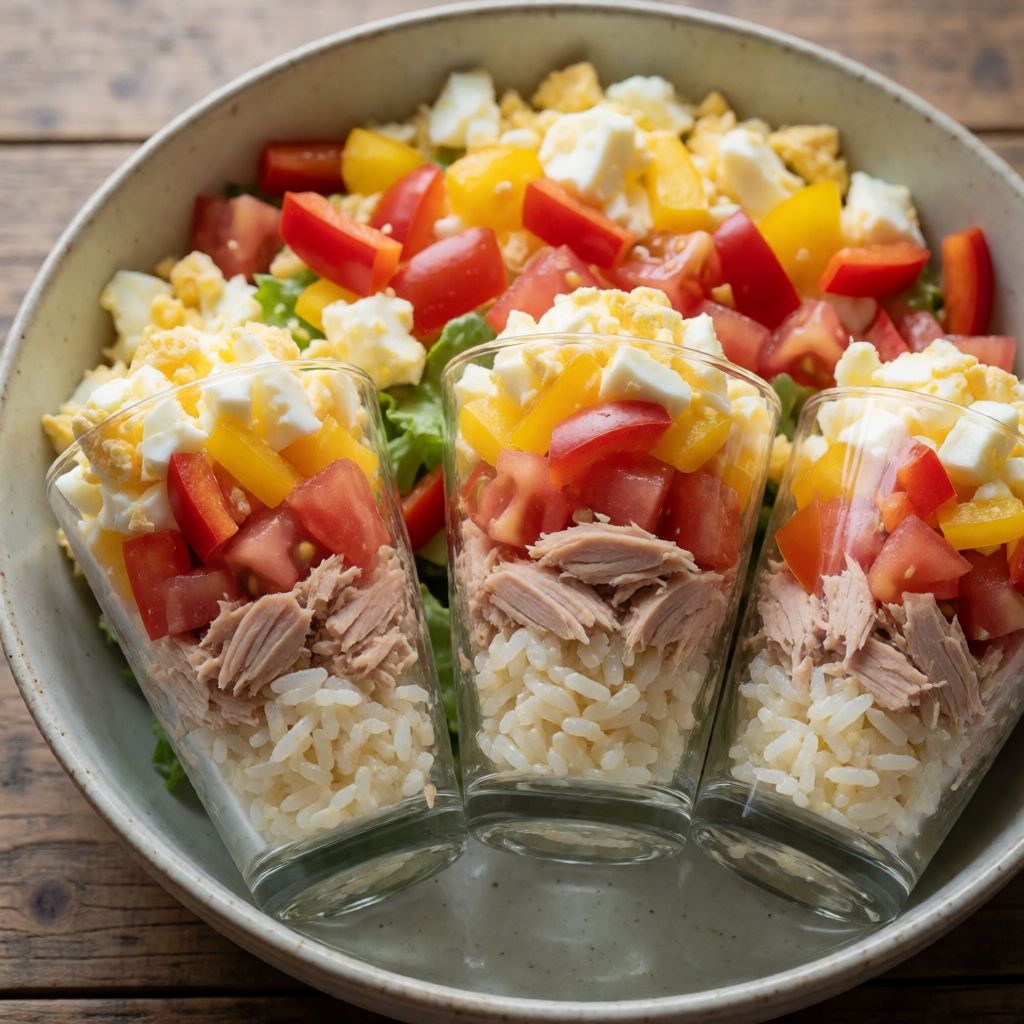
Big Summer Salad in Glasses
A refreshing summer salad of rice, tuna, tomatoes, eggs and peppers, layered in glasses.
Labels are worked out automatically from the ingredients and can be wrong. Check the packaging if it matters to you.
Ingredients
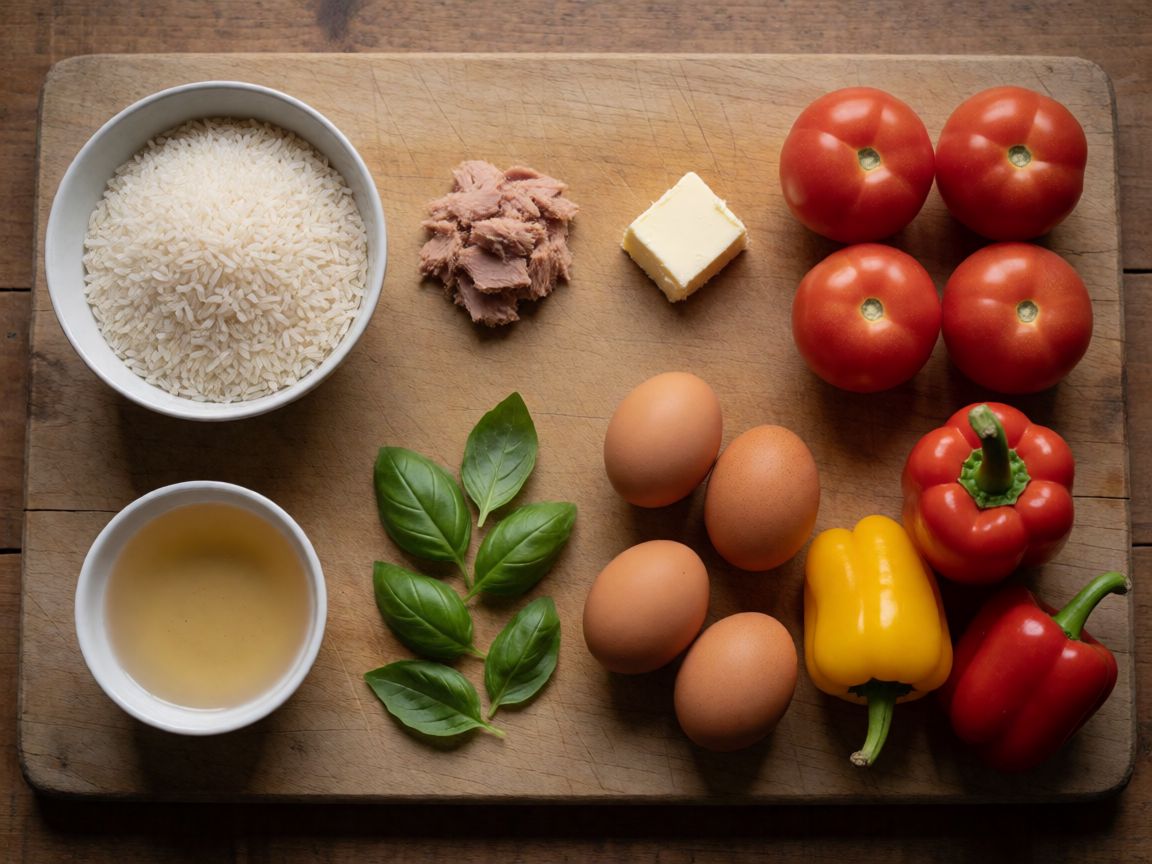
- 250 g Rice
- 120 g canned tuna in water or brine, drained
- 30 g Butter
- 4 pcs plum tomatoes
- 3 pcs boiled eggs
- 2 pcs Bell pepper
- 6 pcs Basil leaves
- 60 ml Olive oil
- 30 ml Vinegar
- 2 tbsp Capers
- Salt to taste
- Black pepper to taste, freshly ground
- 4 pcs Lettuce leaves












Steps
Put a saucepan on the heat, add the butter and pour in half a litre of water. Add a pinch of salt.
As soon as the liquid boils, add the rice.
Cover the saucepan with a lid and cook the rice for about 20 minutes.
20 minTransfer the rice to a bowl and let it cool.
Add the flaked tuna, diced bell pepper, tomatoes and capers, and season with salt and pepper.
Cover the bowl with cling film and place it in the fridge.
Add the boiled eggs and dress with olive oil mixed with vinegar and salt.
Add the chopped basil and mix thoroughly.
Spoon the salad into glasses lined with a lettuce leaf, and serve.
This is a rice salad dressed up as a dinner party trick — the "glasses" part is packaging, not cooking. What actually decides the result is whether the rice goes into that tuna-and-tomato mix hot or cold. Rice straight off the heat keeps absorbing whatever it touches — oil, vinegar, tomato juice — and turns to paste by the time you plate it. Cold rice has sealed its starch and just sits there, separate and glossy, picking up flavour on the surface instead of dissolving into mush. That's the whole reason step 4 and the fridge detour in step 6 exist: they're not for freshness, they're for texture control.
Some say rice salad has to be made with "special" salad rice, risotto-style or sticky. No — the opposite. You want grains that stay apart under pressure, so a everyday long-grain is the safer bet here than anything starchy. Basmati, if you've got it, behaves even better because it's bred to stay separate when cold.
The second thing that decides this dish is the tomatoes and capers sitting in the bowl before the eggs and dressing go in. Tomatoes bleed juice, capers bleed brine — both salty, both acidic. If you dressed everything at once, you'd never taste how much extra salt and vinegar you actually need, because the vegetables are already seasoning themselves. That's why salt and pepper get added at step 5, before the oil-and-vinegar dressing arrives at step 7 — you're correcting a flavour that's already half-made, not building one from zero.
Rice (250 g) is the base and the bulk — for one person that's generous, closer to two or three servings really, which tells you this recipe is built to be a make-ahead lunch across a couple of days, not a single plate assembled to order. The butter in the cooking water isn't flavour — in this quantity it's barely noticeable — it's there to coat the starch granules as they swell, which cuts down on grains sticking to each other. If you've got no butter, a teaspoon of any neutral oil does the same coating job; olive oil works too, it just adds its own taste, which butter in this amount doesn't.
Tuna in water or brine, not oil — that's a deliberate choice, not a lesser option. Oil-packed tuna would add a layer of greasy richness right where you're trying to keep the salad light and separate-grained; water-packed tuna flakes cleaner and doesn't fight with the olive oil dressing you add later. Drain it properly and press it a little — wet tuna dilutes the dressing before the dressing's even made.
Plum tomatoes are specified because they're fleshier and less watery than round salad tomatoes — less juice bleeding into your rice, less risk of a soggy base by the time this sits in the fridge for a day. If plum tomatoes aren't in the shop, any firm, not-overripe tomato works; just deseed it a bit more aggressively, since that's where most of the water hides.
The boiled eggs go in late — step 7, after the cold mixing and fridge rest, not with the tuna and vegetables. Egg yolk is soft and crumbles under stirring; mix it in too early or too roughly and you get a grey-yellow smear through the whole bowl instead of distinct wedges. Adding it near the end, gently, keeps the pieces whole enough to recognise on the spoon.
Capers are a salt-and-acid ingredient dressed up as a vegetable — they're doing the job vinegar does, just in bursts. If you don't have them, a few chopped green olives get you a similar sharp hit, though you'll want to go lighter on the vinegar to compensate. Basil goes in last, chopped, because its aroma is volatile — it fades fast once cut, so it's the one ingredient here that doesn't benefit from sitting in the fridge with everything else. Add it right before serving if you're making this a day ahead; don't chop it until you're ready to use it.
On lining glasses with lettuce: this isn't decoration for its own sake — the leaf stops the bottom layer of rice sitting directly against wet glass, which otherwise looks (and eventually feels) soggier than it is. Any sturdy leaf that can take the weight of a few spoonfuls without collapsing — cos, little gem — does the job; a delicate leaf like baby spinach will just wilt flat and disappear.
One honest note for a UK hob: "about 20 minutes" for rice with the lid on is a lower bound, as it always is with rice, and it depends on your pan holding heat evenly once you take it off a boil — a thin pan on an electric ring runs hotter at the edges than the middle, so check a grain by biting it, not by the clock. It should give, not crunch, and it shouldn't have turned to glue either. That's patience doing the job a timer can't.