
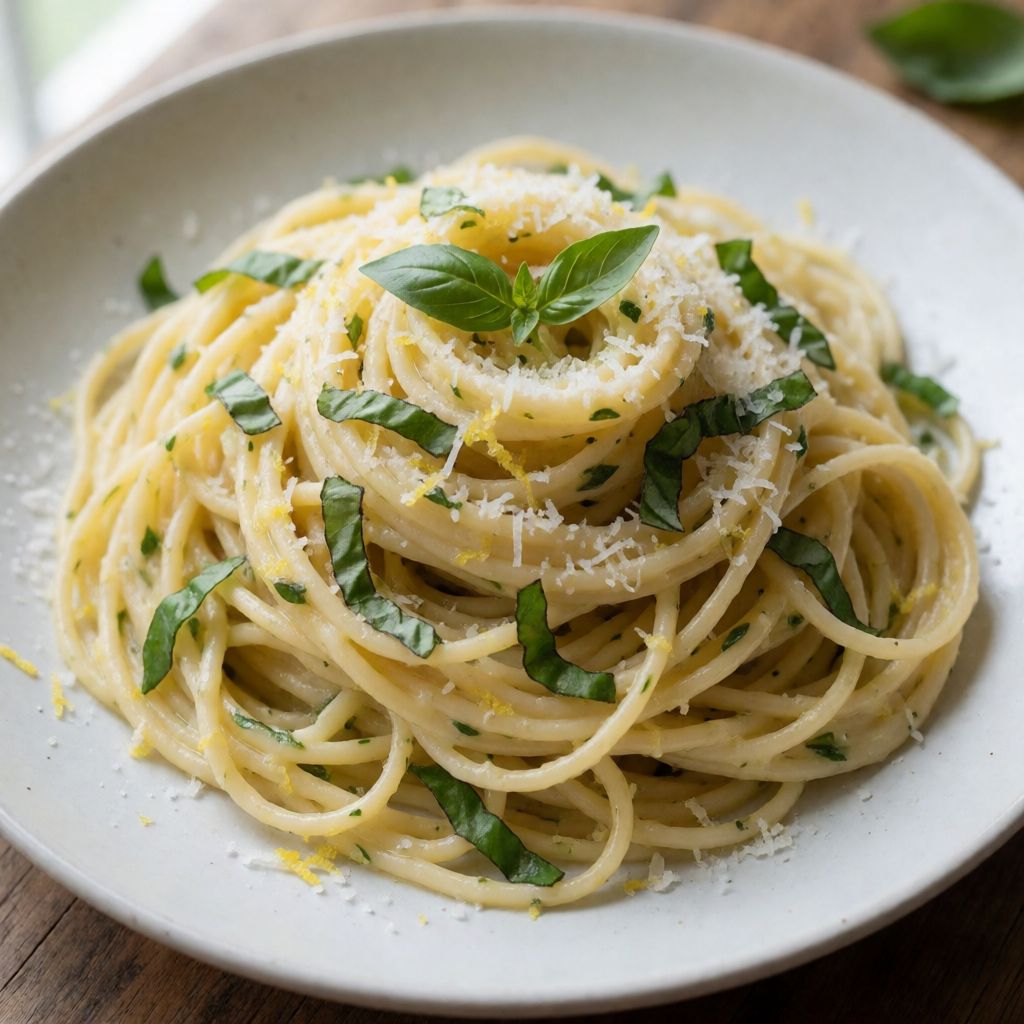
 AI photo
Lemon Basil Pasta
A quick pasta dish tossed with lemon, basil and parmesan, ready in minutes.
Labels are worked out automatically from the ingredients and can be wrong. Check the packaging if it matters to you.
Ingredients








Steps
Cook the pasta until al dente in a pot of lightly salted water.
10 minIn a bowl, mix the lemon juice, lemon zest, olive oil, butter, parmesan, salt, pepper and half of the basil leaves.
Toss the still-hot pasta with this mixture in the bowl.
Serve immediately on plates, sprinkled with the remaining basil leaves.
This isn't a sauce you cook. It's a sauce you build in a bowl while the pasta does the heating for you — that's the whole mechanism, and once you see it, the dish stops being mysterious. The lemon juice, oil, butter and cheese go in cold, loose, almost unfinished-looking. Then the pasta comes out of the pot still steaming, still carrying a film of starchy water on every strand, and that heat and that starch are what turn four separate things into one sauce. No flame, no reduction, no roux. If the dish fails, it almost always fails here: pasta drained too long, cooled on a plate while you dawdled with the zester, tossed when it's gone lukewarm. Lukewarm pasta can't melt butter into cheese properly — you get oily grains sitting on noodles instead of a coat.
So speed after draining decides everything. Have the bowl made before the pasta is done, not after. This is a dish where the last two minutes are the only ones that matter, and they move fast.
Basil is split for a reason, not for show: half goes into the warm mixing bowl and wilts into it, giving up its oil-soluble perfume into the fat; half goes on top raw at the very end, keeping its peppery bite and bright green. Cook all of it in and you lose the contrast — one soft green herb note instead of two.
It's a weeknight dish, not a Sunday-roast dish — nobody's basting anything for three hours. Ten minutes of actual cooking, and most of the skill is in not wasting them.
Pasta shape: anything with surface for the sauce to grip — spaghetti, linguine, a short twisted shape. Smooth tubes work less well because there's less surface per gram to carry fat and acid. Salt the water, yes, but 'salty as the sea' is advice built for a kazan of water you'll never boil at home on one ring — in a domestic pot, a generous pinch per litre is enough; you're seasoning the pasta from inside, not brining it. And don't rinse it after draining — that's a myth that costs you the dish: rinsing washes off the starchy film that lets the sauce stick instead of sliding off into a puddle at the bottom of the plate.
Lemon: zest it before you cut it for juice, not after — once it's halved and squeezed, the peel collapses and you can't grate it cleanly. The zest carries the fragrant oils, the juice carries the sharpness; they're doing two different jobs, which is why the recipe asks for both rather than just 'more lemon'. If your lemon is thin-skinned and dry, you'll get little zest and should lean a touch more on juice to get the same lift.
Parmesan: grate it yourself, just before using it. The ready-grated bags are dusted with starch to stop clumping in the packet, and that same starch is exactly what stops it melting smoothly into butter and oil here — you'll get grit instead of silk. Any hard, well-aged grating cheese with a similar dry, crystalline texture will do if parmesan isn't to hand — a mature pecorino, say, though it brings more salt with it, so taste before you add more.
Olive oil: this wants one with a flavour of its own, because it's not frying anything — it's sitting raw in the bowl as half the sauce, so a bland oil leaves a bland dish. If a lemony, grassy olive oil isn't in your cupboard, use what you'd put on a salad, not what you'd deep-fry in. The butter is there in a small amount for one job only: butterfat rounds off the lemon's sharpness and helps bind oil and cheese into something that coats rather than separates. Leave it out and the sauce will taste thinner and more acidic, not wrong exactly, just less finished.
Patience here isn't about long cooking — there's none — it's about not rushing the small fiddly bits: zesting properly, grating the cheese fine rather than in big shards that won't melt, keeping the basil for the two different moments instead of dumping it all in together because it's quicker. Ten minutes of prep done carefully beats ten minutes done in a hurry, every time, in a dish this short.