
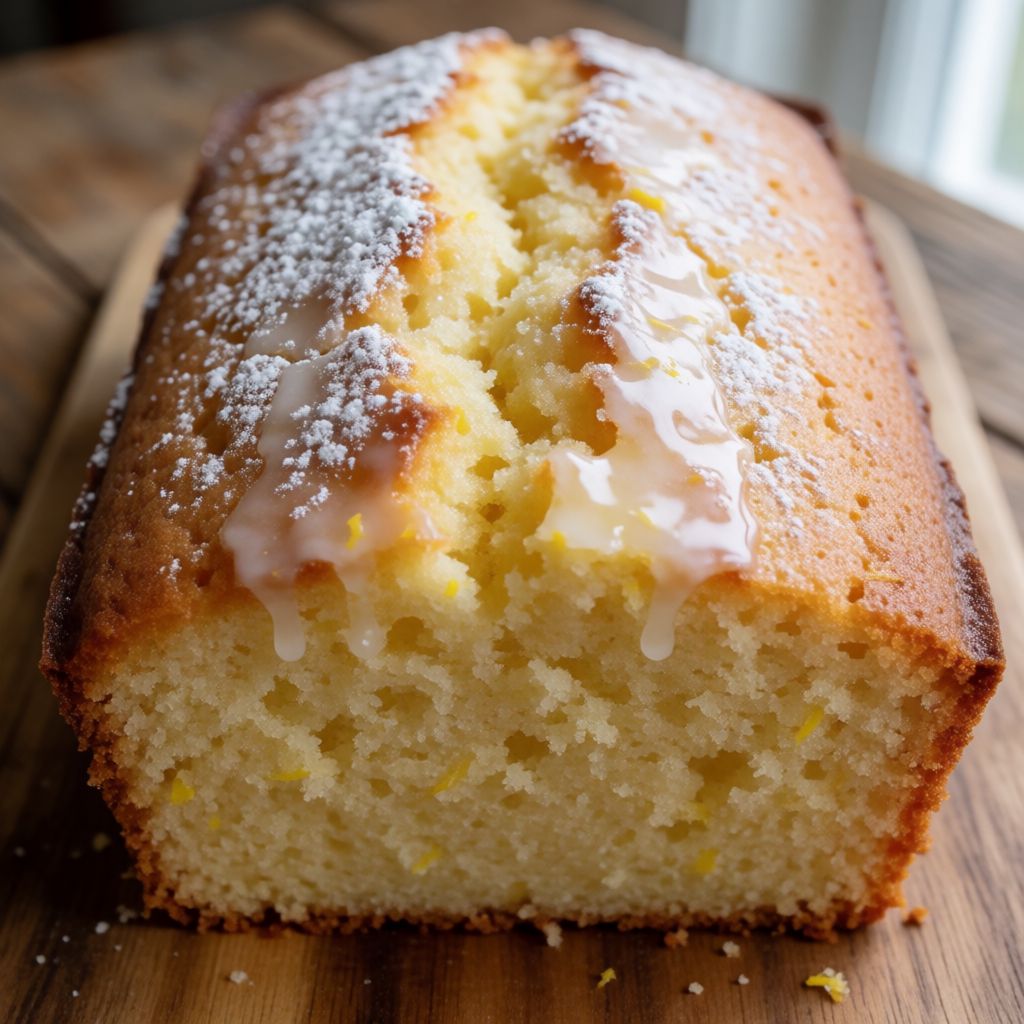
 AI photo
Lemon Cake
A light lemon sponge cake flavoured with lemon zest and juice, finished with a dusting of icing sugar.
Labels are worked out automatically from the ingredients and can be wrong. Check the packaging if it matters to you.
Ingredients
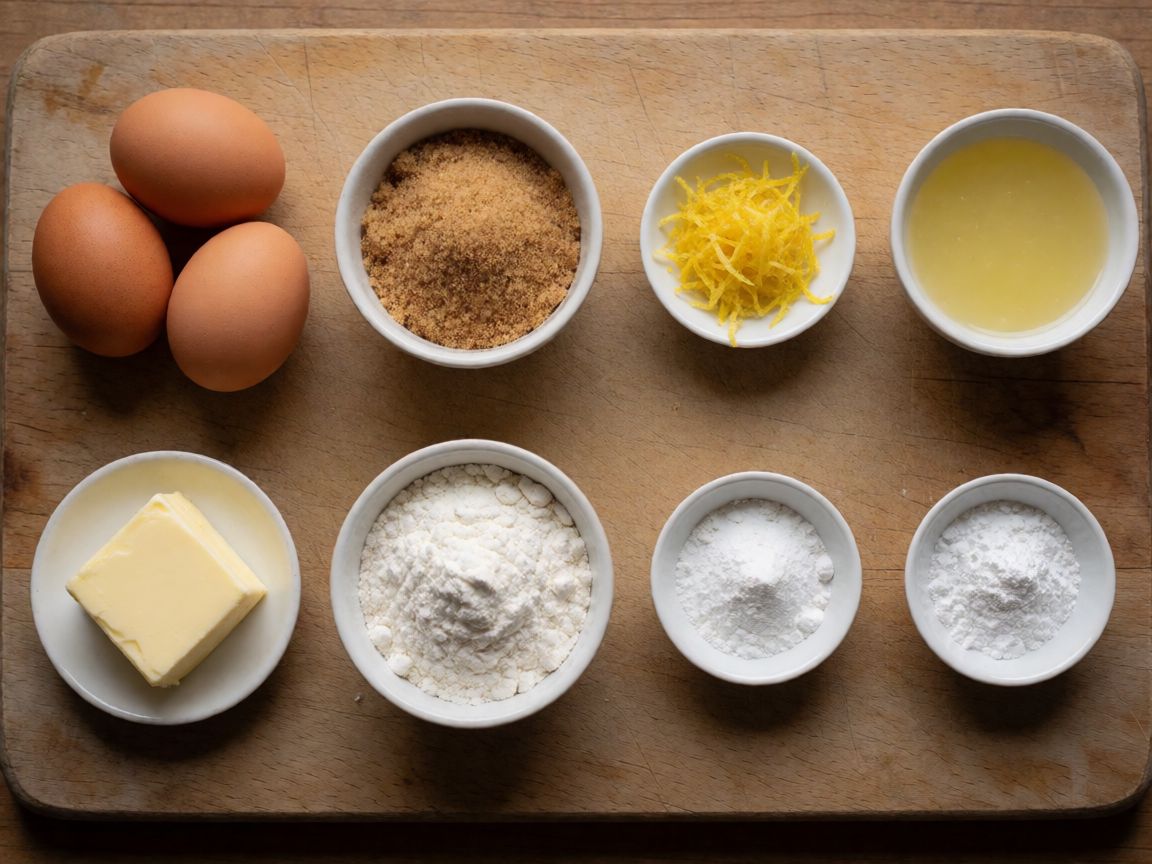
- 3 pcs Eggs
- 120 g Brown sugar
- 2 pcs Zest of 2 lemons
- 2 pcs Juice of 2 lemons
- 120 g Butter soft
- 100 g Plain flour
- 90 g Cornflour or potato starch
- 1 pcs Baking powder sachet
- Icing sugar to taste









Steps
In a bowl, mix the eggs with the brown sugar and beat with a mixer for a few minutes, until the mixture doubles in volume.
Add the soft butter, lemon zest, and juice, continuing to mix with the mixer.
Sift the flour and cornflour, then fold into the mixture, mixing until smooth.
Add the baking powder and gently fold it in.
Pour the batter into a 22 cm tin, greased and dusted with flour.
Bake in a preheated fan oven at 160°C for 30 minutes.
30 minLet the cake cool, then dust with icing sugar.
This is a lemon sponge, not a lemon drizzle cake — there's no syrup soak here, no holes poked in the top. The lift comes from eggs beaten into foam, not from creamed butter and sugar the way your gran might have done it for a Victoria sponge. It's the sort of cake that turns up after a Sunday roast, when nobody wants another heavy pudding but the kettle's already on for tea.
What decides whether it rises properly or sits flat and dense is one thing: how much air you get into the eggs and sugar before anything else goes in. "Doubles in volume" isn't decoration in the method — it's the entire scaffolding of the cake. Baking powder is there to finish the job the foam started, not to do the lifting on its own. Add it too early, beat it too hard, and you knock the air straight back out.
The butter has to be soft, almost spreadable with a knife, and it goes in after the foam is built, folded rather than whipped. Cold butter won't blend, it'll sit in lumps; melted butter is liquid fat, and liquid fat coats the protein walls of your egg bubbles and collapses them on contact. Soft butter is the only state that lets you fold it through without losing what you just whipped in.
And the finish matters more than people think: icing sugar goes on a cold cake. Dust it warm and it melts straight into a wet glaze you can't see — all that fine white dust, gone. Patience here isn't poetic, it's load-bearing: let the cake cool properly, or you throw away the last visible step of the recipe.
Some say you should cream butter and sugar together for any cake, the way you were taught for scones and Victoria sponges — no, because this isn't that family of cake. Here the eggs and sugar are whipped into foam first, and the butter comes in afterwards as flavour and moisture, not as the thing holding air. Two different engineering problems, two different orders of operation. Mixing them up is the usual reason a home-baked lemon cake comes out tight and rubbery instead of light.
Eggs are your foam, and room-temperature eggs whip to greater volume than fridge-cold ones — the proteins unfold and trap air more readily when they're not stiff with cold. If your kitchen's cold, stand the eggs in warm water for a few minutes before you start. Brown sugar does double duty: it dissolves into the egg proteins as you beat, which actually stabilises the foam, and it leaves a faint caramel note that white sugar won't give you. If you've only got caster sugar, use it — the cake will be a touch paler and a shade less rounded in flavour, nothing more.
The flour here is split deliberately between plain flour and cornflour or potato starch, and that split is the difference between a cake with some chew and one with a fine, soft crumb. Plain flour on its own builds gluten, and gluten is what gives bread its structure and a lemon cake its toughness if you let it develop too far. Starch has no gluten at all — it just fills space and sets when heated, so cutting the flour with it dilutes the gluten before it has a chance to form a network. Any pure, flavourless starch does this job: cornflour, potato starch, rice flour if that's what's in the cupboard. What you're after is something with no gluten and no taste of its own, not a specific brand.
Lemon zest carries the oil, which is where nearly all the citrus aroma actually lives — the juice is mostly acid and water. Grate only the yellow, never the white pith underneath, because the pith is bitter and no amount of sugar fixes that. The juice does more than flavour the batter: its acidity reacts with the baking powder once the two meet moisture and heat, and a touch of acid in an egg foam can even help hold the structure, the same principle as cream of tartar in a meringue. That's also why the baking powder goes in last, folded gently rather than stirred through — by that point it's sitting in an already-acidic, already-aerated batter, and the less time and agitation it gets before the oven, the less gas it loses before the heat can set the crumb around it.
Grease the tin and dust it with flour rather than just greasing it — the flour grabs onto the fat and forms a thin dry layer the batter can climb without sticking, which matters more at the edges of a 22cm tin than people expect; a bare greased tin lets the sides stick while the middle rises, and you get a sunken crater instead of a flat top.
On the oven: 160°C fan is the number on the recipe, but domestic ovens, especially older fan ovens in UK kitchens, are notoriously unreliable against their own dial — some run fifteen degrees hot, some cold, and a fan oven thermometer is a better investment than trusting the display. So treat 30 minutes as the earliest you check, not the moment you take it out. Look for the cake pulling slightly away from the tin's edges, a top that springs back rather than leaving a dent, a skewer that comes out clean rather than coated. Only once it's properly cool does the icing sugar go on — a cold surface keeps the dust as dust, which is the whole point of that last step.