
 AI photo
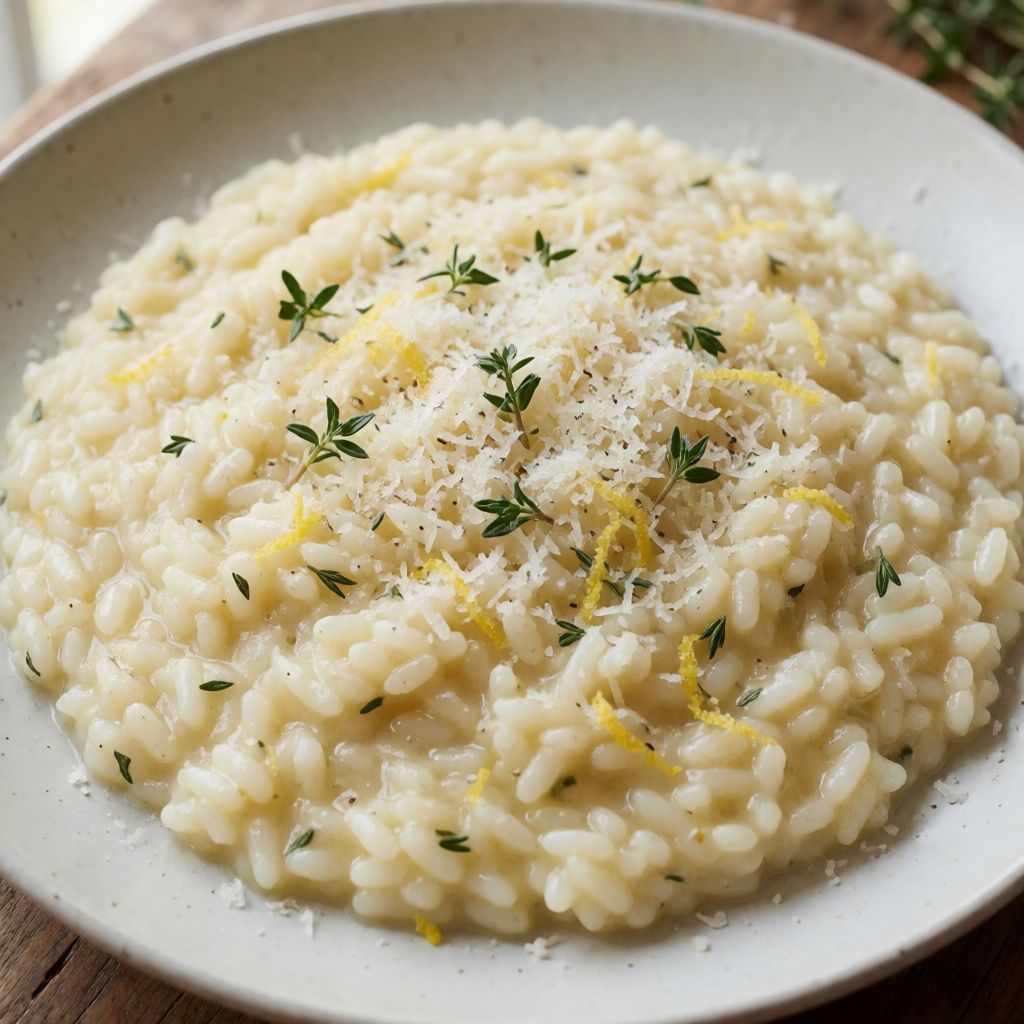
Risotto with Lemon and Thyme
A creamy risotto brightened with lemon and fragrant thyme, finished with butter and Parmesan.
Labels are worked out automatically from the ingredients and can be wrong. Check the packaging if it matters to you.
Ingredients






Steps
Cook the rice in a separate pan, drain and leave to cool.
10 minMelt the butter with the shallot in a frying pan.
Add the cooled rice to the butter and shallot mixture and fry lightly.
Pour in the lemon juice and add stock to cook the rice.
Cook the rice until tender.
10 minAdd the thyme leaves and a little lemon zest, stirring.
Stir in the Parmesan, adding salt to taste if you like.
Once most of the stock has evaporated, let the dish rest briefly before serving.
Forget the kazan for a moment — this isn't really risotto in the Italian sense, it's a lemon-butter fried rice wearing a risotto's name. Real risotto builds its creaminess from raw grain: you toast it dry, then add stock in small amounts and stir until the starch bleeds out and binds everything into a sauce. Here the rice is boiled first, somewhere else, then cooled and fried. That's a different mechanism entirely, closer to what you'd do with yesterday's rice before frying it with egg and soy — and it's a sensible one for a flat with one hob and no twenty minutes to stand stirring.
The cooling after boiling isn't a pause for your convenience, it's the step that saves the dish. Rice straight out of hot water is wet on the outside, sticky, ready to collapse into porridge the moment you push it round a pan. Let it sit and cool, and the surface starch firms back up — the same reason fried rice recipes insist on day-old rice. Skip this and your 'risotto' turns to glue the second it hits the butter.
What decides whether this works is restraint in two places: the shallot, which must soften and sweeten without colouring — push the heat and it turns bitter, and no amount of parmesan fixes bitter — and the lemon, added as juice early to cook into the rice rather than sit on top of it, with the zest held back until near the end so its oil doesn't just boil off into the air above your pan. Some say citrus and dairy fight each other. They don't, as long as the acid goes in before the butter has to carry weight alone — it's timing, not chemistry, that goes wrong.
On the rice itself: you don't need arborio or carnaroli for this method the way you would for true risotto, because you're not relying on raw starch release — you're relying on a grain that holds its shape through two cookings. Short or medium grain rice bred for risotto happens to do this well, which is why it's the safe choice, but the reason isn't mystical, it's structural. Basmati or jasmine will let you down here — they're bred to stay dry and separate, and a second cooking in buttery stock will either overcook them or break them apart. If risotto rice isn't in the cupboard, a pudding rice or even a short-grain paella rice will behave more honestly than a long grain will.
Butter carries two jobs: it's the fat the shallot softens in, and it's what the parmesan will later cling to, turning the last of the liquid into something that coats rather than just sits wet in the pan. Unsalted gives you control over the final salt, which matters once parmesan — already salty — goes in. Any flavourless fat with real body can stand in if you're out of butter, but you'll lose the dairy richness that ties the lemon's sharpness down, so treat butter as closer to essential here than most substitutions allow.
Shallot rather than onion is really about sweetness and gentleness — shallots are milder, cook faster, and don't fight the lemon for attention the way a strong onion can. If you only have onion, dice it fine and give it longer over low heat until it's soft and pale, not coloured; you're after sweetness, not caramelisation, which would push the dish toward a different flavour entirely.
The lemon is doing two separate jobs and that's worth knowing, because it tells you when each part goes in. The juice is acid and goes in with the stock stage, where simmering has time to round off its sharpness. The zest is aromatic oil, fragile under heat, and goes in near the end so it still smells like lemon rather than like boiled peel. Buy one you'd be happy to wash — if it's waxed, scrub it, since you're eating the skin.
Thyme here is a handful of leaves, not a sprig simmered in — strip them off the stalk and add them off any strong heat, the same logic as the zest: these oils don't survive a rolling boil, they survive a gentle finish.
Parmesan at the end is what the Italians call mantecatura in a proper risotto — stirring cheese and fat into the remaining liquid until it turns glossy rather than watery. Grate it fresh if you can; the pre-grated kind is dusty and doesn't melt the same way. Any hard, aged, salty cheese will do the same work — pecorino, grana padano, even a mature hard cheddar at a push, though it will taste like itself and not like Parma. Taste before you add extra salt; the cheese and the stock have usually already done that job for you.