
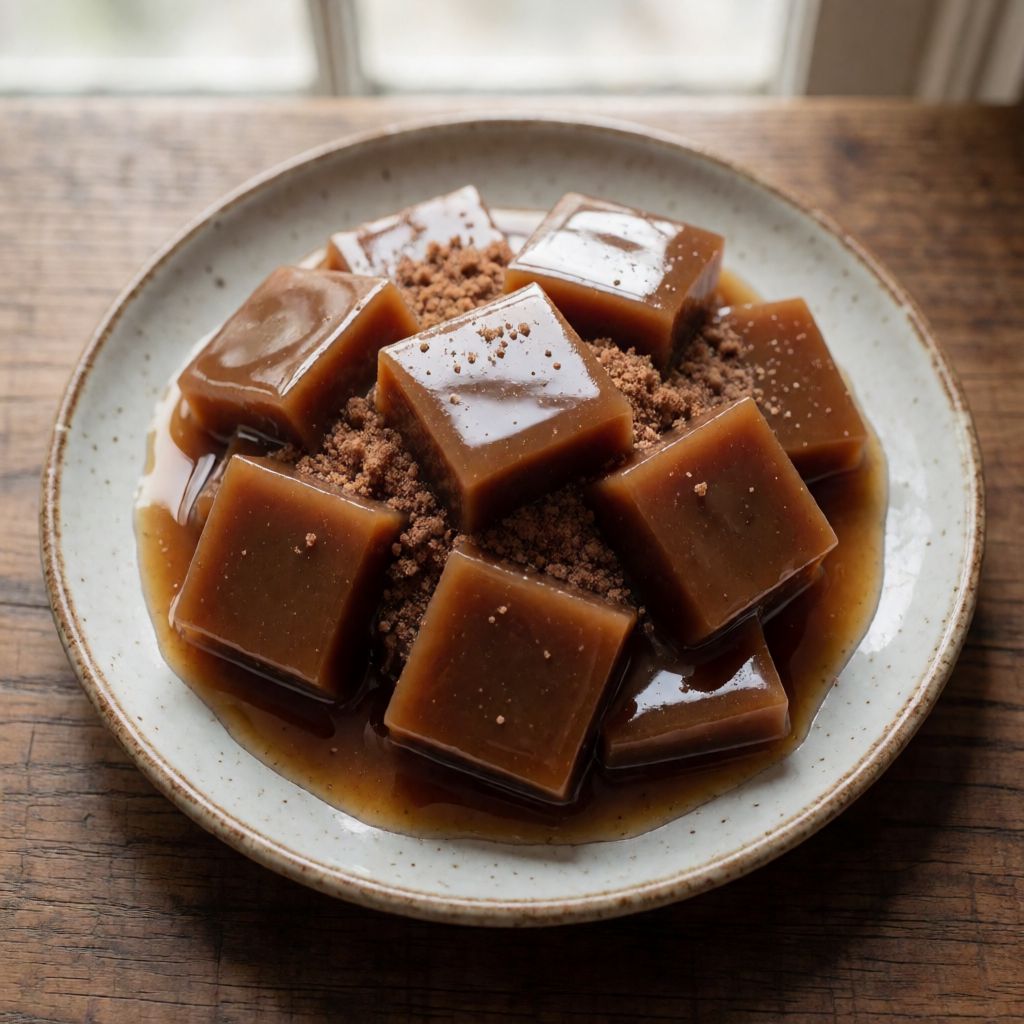
 AI photo
Liquorice Caramels
Soft, chewy liquorice caramels, perfect for sharing or gifting.
Labels are worked out automatically from the ingredients and can be wrong. Check the packaging if it matters to you.
Ingredients
- 500 ml double cream
- 250 g caster sugar
- 120 g glucose syrup
- 1 tsp salted liquorice syrup
- 1 tbsp liquorice powder




Steps
Pour the cream, sugar and glucose syrup into a saucepan and bring to the boil.
Cook the caramel for 35–45 minutes, stirring occasionally, until the mixture pulls away from the base of the pan and reaches 120°C.
40 minPour in the liquorice syrup and stir.
Pour the caramel mixture into a 16×16 cm tin lined with baking parchment, sprinkle with liquorice powder and press down lightly.
Leave to cool for at least 3 hours, then cut into pieces of the size you like.
180 min
What was changed
We used double cream here, as it's the richer cream most UK kitchens reach for when making caramel.
A caramel that stays soft under the tooth, flavoured with liquorice — the sort of sweet that needs no name beyond what's in it. What decides whether it works is one number: 120°C. Below that, the caramel never sets; it stays loose and sticky no matter how long you leave it to cool. Above that, you've made toffee — hard and glassy, a different sweet, not a mistake exactly, but not this one.
Some say "bring to the boil" tells you the temperature. It doesn't. Water boils at 100°C, but once sugar dissolves into it, the boiling point climbs as the water cooks away — you're not watching for bubbles, you're watching concentration rise. That's why the recipe gives you two signs and not one: the number on a thermometer, and the mixture pulling clean away from the base of the pan when you drag a spoon through it. Trust the second if you don't own the first — but own the first if you can. This is one of the few sweets in a home kitchen where guessing by eye alone is a real gamble.
Forty pieces, cut small, from a 16×16 cm tin — this isn't a dessert you plate, it's a tin you keep by the kettle for when the tea's poured and something sweet and slightly bitter sits well against the milk in it. Liquorice isn't a flavour everyone reaches for first; it earns its place here as a counterweight to all that sugar and cream, not a decoration sat on top of it.
Double cream does two jobs at once. Its fat coats the sugar as it cooks, keeping crystals small and separate — half the reason the caramel stays smooth rather than turning grainy on the tongue. Its proteins and milk sugars are what brown and deepen in flavour as the mixture climbs past 100°C — real caramel flavour, not just melted sugar. Use nothing leaner; cream under about 36% fat won't carry the same richness, and the mixture can split instead of cooking down evenly.
Caster sugar is the structure; glucose syrup is the thing stopping it crystallising on you. Pure sugar syrup wants to turn back into crystals the moment it's disturbed or cooled unevenly — that's the grainy caramel every home cook has made once and sworn off caramel over. Glucose syrup gets between the sugar molecules and breaks up that urge to re-form a lattice. Any thick, flavourless invert sugar does the same job — liquid glucose from the baking aisle is the standard one. Golden syrup will just about stand in, though it brings its own faint flavour along; against liquorice that's no bad thing, so it's a fair swap if that's what's in the cupboard.
Grainy caramel is almost never about the temperature being wrong. It's about sugar crystals that never fully dissolved, left clinging to the side of the pan from the start, acting as seeds that the rest crystallises around once the mixture concentrates. That's the real reason you stir gently and only now and then, rather than whisking hard — vigorous stirring knocks undissolved crystals back into the mix and gives them something to grow from. Wipe the sugar off the sides with a wet brush before the heat even goes on, if you want to be thorough about it.
The liquorice syrup goes in only after the pan's off serious heat, because its flavour is volatile — boil it along with the sugar for another ten minutes and you'd cook most of the aroma straight out of it. Salted liquorice syrup is more a Nordic taste than a British one; if you can't find it, dissolve a little pure liquorice extract into a spoonful of hot water with a pinch of salt — the salt matters, it's what stops the sweetness from flattening the liquorice note underneath it. The powder on top isn't decoration either: it gives the cut surface some bite and a second, more concentrated hit of liquorice right where your tongue meets it first. No powder to hand — crushed liquorice sweets, finely ground, do the same work.
A cream-and-sugar mix at a steady bubble for the best part of forty minutes, on a thin domestic pan, is asking to scorch on the base before it ever reaches 120°C — milk solids catch long before sugar does. Use the heaviest-bottomed pan you own, keep the heat low enough to hold a slow, steady bubble rather than a rolling boil, and stir every so often to move whatever's settling on the bottom back into the middle. And give it the full three hours to cool, properly — this is where patience is an actual ingredient, not padding. Cut it too early and the caramel is still soft enough to smear rather than slice, and you lose the clean edges that make forty neat pieces look like forty pieces instead of one sticky slab.