
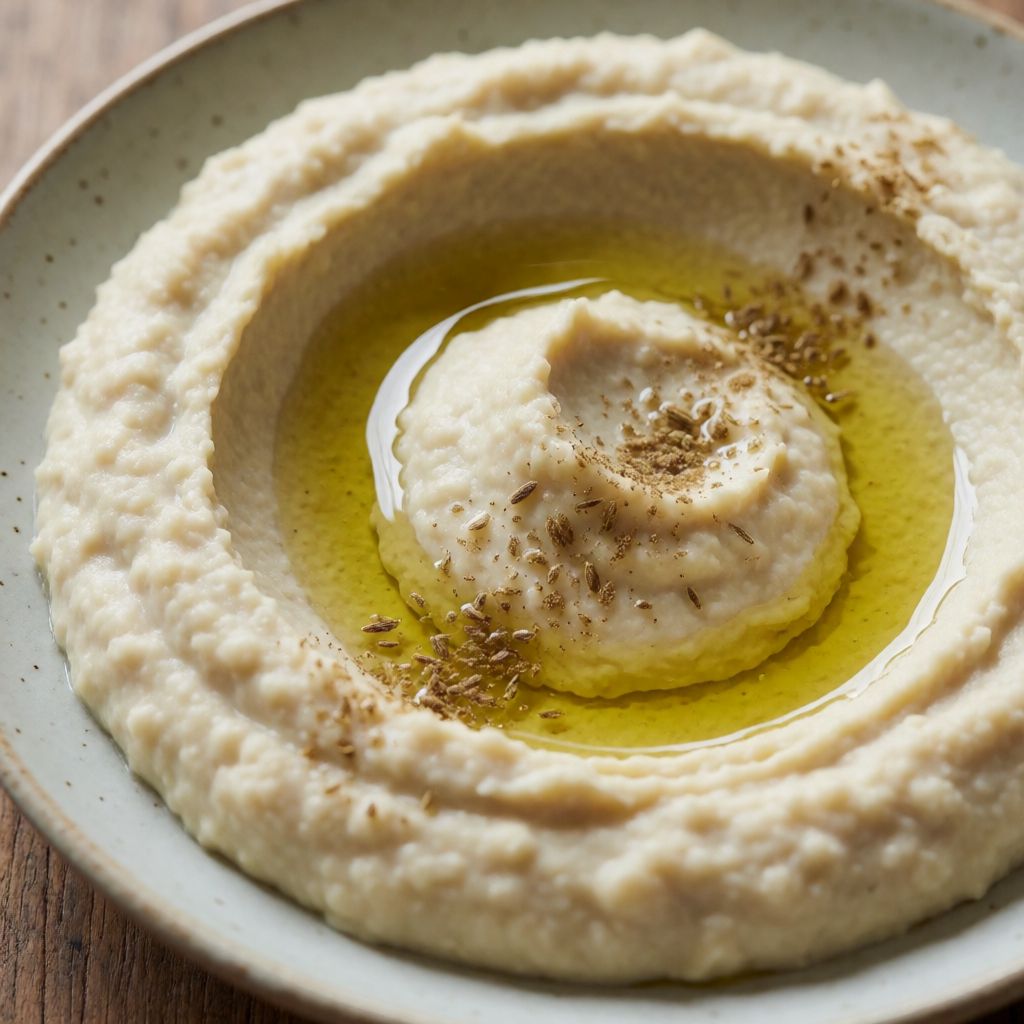
 AI photo
Butter Bean Hummus
A smooth hummus made with butter beans, tahini, lemon and garlic, blended until velvety.
Labels are worked out automatically from the ingredients and can be wrong. Check the packaging if it matters to you.
Ingredients
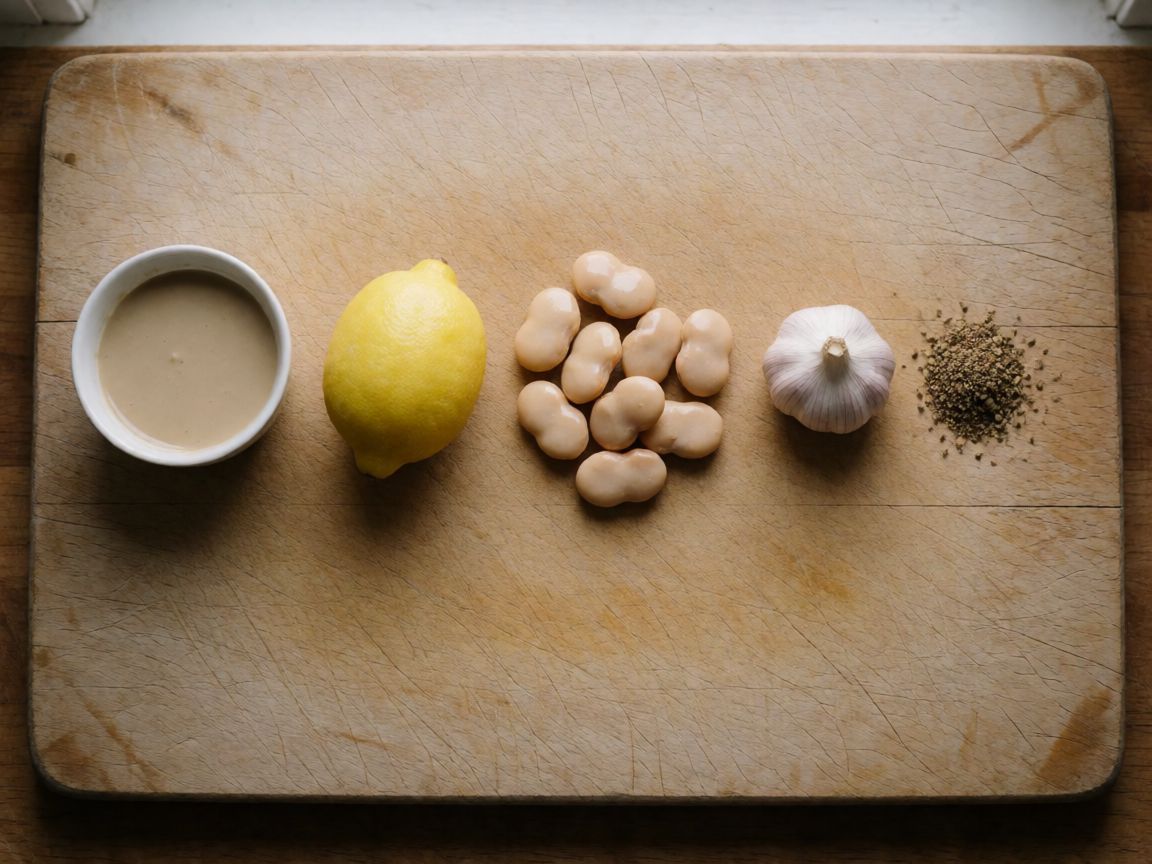









Steps
Put the tahini and lemon juice into a blender or food processor and blend for 1 minute.
1 minAdd all the other ingredients and blend for another minute, until the mixture is completely smooth and velvety.
1 minCheck the consistency and add a little cold water if needed.
This is not a dish you cook — it's a dish you engineer in two minutes in a blender. No flame, no kazan, nothing to watch for burning. So the usual drama of Georgian stews or pilaf doesn't apply here; the only thing that decides success or failure is what order things go into the bowl, and how smooth is actually smooth.
The method tells you something important by making you blend tahini and lemon juice alone first, before anything else goes in. That's not a filler step to use up a minute — tahini is fat, lemon juice is water, and fat and water don't want to mix. Blend them together first, with nothing else distracting the blades, and you force a stable emulsion, the same trick that makes mayonnaise hold. Dump everything in at once — beans, garlic, oil, lemon, tahini — and you often get something that looks blended but tastes split: oily on the tongue, grainy underneath. That graininess people blame on "bad tahini" is usually just bad order.
Tahini is the backbone fat here, so buy it by feel, not by brand loyalty: it should pour or at least fall off a spoon in a ribbon once stirred, not sit like peanut butter that's seized at the bottom of the jar. Sesame paste separates on the shelf — oil floats, solids sink — stir it back together before you measure, or your two tablespoons will be unevenly fat and unevenly paste. If you truly have none, a neutral nut or seed butter will give you body and creaminess, but understand you've made a bean dip, not hummus — the sesame flavour is half the point and nothing else tastes quite like it.
Lemon juice does two jobs: it brightens the heaviness of the tahini fat, and it's the acid that tames the raw garlic without any heat being involved — the same chemistry that makes a quick pickle work. Some say raw garlic has to be cooked to lose its harshness — no, because acid plus a little resting time does that just as well, it just takes patience instead of a flame. Squeeze it fresh if you can; bottled juice carries a flat, slightly metallic note that dulls the finish. In a pinch, a splash of a mild vinegar will give you the acidity but none of the aroma, so treat it as a backup, not an equal swap.
The butter beans themselves: drain them but don't throw the tin liquid away without a thought — it's starchy, slightly salted, and works better than plain tap water if you need to loosen the mix, because it's already carrying flavour instead of diluting it. Any soft white tinned bean behaves the same way — cannellini, haricot — the criterion is simply that a bean collapses under light pressure rather than holding its shape, because that's what tells you it'll purée smooth instead of mealy.
Garlic, raw, two cloves: this is a lot of bite for a small batch, and that's deliberate, because the lemon juice and the resting time afterwards will round it off. Don't skip the resting — even ten minutes under a plate on the counter (you don't need a lid, a plate or a sheet of paper napkin over the bowl does the same job of keeping dust and fridge smells out) lets the garlic mellow into the paste instead of sitting on top of it as a raw shock.
Olive oil adds silkiness and carries its own flavour into the mix — extra virgin if you want a peppery edge that pushes through the tahini, a milder olive oil if you'd rather the sesame lead. The substitution rule here is simple: any oil with no smell of its own will loosen the texture the same way without competing for attention — sunflower, for example — but you lose the fruitiness that olive oil was chosen for in the first place, so it's a fair trade only if that's what you want.
Cumin, ground, gives the one note of warmth that stops the whole thing tasting purely of lemon and raw garlic. Ground cumin from a jar that's been open six months smells of very little — if you've got whole seeds and five spare minutes, a dry pan and a pestle will get you something with far more presence, though that's a kitchen job for another day, not this one. Salt last, and lightly at first — tinned beans already carry salt from the brine, so taste before you add rather than seasoning on instinct, or you'll end up having to dilute a dish that was never actually bland.