
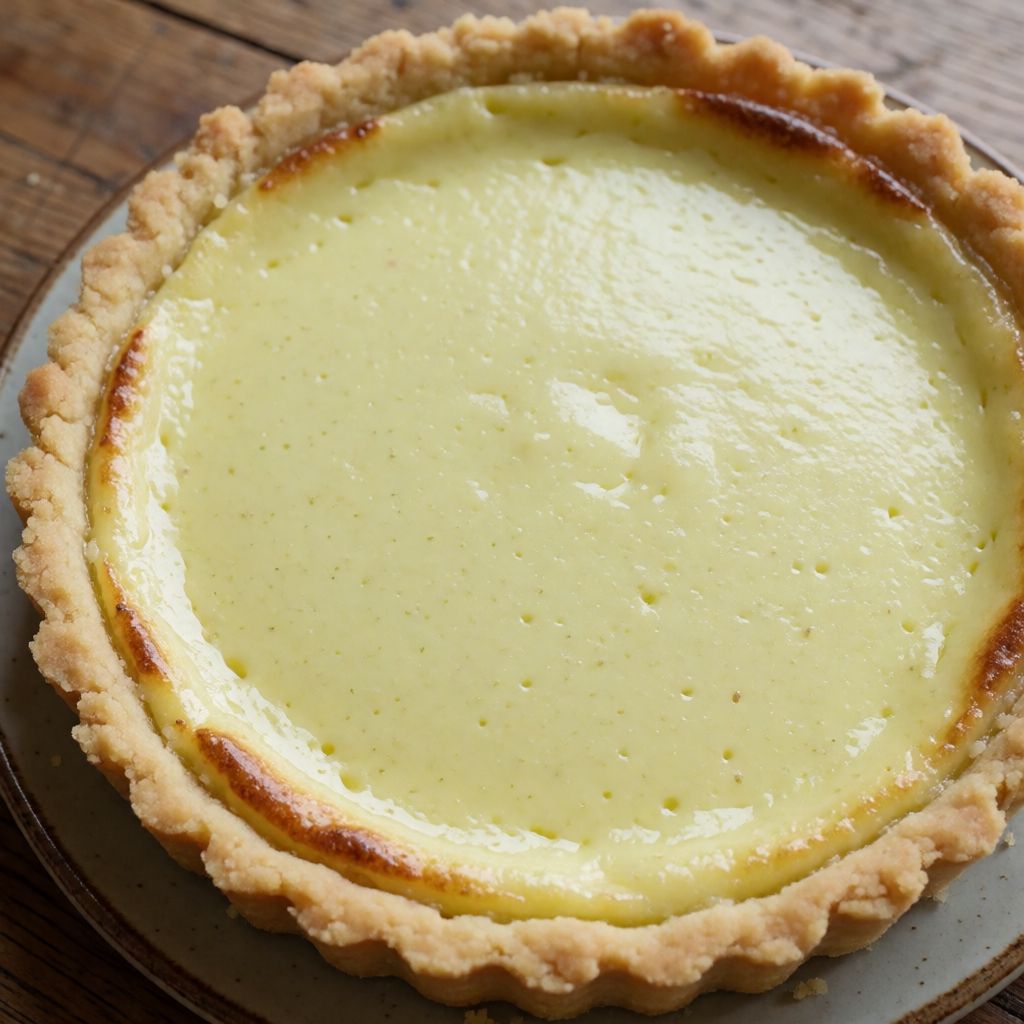
 AI photo
Lime Crostata
A no-fuss lime tart with a biscuit base, creamy condensed milk filling and fresh lime.
Labels are worked out automatically from the ingredients and can be wrong. Check the packaging if it matters to you.
Ingredients







Steps
Crush the biscuits in a blender into fine crumbs. Combine with the melted butter and mix.
10 minTransfer the mixture into a tin, level it out and press down firmly.
5 minBake the base at 170°C.
10 minLeave the base to cool.
15 minPour the sugar into a bowl, add the condensed milk and mix.
3 minAdd the freshly squeezed lime juice.
2 minAdd the egg yolks and mix thoroughly.
3 minPour the filling over the cooled base.
2 minBake at 160°C.
15 minLet the tart cool to room temperature.
30 minPlace in the fridge.
120 minBefore serving, garnish with fresh mint leaves and lime slices.
5 min
This is a key lime pie's cousin, built the way a biscuit-tin crust always is: crumbs and fat pressed into a disc, baked just enough to set, then loaded with a curd that sets itself without gelatine or cornflour. The whole thing hinges on one bit of kitchen chemistry — acid meeting condensed milk and egg yolk. Lime juice is acidic enough to denature the proteins in the yolk and thicken the sugared condensed milk into something closer to a curd than a custard. That's why the filling needs so little oven time: you're not cooking it so much as finishing a reaction that's already started in the bowl.
What decides whether it works is restraint at two points. First, the base: press it firm, not because tradition says so, but because loose crumbs leave air pockets that let the filling seep through and turn the bottom soggy. A flat-bottomed glass does the pressing better than a spoon — you want even pressure, not fingerprints. Second, the second bake: this isn't there to brown anything, it's there to let the egg proteins finish setting around the acid-thickened base. Push it too far and you get the same rubbery, slightly sulphurous curdling you'd get in an overcooked custard — the filling should still have a wobble like a set jelly, not a solid wall.
Some say you need a water bath for this kind of filling, the way you would for a cheesecake. No — a water bath exists to slow heat transfer so egg proteins don't seize suddenly; here the condensed milk and sugar are already protecting the yolks by diluting them and slowing coagulation. You don't need the extra kit.
On the biscuits: sponge fingers (the ones you'd otherwise dunk in tea) work because they're dry and low in fat already, so the butter you add is doing all the binding, with nothing fighting it. Any dry, plain biscuit that snaps rather than bends will do the same job — digestives are the obvious British stand-in, just use slightly less butter since they're already fattier, or the base turns greasy instead of short.
The butter must be melted and only just cooled — not hot, or it'll cook the biscuit crumbs unevenly and some will clump; not cold, or it won't coat every crumb and the base will crumble when sliced. "Any butter" is fine here; this isn't a dish where cultured or salted butter changes the character, since it's baked briefly and masked by sugar above it.
Condensed milk is the backbone of the filling, not just a sweetener — it's already thick, already partly cooked down, so it brings body the way flour or cornflour would in a lesser recipe, without diluting the lime flavour with starch taste. Don't reach for evaporated milk by mistake; it has none of the sugar or thickness and the filling simply won't set.
The egg yolks are the actual setting agent once the acid starts them working — four yolks for this volume is enough to firm the filling into clean slices without turning it into scrambled egg under heat, which is the real risk of using whole eggs here: the whites set stiffer and faster, and you'd get a grainier bite.
Lime juice gives you two things at once — the acid that sets the filling and the sharpness that stops the whole tart being just sweetened condensed milk in a biscuit shell. "To taste" is right: limes vary wildly in acidity depending on how ripe they are, so taste the mixture before it goes in the oven, not after. If you're out of limes, lemon does the same chemical job, just with a rounder, less floral edge — you lose nothing structurally.
Mint and the lime wedge at the end aren't decoration for the sake of it — the mint's sharpness cuts the richness of condensed milk on the tongue the way it does in a mojito, and the extra lime wedge lets whoever's eating it adjust the sourness themselves, since you can't fully judge it until it's chilled and the flavours have settled.
On your hob: a standard British oven with a reliable dial handles both bakes without trouble — just don't be tempted to stack the two bakes close together to save time. The base genuinely needs to be cool before the filling goes on, not just "not hot," or the butter in it softens again and the crust slides when you try to lift a slice.