
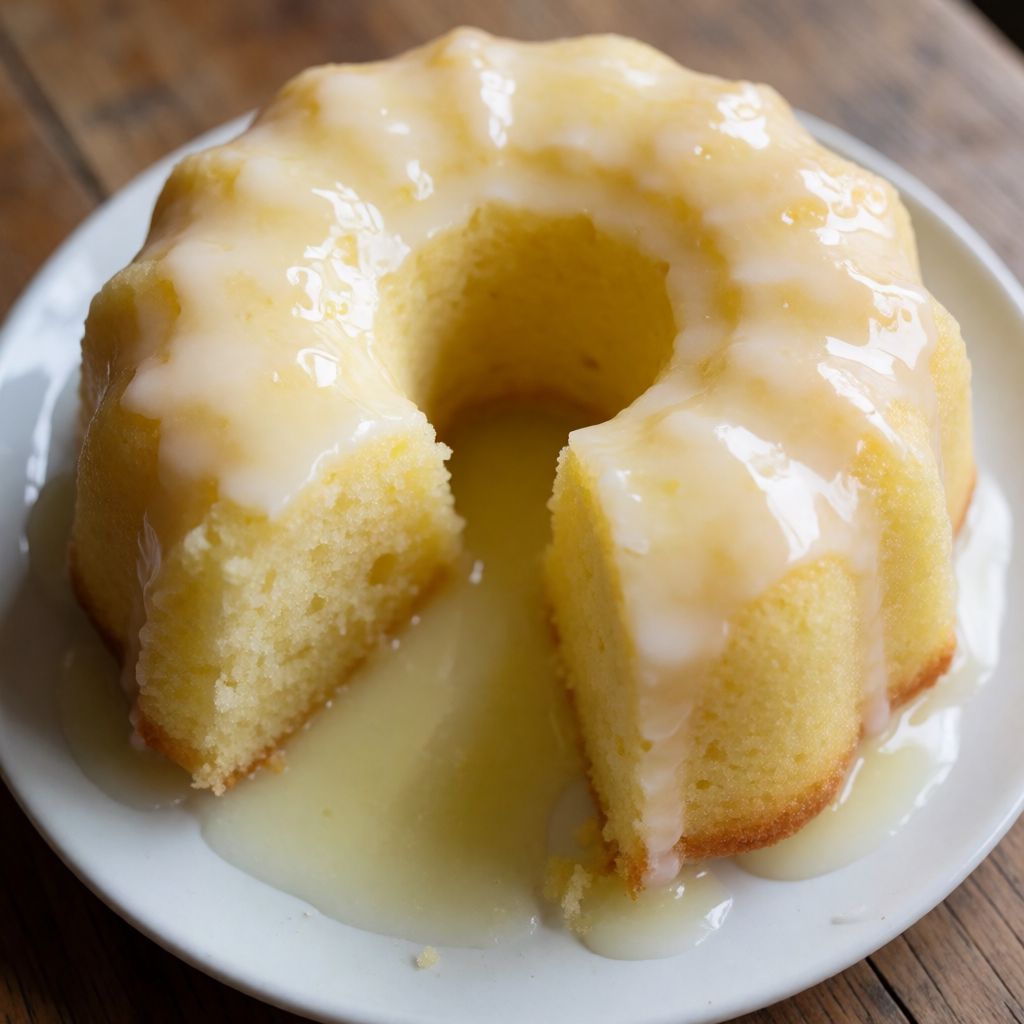
 AI photo
Limoncello Cake
A light sponge cake delicately flavoured with limoncello liqueur.
Labels are worked out automatically from the ingredients and can be wrong. Check the packaging if it matters to you.
Ingredients
- 150 g Plain Flour
- 80 g Butter softened, at room temperature
- 100 g Caster Sugar
- 2 pcs Eggs
- 180 g Yogurt
- 10 g Baking Powder
- 100 g Limoncello
- Icing Sugar to taste, for dusting








Steps
In a bowl, mix the butter, softened at room temperature, with the sugar and beat with an electric whisk until smooth.
Add the yogurt and continue mixing.
Beat in the eggs one at a time, mixing well after each addition.
Sift the flour and fold it into the batter in small batches.
Add the baking powder, then slowly pour in the limoncello so it mixes evenly into the batter.
Mix everything well until smooth.
Pour the batter into a 20cm springform pan, greased and dusted with flour.
Bake in a preheated fan oven at 170°C for about 45 minutes.
45 minLet the cake cool slightly, dust with icing sugar, and serve.
What was changed
The oven temperature was rounded to suit UK oven displays.
This is a plain cake dressed up by one thing: lemon oil, carried into the crumb by alcohol rather than squeezed in by a zester. No filling, no frosting — what you see on the plate is exactly what rose in the tin, dusted white. It sits well next to a pot of tea with milk, cut into wedges, nothing ceremonial about it, the kind of cake that turns up on a weekday as easily as after a Sunday roast.
What decides whether it works is air, and it comes in twice. First, the air you beat into butter and sugar — every pass of the whisk traps a bubble, and those bubbles are what you're actually baking, not just fat and sugar sitting in a bowl. Second, the baking powder, which can only expand air that's already there. Skip the proper beating and rely on the powder alone, and the cake rises in the oven then sits back down the moment you take it out — that's not a bad oven, that's a missing first act.
Then comes the flour, and here the enemy is enthusiasm. Flour meeting liquid starts building gluten the second it's wet, and gluten behaves like rope, not sponge. Beat it the way you beat the butter and you get something closer to bread than cake. Fold it in small batches, stop the moment the dry streaks disappear, and leave it alone.
Butter has to be soft, not melted, and that's not fussiness — it's mechanics. Soft butter holds air when you beat it; melted butter is a liquid and liquids don't trap bubbles, they just sit there being greasy. If you've only got margarine, it'll cream too, but you lose the flavour that butter brings for free.
Caster sugar earns its place here because the crystals are small enough to cut into the butter cleanly, multiplying the air pockets as you beat. Granulated sugar works, it just takes longer and a rougher crumb is the trade-off — not a disaster, just a different cake.
Eggs go in one at a time because butter, sugar and egg form an emulsion, fat and water trying to stay mixed against their nature. Add all the eggs at once and the mixture can split — you'll see it curdle, go grainy, lose the smoothness you built with the whisk. One at a time, beaten in properly, keeps the emulsion holding.
Yogurt does two jobs nobody notices until it's missing: its acidity softens the gluten you're about to introduce with the flour, so the crumb stays tender rather than tightening up; and that same acid reacts with the alkaline part of the baking powder for a bit of extra lift beyond what the air-beating gives you. Any soured dairy with a similar thickness — buttermilk, soured cream loosened with a splash of milk — will do the same job.
Plain flour plus measured baking powder, rather than self-raising, is a choice about control, not correctness. Self-raising flour isn't wrong, but the rising power varies bag to bag and you lose the ability to judge how much lift you're actually getting. Here you know exactly what's going into the rise.
The limoncello is doing more than flavouring: it's carrying citrus oil into the batter and its alcohol slightly loosens the gluten you built while folding, which is part of why this stays tender rather than cakey-dense. No limoncello in the cupboard — use another citrus liqueur, or if you're avoiding alcohol altogether, lemon zest steeped in the yogurt for an hour will get you partway there, though you'll lose some of that particular lightness.
On the oven: 170°C fan matters because it's fan, and a fan oven moves hot air around the cake instead of letting it sit in layers the way a conventional oven does — that's why UK ovens usually print both numbers, and why using the conventional figure here would run the cake hotter than intended, catching the crust before the centre sets. The springform tin isn't a luxury either — this crumb is soft and moist enough that turning it out of a solid tin risks tearing the base clean off. Grease and flour the tin regardless; it's cheap insurance against a cake that bakes perfectly and then refuses to leave.
Doneness is a skewer coming out clean and the edges just starting to pull back from the tin sides — the 45 minutes is where to start checking, not where to stop. Let it cool before dusting with icing sugar; sugar on a still-steaming cake doesn't dust, it melts into a wet patch, and patience here costs you nothing but a few minutes with the kettle on.