
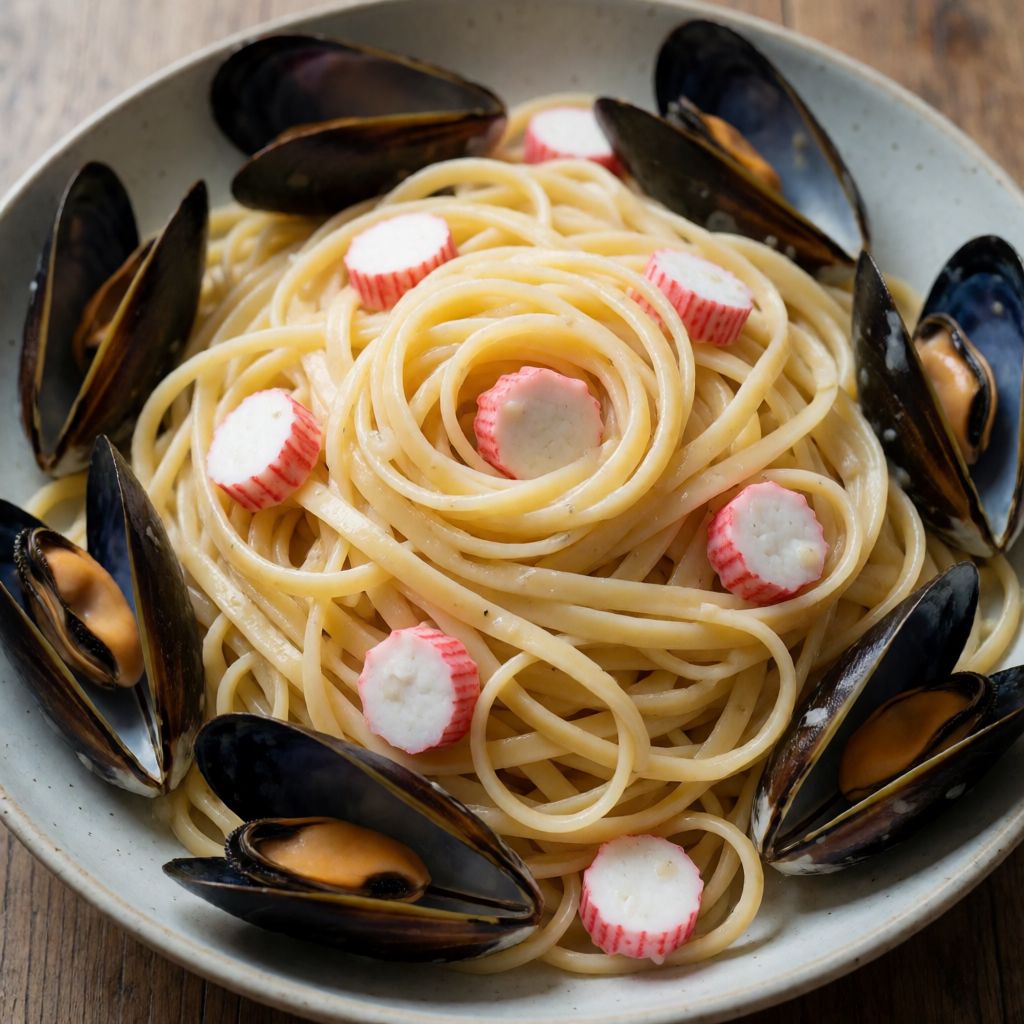
 AI photo
Linguine with Mussels and Crab Sticks
A quick pasta dish of linguine tossed with mussels, crab sticks and tomatoes in a white wine sauce.
Labels are worked out automatically from the ingredients and can be wrong. Check the packaging if it matters to you.
Ingredients
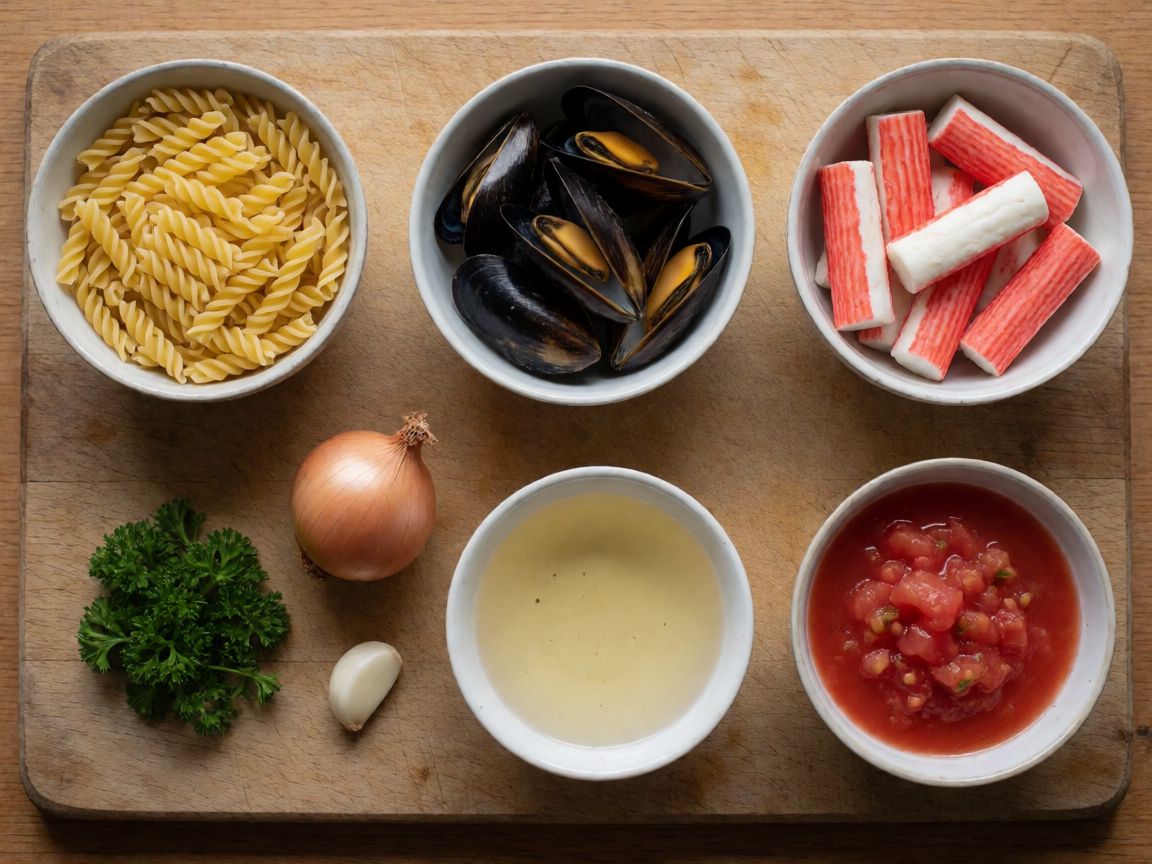
- 350 g Linguine
- 500 g Mussels
- 300 g Crab Sticks
- 1 bunch Parsley
- 1 pcs Onion
- 1 clove Garlic
- 250 ml White Wine
- 2 can Canned Chopped Tomatoes
- Olive Oil to taste
- Chilli Flakes to taste
- Salt to taste











Steps
Finely chop the parsley, garlic and onion.
Heat the olive oil in a pan and fry the chopped mixture until soft.
Add the chopped crab sticks and mussels.
Pour in the white wine and cook until the alcohol evaporates.
10 minCrush the canned tomatoes and add to the sauce, season with salt and chilli flakes, and simmer.
20 minCook the linguine in salted water until done.
Drain the linguine and toss it in the pan with the sauce.
Serve immediately.
This is a quick, honest weeknight pasta dressed up with a shellfish dinner-party gesture: a tomato and wine sauce that leans on cheap crab sticks for bulk and real mussels for the sea flavour that makes the whole thing worth doing. It is not Naples. It is not trying to be. It's the kind of thing a Neapolitan nonna's granddaughter in London makes on a Tuesday because mussels are in the fishmonger's and the wine's already open.
What decides whether it works is the sauce, not the pasta — linguine here is just a vehicle, long enough to pick up sauce on every strand, which is the actual reason you use a long flat noodle with seafood rather than a short tube: more surface, more cling. The mussels must open in the heat of their own steam, not boil to rubber; the wine's job is to burn off its rawness into the onion and garlic before the tomato goes in, otherwise you get a sauce that tastes of the bottle instead of the pan. Some say wine in a seafood sauce is there to "add flavour" — no, mostly it's there to deglaze and to cook off harshly, so what's left is sweetness and acid, not alcohol.
The onion, garlic and parsley together are the base — not seasoning added at the end, but the thing you build the sauce's backbone from. Chop them fine because they're going in raw to a gentle heat and need to soften, not caramelise; big chunks will still be crunchy by the time the wine hits the pan, and crunchy onion in a seafood sauce reads as underdone, not rustic. A mandoline won't help you here — a sharp knife and five minutes will.
Mussels: buy them live, shells closed or snapping shut when tapped, no cracked shells, and discard any that feel unusually heavy (that's sand or grit, not meat) or any that stay open and don't close when prodded — that one's dead and you don't want it. Debeard and scrub them yourself if the fishmonger hasn't; the "beard" is the byssal thread they use to anchor to rocks, and leaving it on gives you a stringy mouthful for no reason. Any mussel that doesn't open after cooking is dead already — throw it out, don't force it, that's the one actual food-safety rule here that isn't superstition.
Crab sticks are surimi — processed white fish, usually pollock, pressed and coloured to look like crab leg meat. Choose ones from the chiller, not frozen-then-thawed-looking packs, and check they're still firm, not slimy. If you can't get them or don't want to, swap in any firm white fish cut small, or just double down on mussels and skip the pretence — the dish survives either way because the sauce is doing the heavy flavour lifting, not the crab sticks.
White wine: you want something dry and unremarkable — not a wine you'd want to finish the glass of, because its whole purpose is to boil off its sharp edges and leave acidity behind. Any dry white does this; a bottle that's been open three days in the fridge is, frankly, ideal, not a compromise. If you've genuinely got none, a splash of water with a squeeze of lemon gets you most of the acid without the aromatics, though it won't be the same dish.
Canned chopped tomatoes are there for convenience and consistency — they're already cooked down once, picked ripe and canned at their peak, which is more than most supermarket fresh tomatoes in a British winter can claim. Crushing them further with your hands or a spoon breaks up any remaining lumps so the sauce coats the pasta rather than sitting in puddles. Some cooks insist on fresh tomatoes only — no, not in this country, not out of season; a good tin beats a bad fresh tomato every time, and this is a tin-of-tomatoes dish by design.
On your hob: use the widest pan you own, because mussels need room to sit in a single-ish layer to open evenly in the steam — crammed into a narrow saucepan, the ones on top won't get enough heat and stay shut while the bottom layer overcooks. A domestic ring won't give you the fierce, even heat of a professional burner, so don't rush the simmer thinking you're saving time; you're just undercooking the sauce. Finish by tossing the drained linguine straight into the sauce pan, off the heat from the hob but still warm from the sauce — this is what makes the pasta taste cooked *in* the sauce rather than merely wearing it.