
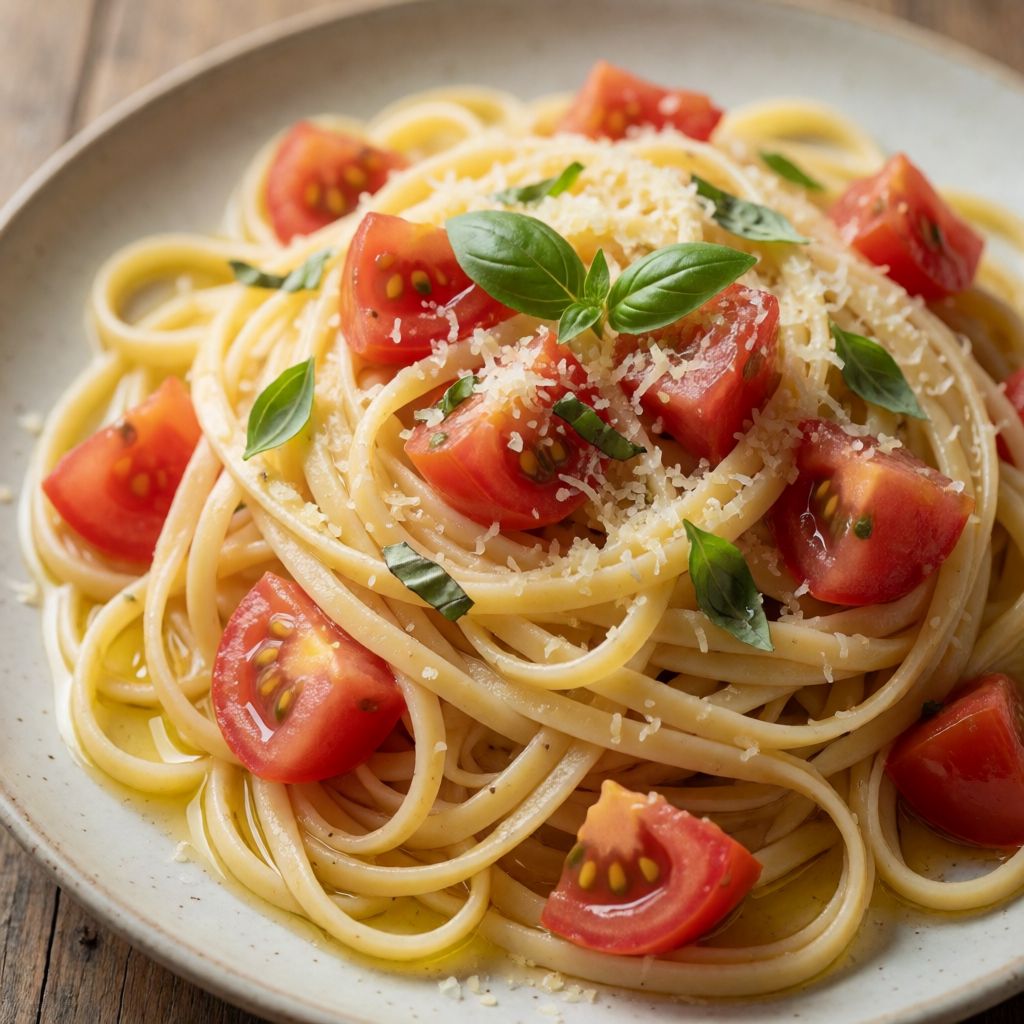
 AI photo
Linguine with Tomatoes and Basil
A simple pasta dish with ripe tomatoes, fresh basil and parmesan.
Labels are worked out automatically from the ingredients and can be wrong. Check the packaging if it matters to you.
Ingredients
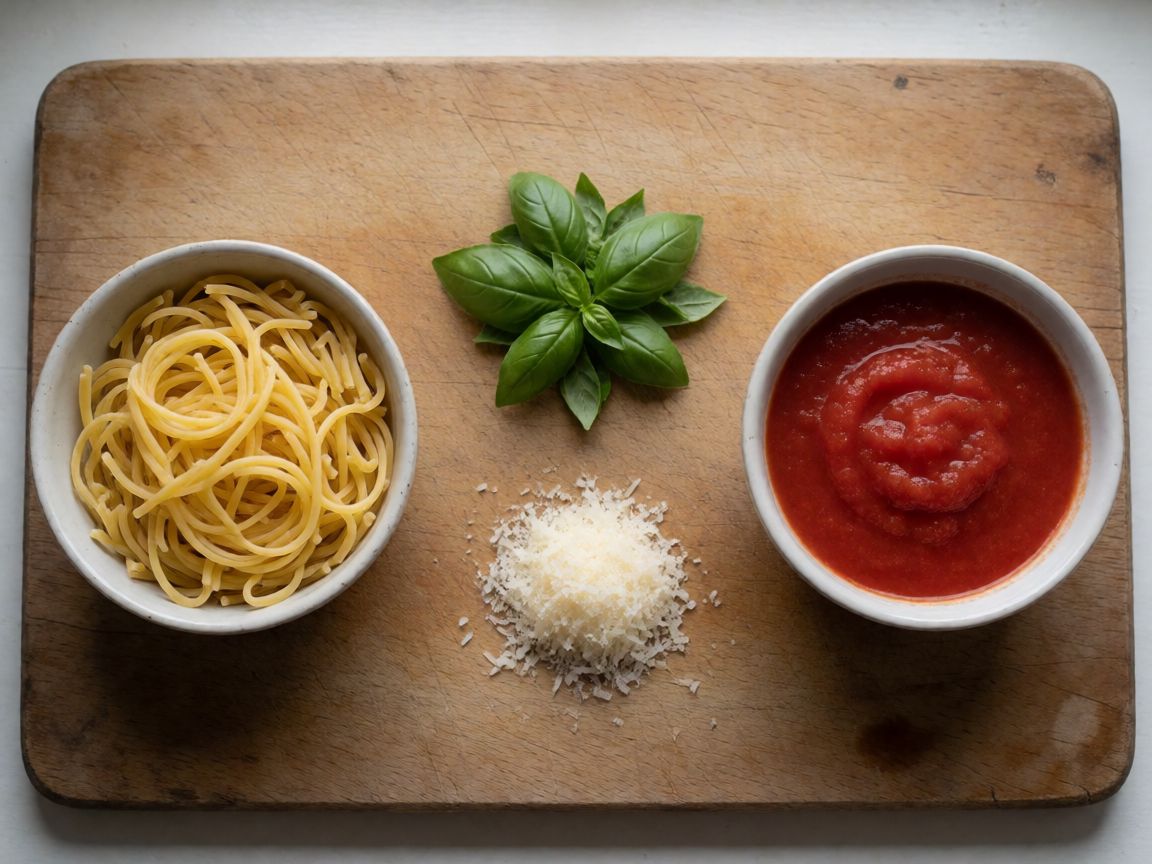
- 400 g Linguine
- 400 g Cherry tomatoes
- 1 bunch Basil
- Parmesan to taste
- Olive oil to taste
- Salt to taste
- Black pepper ground, to taste







Steps
Bring a large pot of water to the boil for the pasta.
Wash and chop the tomatoes, place them in a bowl, add basil, olive oil and salt.
Cook the linguine until al dente, reserving a little of the pasta water.
Transfer the linguine to a pan, add the dressed tomatoes and mix with the reserved pasta water.
Let the water evaporate, add the parmesan, and stir over the heat.
Serve with ground black pepper and a basil leaf.
This isn't really a tomato sauce dish — there's no sauce you cook. What you've got is raw tomatoes, salted and oiled, left to bleed their own juice while the pasta boils. That juice, thickened just a little by starchy pasta water, is the entire structure of the dish. Get the bleeding right and the plate glistens. Skip it, and you've got linguine with wet tomato chunks sitting on top like they wandered in from another meal.
What decides whether it works is timing, not heat. The salt needs a few quiet minutes with the tomatoes before anything hits the pan, so it can pull water out through the cell walls — that's your sauce forming in a bowl, not a pot. The pasta water you keep back has to actually be starchy, which tells you something about how much water you boiled the pasta in: too much water and it's thin as tap water, no good to anyone. And the final toss over the heat needs to run long enough to lose the raw-water edge but stop before the tomatoes collapse into mush.
Some say good tomato pasta needs a sauce simmered down for twenty minutes, otherwise the tomato taste is "raw" and unfinished. No — because that's a different dish solving a different problem. A simmered sauce is after sweetness built by evaporation; this one is after the bright, slightly sharp taste of a tomato just opened by salt, a taste that vanishes the moment you properly cook it. Judge this by what it's trying to be, not by what a ragù is trying to be.
Tomatoes do the heavy lifting, so choose by sweetness and skin, not size. Cherry tomatoes work because they're small enough to have a decent flesh-to-skin ratio and usually sweeter per gram than the big ones, which tend to be mostly water with flavour running thin through it. If what's ripe in your fridge is a few large salad tomatoes instead, that's fine — just cut them smaller than you think you need to, so the salt has more surface area to work through and the pieces release juice at roughly the same rate the cherry ones would. What you're avoiding either way is a tomato with thick, tasteless flesh and watery insides — raw, that defect has nowhere to hide.
Basil here isn't a garnish, it's the second flavour in the dressing, sitting in the bowl with the tomatoes from the start so its oil has time to move into the juice. Tear it by hand rather than slicing it fine with a knife — a cut edge bruises and darkens faster than a torn one, and you want it green and fragrant on the plate, not wilted and grey. There isn't a real substitute for basil in this dish; it's not pretending to be anything else, so don't swap it for dried herbs expecting the same result — dried basil has lost exactly the volatile oil you're relying on.
Parmesan goes in at the end, off direct heat if your hob runs hot, because what you want is the starchy pasta water helping it melt into something silky, not the cheese seizing into little rubbery beads — that happens when the liquid in the pan is too hot or not starchy enough to hold it in suspension. Any hard, well-aged, naturally salty cheese that grates fine will do the same job — pecorino, grana padano, whatever's sitting in your fridge from a previous dish.
Olive oil is the one place in this dish where you actually want flavour, not a neutral carrier — a decent extra virgin, something with a bit of grass or pepper to it, because it's doing half the dressing's work alongside the salt. This is the opposite of frying, where a flavourless oil is the right choice because you don't want it talking over the food.
Salt has two jobs at two different times: early, on the tomatoes, it's pulling water out through osmosis to build your sauce; later, in the pasta pot, it's seasoning the pasta itself from the inside as it cooks. Don't skip the first salting thinking you'll fix it at the table — pepper and salt sprinkled on top season the surface, not the dish.
On an ordinary hob you don't need a kazan's heat or a wok's curve — you need a pot big enough that the pasta has room to move (cramped water cools fast and glues the strands together) and a wide, shallow pan for the final toss, because a narrow saucepan traps steam instead of letting the water evaporate off, and you end up with pasta sitting in liquid rather than coated by it. Four hundred grams of linguine, a hundred grams a head, feeds four at a normal appetite — scale the pasta up for bigger eaters, but the tomatoes should keep pace roughly in proportion, or the sauce thins out and disappears under the extra pasta. And give it the few minutes it needs while the water comes to the boil — that's the patience this dish asks for, and it's a short ask, but skip it and there's no dish, just pasta with tomato on top.