
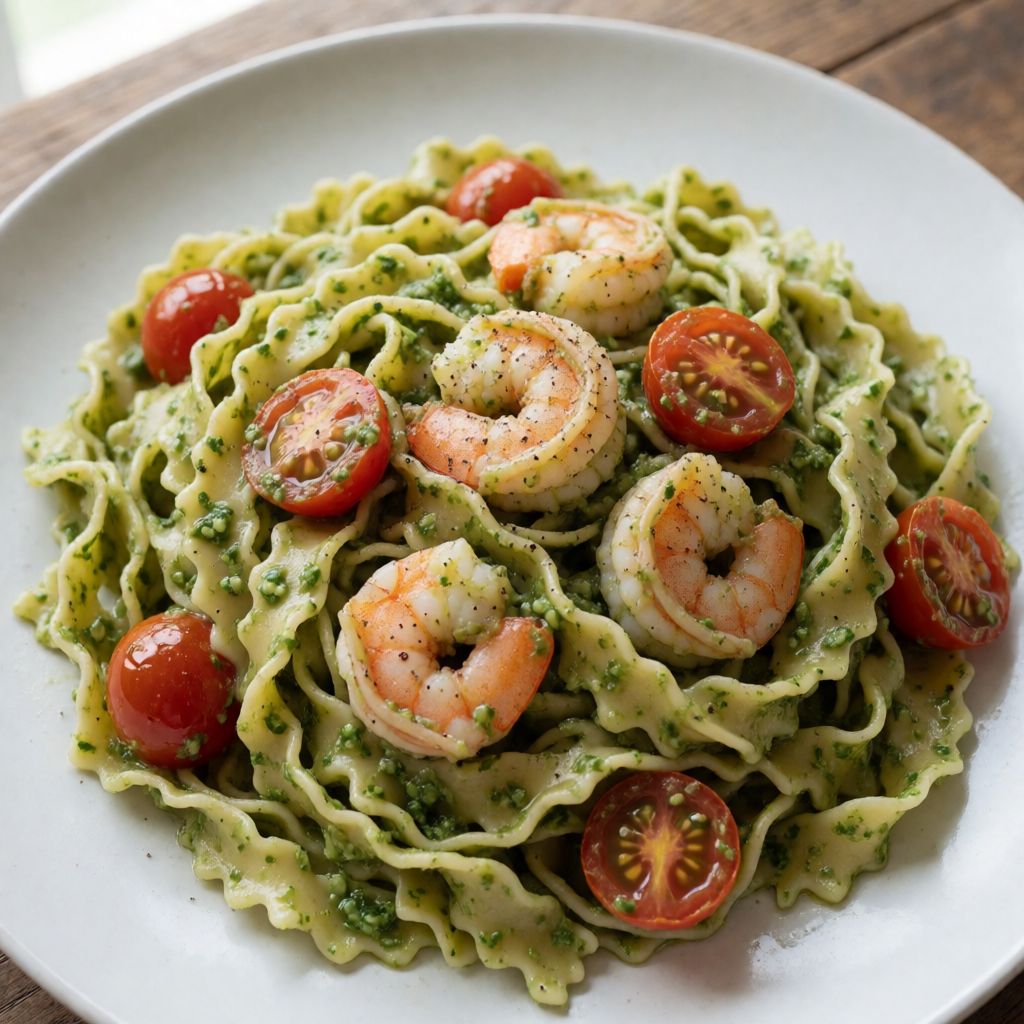
 AI photo
Mafaldine with Prawns, Pesto and Cherry Tomatoes
A speedy pasta dish with prawns, basil pesto and sweet cherry tomatoes, finished with a splash of white wine.
Labels are worked out automatically from the ingredients and can be wrong. Check the packaging if it matters to you.
Ingredients
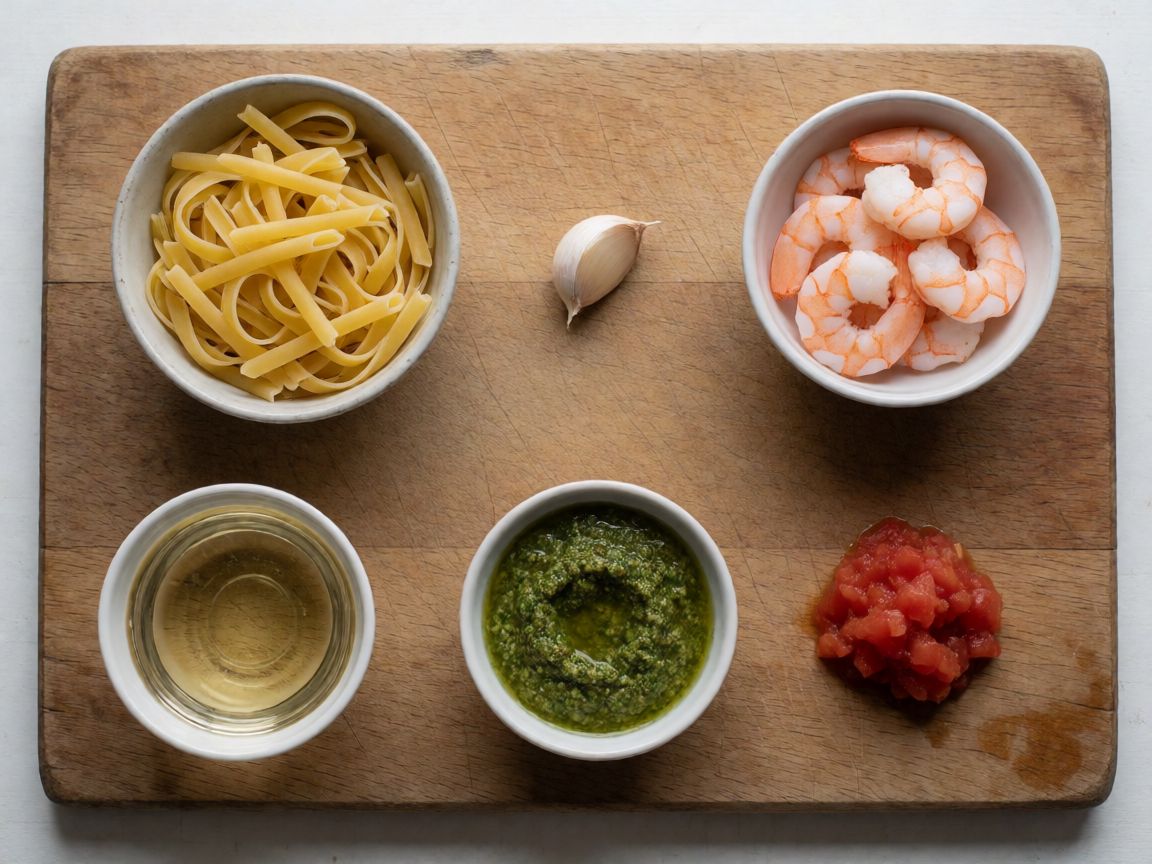
- 400 g Mafaldine
- 1 clove Garlic
- 300 g Prawns
- White wine to taste
- Salt to taste
- Black pepper to taste
- 1 pcs Pesto a jar of ready-made pesto
- 2 tbsp Olive oil
- 200 g Cherry tomatoes









Steps
Heat the olive oil in a frying pan and sauté the garlic until golden, then remove it.
2 minAdd the prawns to the pan and sauté for a few minutes.
3 minAdd the cherry tomatoes and cook gently for 3 minutes.
3 minPour in the white wine and cook for a further 2 minutes. The prawns are ready when they reach 63°C at the thickest point.
2 minSeason with salt and black pepper to taste.
1 minCook the mafaldine in salted boiling water, then drain.
10 minToss the pasta in the pan with the pesto and a little pasta water, mixing well.
2 minServe hot.
Mafaldine is a ribbon noodle with a ruffled edge, named after Mafalda, a princess, back when pasta shapes were marketed like fashion lines. The ruffle isn't decoration — it's surface area, a place for olive oil and pesto to sit instead of sliding to the bottom of the plate the way a smooth tagliatelle would. This dish is built for that pasta but doesn't demand it.
What decides whether this works has nothing to do with the pasta, though. It's the prawns. You have a window of maybe sixty seconds between "just set" and "rubber band," and everything else in the pan — the garlic, the tomatoes, the wine — exists to fill time around that window without wasting it.
The pesto goes in raw, off the heat, loosened with starchy pasta water instead of cooked into a sauce. Some cooks stir it straight into a hot pan to "meld the flavours." Don't — basil's chlorophyll breaks down under heat and turns a dull khaki, and the oil in a good pesto is there to carry aroma, not to be fried out of it. Heat is the enemy of pesto, not its friend.
Garlic gets the same logic in reverse: it goes in first, flavours the oil, then comes out before it can burn. A burnt garlic clove left in the pan doesn't add flavour, it adds bitterness, and bitterness doesn't cook out later no matter how much wine you pour on it.
Prawns: the 63°C the recipe gives you is a real number, not decoration — it's roughly where shellfish protein finishes tightening and the flesh goes from grey-translucent to opaque white with a pink edge. Past that point the proteins keep squeezing, water gets pushed out, and what's left is tough. If you don't own a probe thermometer, watch the shape instead: a prawn curls into a loose C as it cooks; tight into a ring, it's gone too far. Frozen raw prawns, thawed properly in the fridge, are often better than the "fresh" ones on ice at the counter, which have usually been frozen and thawed once already, just not by you.
Garlic: one clove, sliced or just bruised, is there to flavour oil, not to be eaten. Any neutral oil would carry it, but olive oil here is doing double duty as a second layer of flavour once the garlic's out — so stick with an olive oil that actually tastes of something, not the lightest, blandest bottle on the shelf.
Cherry tomatoes: small tomatoes have more skin relative to flesh than a big one, and skin is where the sugars concentrate under heat. A few minutes in a hot pan blisters that skin until it splits and the inside collapses into something closer to a quick sauce than a vegetable. Any small, sweet tomato works — the test is taste one raw first; if it's watery and flat, it'll be watery and flat cooked too, just warm.
White wine: use whatever dry white is open, not a dedicated "cooking wine," which is usually worse wine at a worse price. Its job is acid and a splash of alcohol to lift whatever's stuck to the pan from the prawns and tomatoes — deglazing, in the old sense, scraping flavour off metal rather than leaving it behind in the sink. No wine in the house, a spoon of lemon juice and a splash of water does a version of the same job, just without the aromatic lift.
Pesto from a jar: this is economics, not laziness. Proper pesto is basil pounded in a mortar, because a food processor's metal blade bruises and oxidises the leaf, turning it brown within the hour — a mortar's stone doesn't do that. Jarred pesto gets around the same problem industrially, often by blanching the basil first, which is why it tastes rounder and duller than fresh but keeps for months on a shelf. If you want to make your own, you need basil, pine nuts, a hard sharp cheese, garlic, and an oil with no smell of its own to carry it — grind, don't blend fast, or you'll heat the blade and bruise the leaf anyway.
Pasta water: salted, cloudy with starch, saved by a cupful before you drain. That starch is what lets the pesto actually cling to the mafaldine instead of pooling in the bottom of the bowl — it's a mild thickener and an emulsifier in one, holding oil and water together on the noodle instead of letting them separate the moment the dish cools. Skip it and you get pasta in a puddle of green oil, which still tastes fine, but isn't the same dish.