
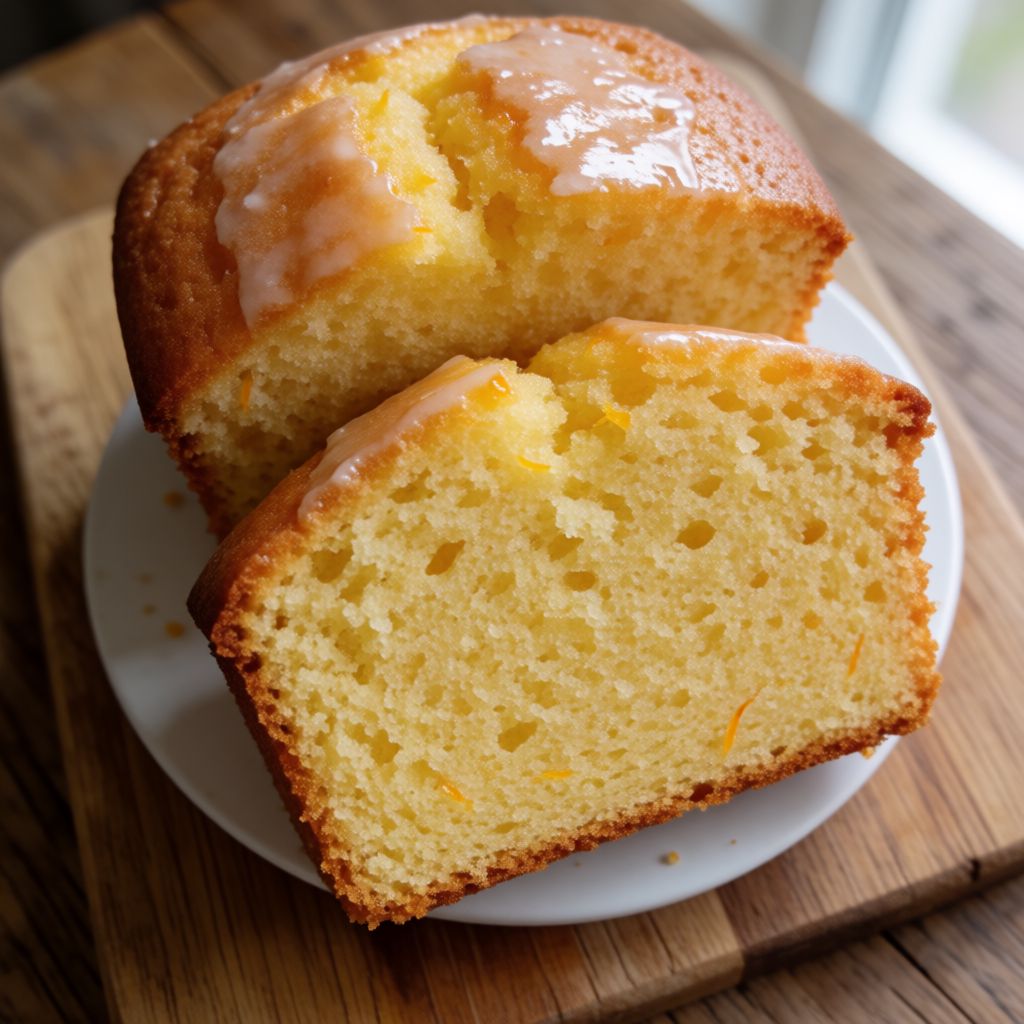
 AI photo
Mandarin Cake
A light mandarin cake made with fresh mandarin juice and zest, lovely with a cup of tea.
Labels are worked out automatically from the ingredients and can be wrong. Check the packaging if it matters to you.
Ingredients
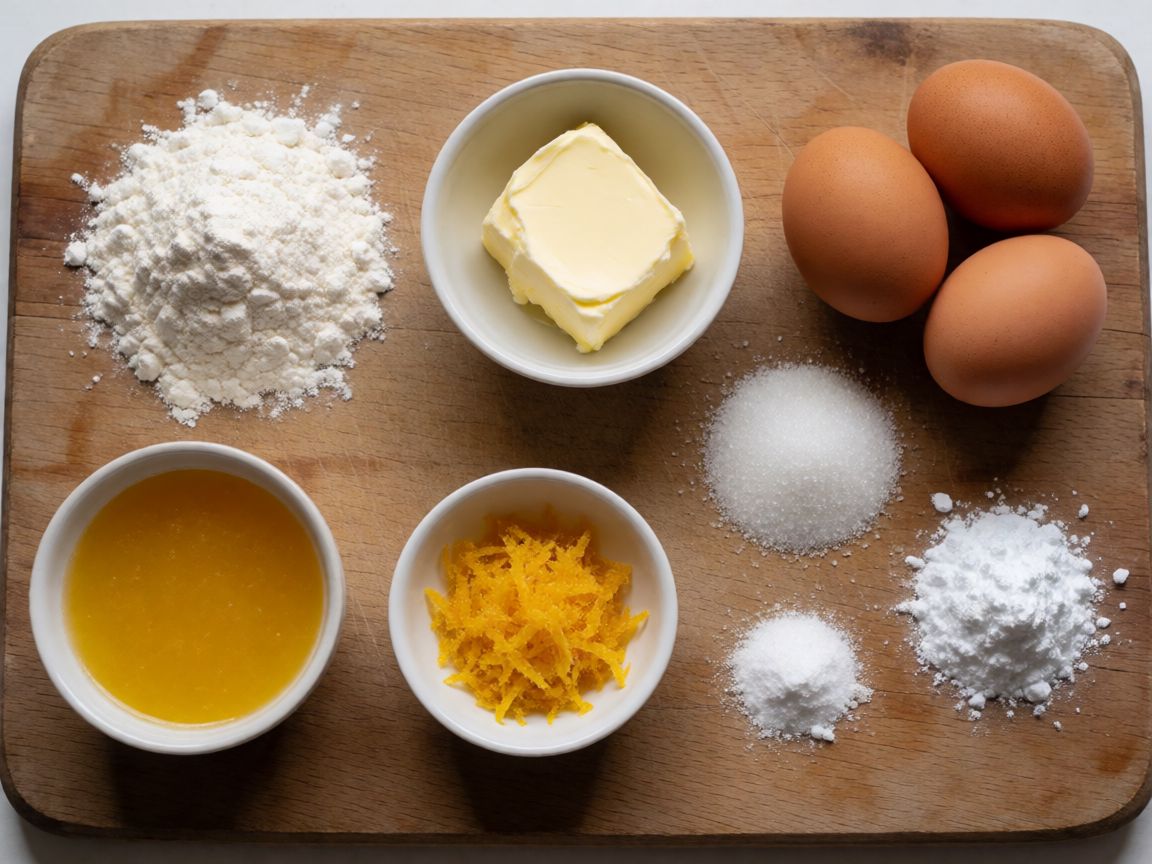
- 270 g Plain flour
- 150 g Butter softened
- 3 pcs Eggs
- 200 g Caster sugar
- 250 ml Mandarin juice
- 3 pcs Mandarin zest zest from 3 mandarins
- 16 g Baking powder
- Icing sugar to taste, for dusting








Steps
Put the eggs and sugar in a bowl and start whisking with an electric mixer.
Gradually add the softened butter and mix until smooth.
Zest the mandarins and squeeze out their juice, then add both to the batter.
Add the sifted flour and baking powder. Mix well once more with the mixer.
Transfer the batter into a 24 cm tin, greased with butter and dusted with flour.
Bake in a preheated fan oven at 160°C.
43 minLet the cake cool, then dust with icing sugar if you like.
This is a plain sponge lifted by mandarin instead of milk — egg, butter, sugar, flour, and then the whole fruit poured in: juice for moisture, zest for the smell that actually survives baking. It sits closer to a Victoria sponge than to anything French, but the citrus does the same job a splash of buttermilk does elsewhere — it keeps the crumb from drying into cardboard once the cake has cooled on your counter for a day.
What decides whether this rises evenly or sits heavy in the tin is not the flour, it's the first two steps. Whisking eggs and sugar isn't a formality — the sugar crystals cut into the egg and dissolve, and in doing that the mixture traps thousands of tiny air pockets. That trapped air is your only leavening besides the baking powder; lose it and no amount of raising agent will save you. Butter goes in next, and it has to be soft enough to fold into that foam without a fight — press it with a finger and it should give, not squish into grease. Cold butter won't blend and leaves hard flecks baked into the crumb; melted butter is worse, because its heat knocks the air straight back out of the eggs you just worked for.
Some say a cake this plain doesn't need careful mixing, just stir everything together and bake. No — because 'plain' here means there's nothing else to carry the structure. No ground almonds, no yoghurt, no extra fat to apologise for a flat batter. The whisking is doing the entire lift except for 16 grams of baking powder, and that's not much.
Flour and baking powder, kept separate from each other on the shopping list, give you control that self-raising flour doesn't. Self-raising already has rising agent baked into it at a fixed ratio, and here the recipe wants more lift than that ratio usually gives — hence 16 grams of baking powder added on top of plain flour. If self-raising is all you have, use it and drop the baking powder to a small pinch; otherwise you risk the cake doming and then collapsing because it rose faster than the structure could hold.
Butter: softened, not melted, for the reason above — it needs to fold into an aerated mixture, not drown it. Unsalted is the honest choice because there's no salt elsewhere in this recipe to balance against; British butter is often salted by default, so check the wrapper. If you only have salted, it's not a disaster, the cake just leans slightly savoury-sweet rather than purely sweet — nobody at the table will complain, but now you know why it tastes the way it does.
Eggs matter more for temperature than people think. Cold eggs resist the mixer; they don't trap air as readily, and you'll stand there longer than you need to. Leave them out an hour before you start, or stand them in warm water for a few minutes if you forgot. Caster sugar, not granulated, because its smaller crystal dissolves into the egg quickly — granulated sugar takes longer and can leave a grainy bite if you rush the whisking.
The mandarins are the actual point of this cake, and they're also the one ingredient with a season — they peak around the end of the year, which is exactly when British shops fill with nets of clementines and satsunas anyway, so you're not fighting the calendar. Zest only the orange skin, not the white pith underneath — the pith is bitter and the fragrant oil that gives you the smell of mandarin lives entirely in that thin coloured layer. If mandarins aren't to be found, orange will do, but orange juice is sharper and more acidic, so taste the batter before you commit all the sugar, or it'll fight the citrus instead of lifting it.
Icing sugar goes on only once the cake is properly cool — not just cool to the touch on top, cool all the way through. Dust it onto a warm cake and the residual steam turns the sugar into a thin wet glaze within minutes; nothing wrong with that as a glaze, but it's not what dusting is for, and you'll have wasted the one bit of patience this recipe actually asks of you.
Tin size is 24 cm for a reason tied to the batter volume you have — go much smaller and the middle won't set before the edges burn; much larger and you'll get a thin dry disc instead of a cake with any give in the centre. Grease and flour the tin properly, because a citrus batter with real juice in it sticks harder to bare metal than a plain sponge does — that step isn't decoration, it's what gets the cake out in one piece.