
 AI photo
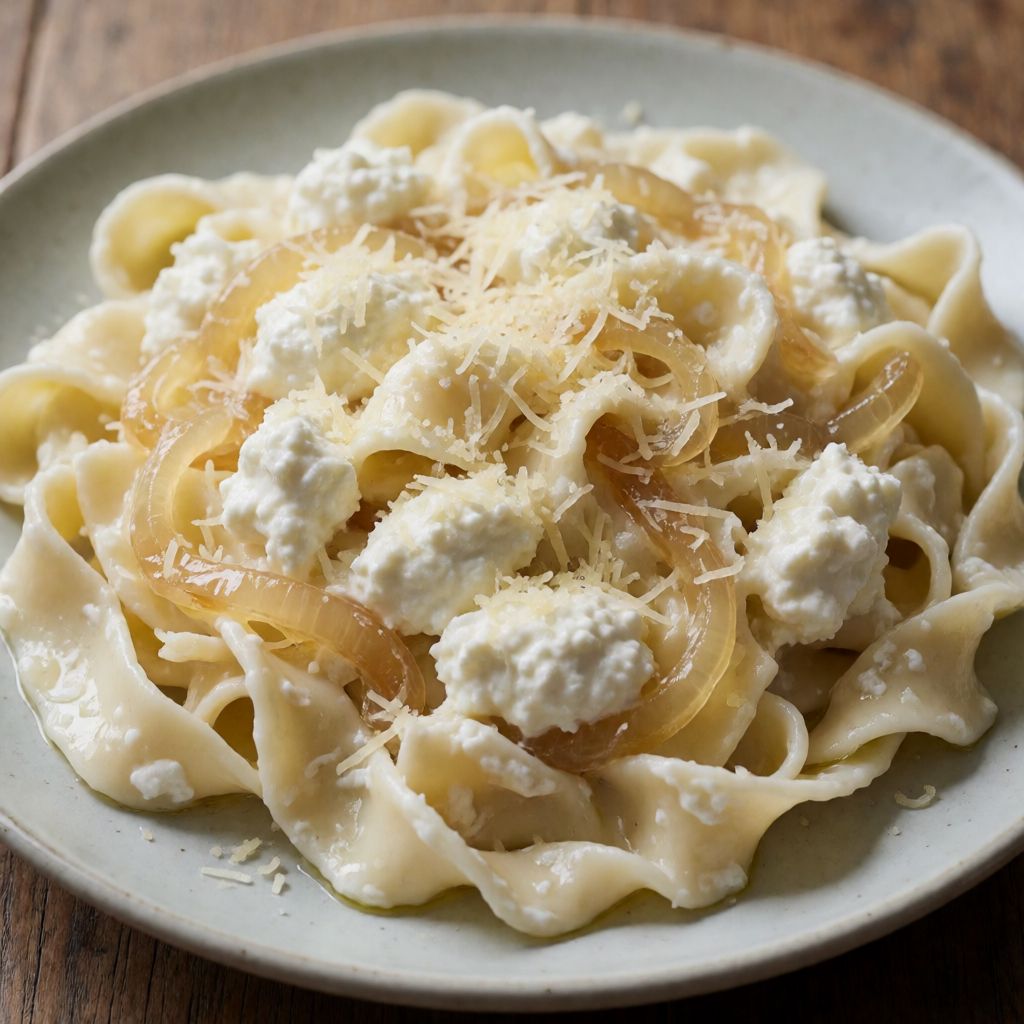
Mafaldine with Ricotta
A simple pasta dish where mafaldine is tossed with a creamy ricotta sauce, onion and parmesan.
Labels are worked out automatically from the ingredients and can be wrong. Check the packaging if it matters to you.
Ingredients







Steps
Heat the olive oil in a frying pan.
Finely chop the onion and fry briefly in the oil.
Remove the pan from the heat.
Bring salted water to the boil and cook the mafaldine.
Halfway through cooking, set aside a ladleful of the pasta water in a separate bowl.
Add the ricotta to this water and mix until smooth and creamy.
Drain the pasta and transfer it to the pan with the oil and onion.
Add the ricotta mixture and mix well.
Add the parmesan (or pecorino), and if you like, a little black pepper.
This is a store-cupboard pasta dish - whey cheese, a fried onion, olive oil, and the pot water itself. No separate sauce gets made; it's built at the last minute from what's already there, starch-laden water loosening a soft curd cheese into something that can coat a ribbon of pasta. It's the kind of thing an Italian household made when there was half an onion, a tub of ricotta, and nothing else in the fridge - and it works not because of skill, but because of basic chemistry.
What decides whether it works is the temperature of the pan when the ricotta goes in. The onion goes into hot oil to soften and sweeten, not to brown - you want it going translucent and faintly gold, not the deep amber that means the sugars at the edges have tipped over into bitter. Then the pan comes off the heat, and that's not a casual instruction. A screaming-hot pan meeting cold, soft ricotta will seize the protein on contact and give you grainy lumps swimming in oil instead of sauce. Residual warmth is gentle enough to marry fat and curd without punishing either.
Some say you need cream for a silky pasta sauce. No - cream is a late, mostly imported habit, not the backbone of Italian cooking it's taken to be. Starchy pasta water, fat, and a soft curd cheese do the identical emulsifying job, and do it lighter, without burying every other flavour under butterfat. This is close to the trick used long before cream ever turned up on a plate of pasta.
Mafaldine is a long ribbon with a wavy, ruffled edge. The ruffle isn't decoration, it's surface area - it catches and holds a thin, loose sauce in a way a flat ribbon can't. If you don't have it, any broad, flat long pasta does the same work - tagliatelle, pappardelle, fettuccine. Short tube pasta will still taste fine, you'll just lose some of that cling, because the mechanism depends on a wide, textured surface, not a brand name.
Ricotta means, literally, recooked - it's made from the whey left over once another cheese has already been pulled from the milk. That history is the whole dish in miniature: this was frugal food, built from a by-product nobody else wanted. Choose fresh ricotta, well-drained, mild, faintly sweet - not ricotta salata, which is salted and firm and meant for grating, a different cheese doing a different job. If you have none, the criterion is simple: any soft, mild, unripened curd will do - well-drained cottage cheese blitzed smooth works. Mascarpone can stand in too, but it's richer in fat and has no real curd structure, so thin it more carefully or the sauce turns heavy instead of silky.
Olive oil here is doing double duty - frying the onion and carrying flavour into a dish that has no other fat. Use one that still tastes of something, since there's nothing to hide behind. If you want something neutral - any oil with no smell of its own, sunflower or a light rapeseed - you can use it, but you lose the faint bitterness and grassy edge that balances the sweetness of the onion and the blandness of the ricotta.
Half an onion, not a whole one, is deliberate - the job is background sweetness, not a dish that tastes mainly of fried onion. White or yellow onion both work. Red onion brings a sharper bite that can argue with the ricotta's mildness, so if that's what's in the bowl, give it a little longer in the pan until it's truly soft, not just coloured.
Parmesan or pecorino is there to correct for ricotta's main weakness - it's nearly flavourless on its own. Pecorino, from sheep's milk, is saltier and sharper; parmesan is rounder. Either one gives the dish the edge ricotta can't supply by itself. Any hard, aged cheese that melts into fine threads rather than stringy clumps will do if you have neither to hand.
The one ingredient on this list with no weight given is the pasta water, and it's doing the real chemistry. Starch leaches off the pasta as it cooks, and that starch is what lets oil and curd bind into something that behaves like a sauce instead of splitting. Take your ladleful roughly halfway through cooking - early enough that the water still carries real starch, not so early it's thin as tap water. Use it warm, not off the boil straight into the bowl. And don't tip the rest down the sink out of habit, the way you might with vegetable water before it goes into a Sunday roast gravy - you may need a splash more once the ricotta meets the hot pasta and tightens up.